
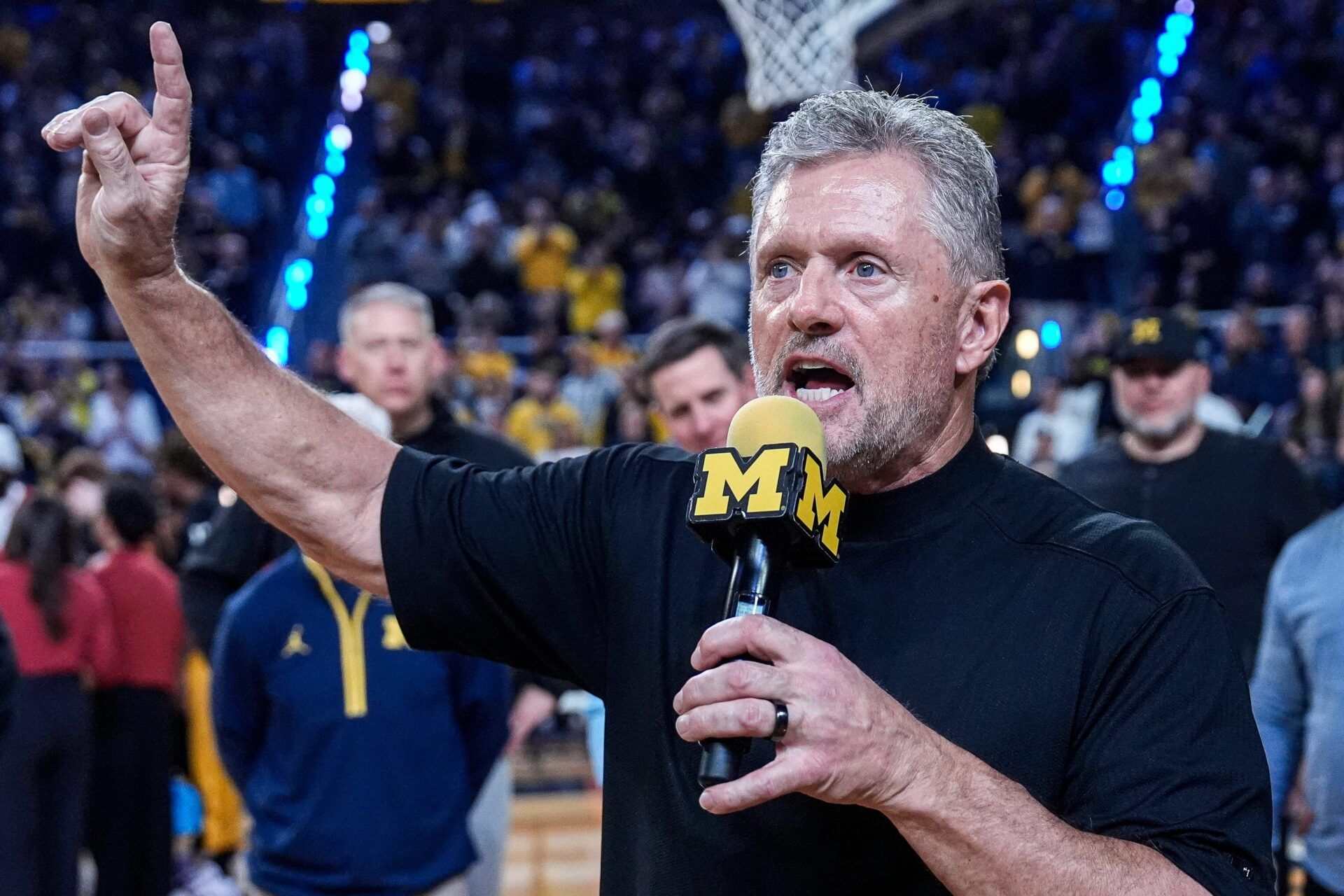
College football rarely follows a straight line, and Michigan’s last year proved that more than most. After the chaos of the Sherrone Moore situation this past offseason, many believed the 2026 season would be make-or-break for Moore and the Wolverines. Instead, the program took a stunning turn: Kyle Whittingham stepped into Ann Arbor after leaving Utah, a move many assumed would precede retirement.

Michigan Faces Early Tests With No Margin for Error
Whittingham inherits one of the most demanding schedules in the country. It’s a gauntlet that tests Michigan early, often, and relentlessly down the stretch. But if there’s one thing Whittingham has never shied away from, it’s adversity. And frankly, Michigan wouldn’t want it any other way.
The Wolverines open the season at home against Western Michigan in Week 1, ideally a tune-up game before things escalate quickly. That escalation comes fast with Oklahoma rolling into Ann Arbor the following week. After last season’s trip to Norman, Michigan now gets the Sooners at the Big House, and that matters.
The priority in that game is clear: disrupt quarterback John Mateer. Oklahoma struggled to establish a consistent run game a year ago and didn’t add much to that room heading into 2026. If Michigan can generate pressure and force Mateer into erratic decisions, redemption from last year is very much on the table.
UTEP follows in Week 3 and then completes a four-game homestand against Iowa the following Saturday. The Hawkeyes are never a gimme. They pride themselves on battles in the trenches and physicality, and their defense has graded inside the top 25 in PFSN CFB defensive impact grades for seven straight seasons. Michigan will need to match that toughness or risk getting dragged into a rock fight.
Week 5 sends Michigan to Minneapolis to face a Minnesota team that’s always capable of springing an upset. It’s a classic “sneaky” Big Ten game, one you don’t survive unless you’re locked in. A bye week follows, which comes at the perfect time before Michigan’s homecoming matchup against a revamped Penn State.
Now led by Matt Campbell, Penn State embodies everything Campbell has built his reputation on: consistency, discipline, and doing more with less. Michigan may want a celebratory homecoming, but Campbell has never been one to play along with the script.
Then come the defending national champions. Curt Cignetti’s team somehow managed to post the No. 1 offense and defense in the country according to PFSN’s CFB impact grades, and even without Heisman winner Fernando Mendoza, now off to the NFL, the cupboard is far from bare. Transfer quarterback Josh Hoover arrives from TCU after a top-10 season in passing yards and touchdowns. This is a heavyweight matchup, plain and simple.
Kyle Whittingham Will Be Tested at Every Turn
After Bloomington, Michigan, heads to Rutgers to face a feisty Scarlet Knights squad before a rivalry showdown with Michigan State. The Spartans enter a new era under head coach Pat Fitzgerald, whose Big Ten experience at Northwestern ensures MSU will be physical and disciplined from the start.
Then comes Oregon, and this might be the most intimidating matchup on the schedule. The Ducks combine elite returning production with high-end new talent. Dante Moore is back for his final season, already viewed as a top NFL prospect after a strong first year as the starter.
Defensively, Oregon returns much of its core and adds safety Koi Perich, a true Swiss Army knife who elevates the entire unit. After ranking 11th nationally in PFSN CFB defensive impact grades in 2025, there’s no reason this group can’t be just as dominant.
UCLA sits between Oregon and Ohio State, the definition of a potential sleepwalk game. Whittingham cannot allow it. Good teams take care of business, and great teams don’t overlook anyone, especially in November.
Then it’s The Game.
Michigan travels to Columbus to close the season in the sport’s biggest rivalry. After four straight losses, Ohio State finally reclaimed bragging rights last year and now smells blood in the water. Michigan needs to snuff that confidence out immediately.
By this point, Bryce Underwood should be fully comfortable in Year 2, capable of unlocking the offense with both his arm and his legs. This also shapes up to be the John Henry Daley Game, much like the one-star Wolverine Aidan Hutchinson had in Ann Arbor.
The star edge rusher followed Whittingham from Utah and finished last season with the second-highest PFSN CFB edge impact grade and 11.5 sacks. Against a loaded Ohio State offense, Daley’s impact must be felt early and often. Keep Julian Sayin and Jeremiah Smith in check, disrupt timing, and never let the Buckeyes get comfortable.
There’s no sugarcoating it; this is a brutal road. But that’s Big Ten football in 2026. With three straight national championships belonging to the conference, nothing is given. Everything is earned.
That’s why Whittingham feels like the right hire at the right time. Michigan has missed the cultural edge it had under Jim Harbaugh: toughness, accountability, and identity. Whittingham built all of that at Utah, and he’ll waste no time installing it in Ann Arbor.
The question isn’t whether Michigan will be tested. The question is whether they’ll be ready to meet it. With Kyle Whittingham at the helm, don’t bet against them.
