
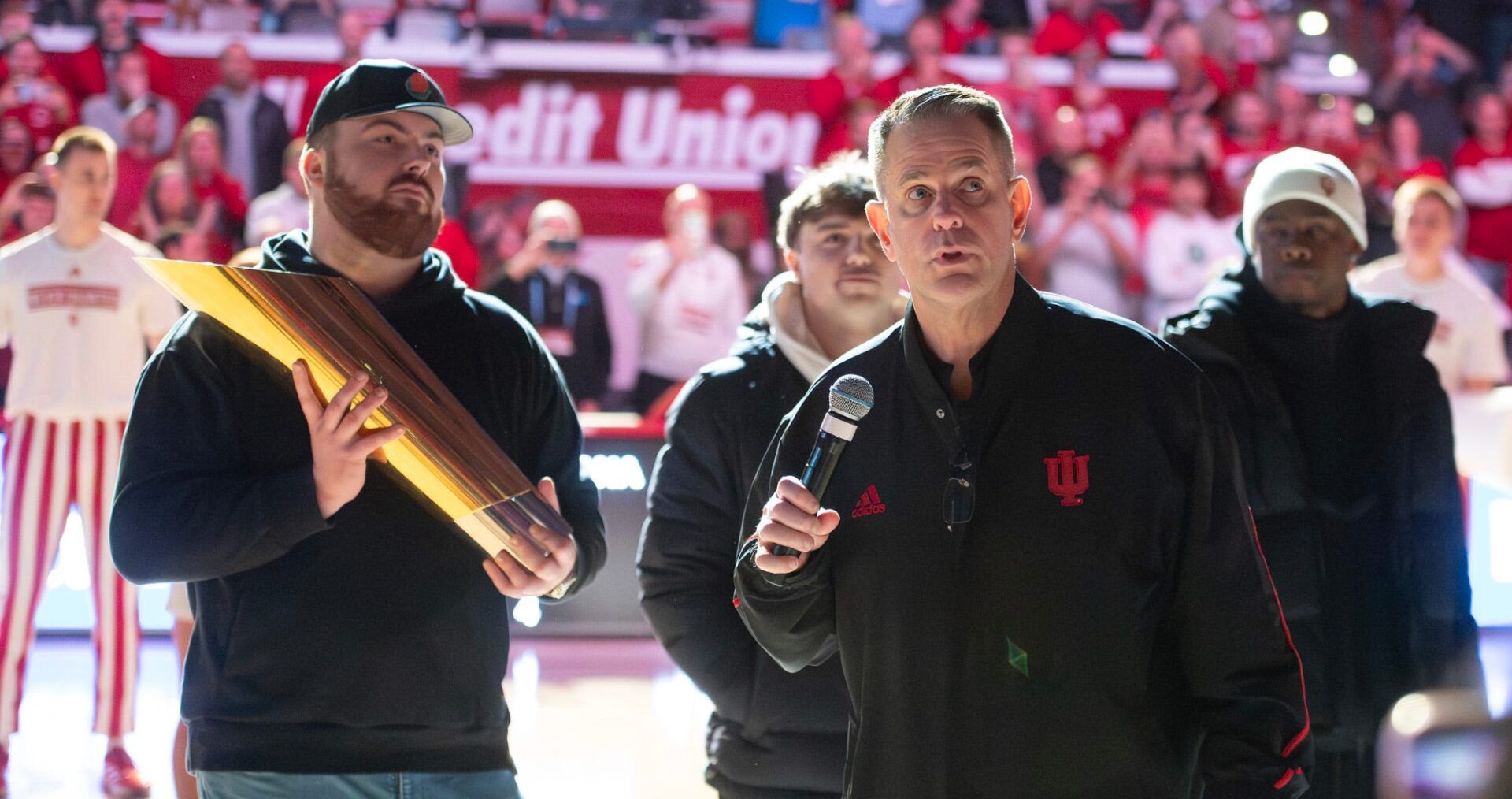
Fresh off a historic season that saw the Indiana Hoosiers capture their first national championship, expectations in Bloomington have never been higher. Much of that success can be credited to third-year head coach Curt Cignetti, who has rapidly transformed the program with a clear philosophy rooted in discipline, development, and experience.

Curt Cignetti on Why Freshmen Struggle to Play Winning Football
Cignetti offered a candid assessment of one of college football’s more talked-about topics: the role of freshmen. In an interview with Yogi Roth, he explained why first-year players often struggle to see the field early in their careers.
NEW: Curt Cignetti talks about the development of high school recruits:
“Most freshmen are not capable of playing winning football yet at this level.” 😳 pic.twitter.com/MB59m0nS4D
— College Portal (@CollegeFBPortal) March 21, 2026
“Most freshmen are not capable of playing winning football yet at this level,” Cignetti said. “They work hard daily: they get bigger, stronger, faster, learn the offense, defense, the expectation level, the standards, consistency in performance…”
MORE: Deion Sanders’ Health Update Could Bring ‘Winning Winning’ Season to Colorado
It may sound harsh at first, but it reflects a deeper truth about what it takes to succeed at the highest level of college football. Talent alone isn’t enough. For Cignetti, “winning football” requires consistency, mental discipline, and a full understanding of the system, which are traits that typically take time to develop.
What he is implying is clear: While many freshmen arrive with elite athletic ability, the transition to college football demands far more than raw skill. Players must adapt to a faster, more physical game while also mastering complex schemes and meeting heightened expectations. Until those pieces come together, earning significant playing time can be difficult.
Indiana’s recent success under Cignetti reinforces this philosophy. Over the past two seasons, the Hoosiers have leaned heavily on experienced players, particularly juniors and seniors, rather than relying on highly touted underclassmen. That approach has paid off in a big way.
Offensively, Indiana led the nation with a PFSN CFB Offensive score of 93.5, powered by standout quarterback Fernando Mendoza, a redshirt junior transfer from Cal. Mendoza’s leadership and production culminated in a Heisman Trophy win and a host of other accolades, anchoring one of the most efficient offenses in the country.
Defensively, the trend continued. Veteran leaders like linebacker Aiden Fisher and cornerback D’Angelo Ponds helped guide a unit that posted a PFSN CFB Defensive Impact score of 97.9. The Hoosiers also ranked second nationally in points allowed per game, surrendering just 11.1 points, a testament to both talent and experience.
MORE: Jedd Fisch Questions “Value” of Exposing Tampering After Demond Williams Jr. Drama
Taken together, these results highlight the effectiveness of Cignetti’s long-term development model. His approach does not exclude freshmen from contributing, but it does set a high bar. Young players must prove they can meet the program’s physical and mental demands before stepping into significant roles.
Ultimately, Cignetti’s message is not discouraging; it is instructive. For freshmen entering the program, the path to playing time is clear: Embrace the process, commit to development, and earn trust through consistent performance. If Indiana’s recent rise is any indication, those who do will find themselves part of something special.
