
The NCAA was put on the spot in January when Clemson Tigers coach Dabo Swinney publicly accused Ole Miss coach Pete Golding of tampering. Swinney revealed that the Tigers had proof that the Rebels coach had tampered with linebacker Luke Ferrelli, who had initially joined the Tigers before entering the transfer portal and moving to Ole Miss.
The issue of tampering has become a sticking point in college sports amid the collision of the NIL era and freer transfer portals, which allow players to move between programs at will.

Why Washington Huskies Coach Jedd Fisch Is Blasting the NCAA Over Tampering
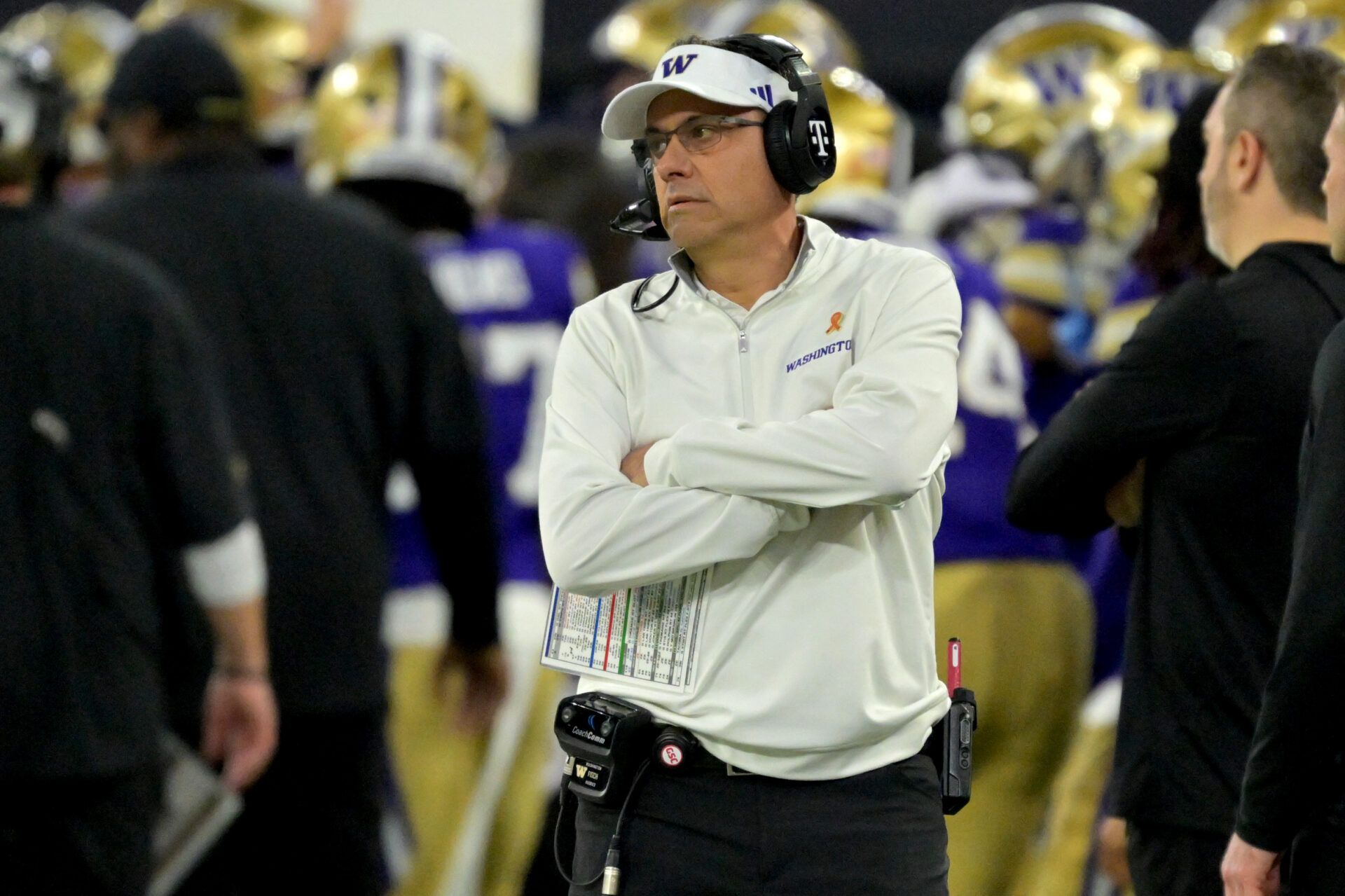
While speaking to reporters on Friday, Washington Huskies coach Jedd Fisch blasted the NCAA for inaction whenever programs report tampering claims by other teams involving their players.
“I’ve seen guys go public, and I have seen no changes in the programs that they’ve gone public about. So what’s the value? Right now, it seems like you can kind of do what you want,” Fisch said.
MORE: Dave Portnoy Mocks Utah Over ‘Crying’ About Kyle Whittingham’s Michigan Move
In January, Fisch had to deal with the drama of quarterback Demond Williams Jr., who, despite having an ironclad contract to play for the Huskies next season, was reportedly lured by a lucrative offer from the LSU Tigers, prompting him to enter the transfer portal before backing down and remaining at the program.
Why the Big Ten Is Making a Shocking Tampering Request to the NCAA
According to ESPN’s Pete Thamel, the Big Ten sent a letter to the NCAA on March 11 asking the body to halt any ongoing investigations into tampering, as the existing rules were not designed to address the modern era of college sports.
“These rules were not designed for a world in which student-athletes are compensated market participants making annual decisions with significant economic consequences,” the letter read. “The collision between the old rules and new reality is producing outcomes that harm the population that the rules were designed to protect.”
The letter pointed out that the current tampering rules were implemented before a 2025 antitrust settlement cleared the way for schools to pay players, and were drafted long before today’s era of almost unlimited movement via the transfer portal.
According to the governing body, they processed 90 tampering cases in the last year alone, proving that the existing rules were working. However, the Big Ten argued in its letter that the current rules cannot be credibly or equitably enforced.