
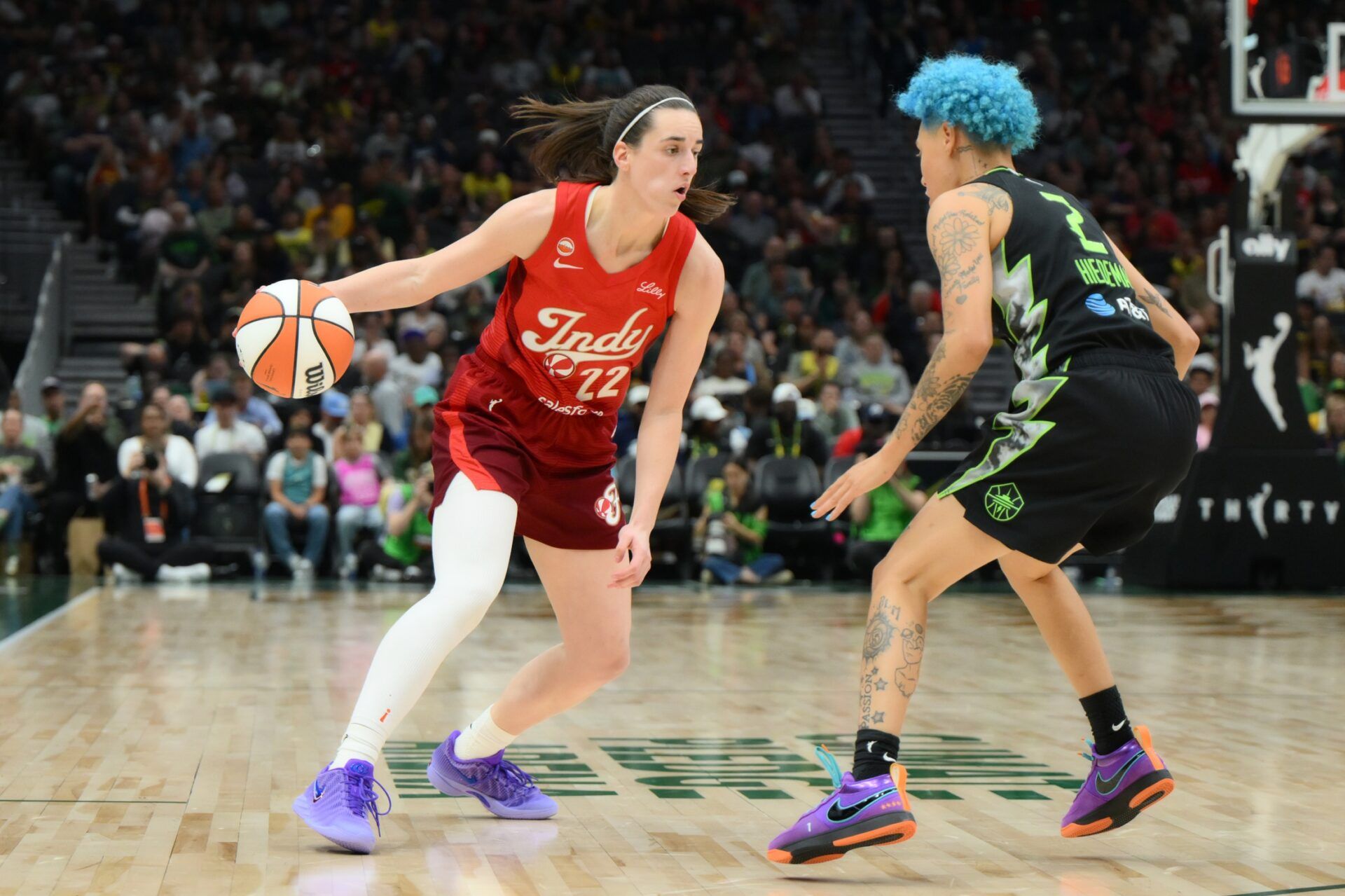
Indiana Fever star guard Caitlin Clark has dealt with opinions regarding every aspect of her since her days at the University of Iowa.
Yet it seems to have grown when the Indiana Fever drafted her. From fans and media who see her as the embodiment of their beliefs that extend beyond sports to others who examine her on-court skill, a wide-ranging set of opinions exists.
Jemele Hill Believes That Caitlin Clark Isn’t Reviled Inside WNBA
Yet, one relatively quiet part of the discourse centers on what Clark’s teammates and opponents feel about her, arguably the face of the WNBA. However, one journalist firmly believes that much of what people think about Clark’s league perception may not be entirely accurate.
In essence, many observers think that you can trace the popularity of the WNBA to Clark’s debut. Hill, formerly of ESPN, discussed perception. Awful Announcing opined regarding Hill’s beliefs during her visit to its podcast.
Even among less politicized media, Hill believes history will not look kindly on those who jumped to conclusions that other players in the league “don’t like” Clark or “want to hurt her.”
Basically, Hill thinks that Clark isn’t reviled or disliked as much as those who use her for clout or political points, as much as you would believe. Additionally, Hill thinks those notions will become more laughable over time.
“This narrative that the media keeps drilling that the players don’t like her, that they’re jealous of her, that they want to hurt her,” Hill said, “that is not the dominant perspective or feeling in the league.”
In fact, Clark’s fellow players have benefited from her arrival and presence. For example, the guard entered the league just a few years before the collective bargaining agreement was set to expire. Now, WNBA players make far more than they did under the old deal. Plus, the additional broadcast coverage increased the league’s visibility.
In a way, Clark is good for the league’s financial health. Hill thinks that those who politicize the guard will eventually be mocked for their views because they lack a legitimate foundation.
“They’re just competing, and the fact that you’re villainizing people for just competing with her, it is something that will prove to be historically embarrassing by the way it has been discussed.”
Clark, from all of the game film and television broadcasts, appears as a highly competitive star who wants to win. The Fever continues to succeed with Kelsey Mitchell, Aliyah Boston, and her. How people perceive Clark remains out of her control.
