
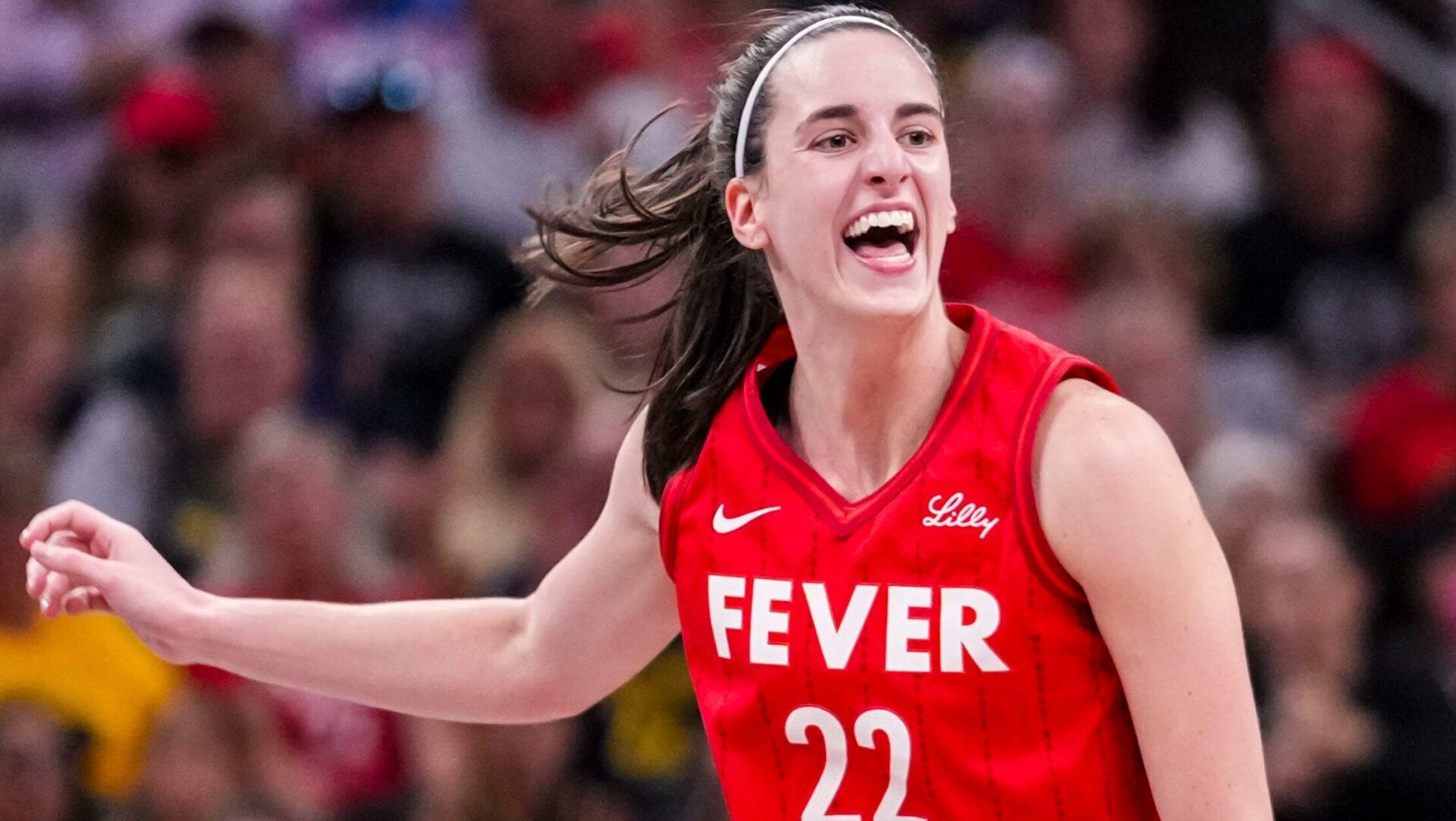
The WNBA season has only intensified debate about how opponents handle Indiana Fever star Caitlin Clark. Fouls that skirt the line, pointed postgame comments, and a recent ninth-place finish in player balloting for All-Star guards have fueled headlines.
This week, a notable voice from outside basketball added fresh perspective and a hint of Hawkeye pride. His insight hints at why Clark’s reception inside the league still splits opinion and why her response could shape the Fever’s summer push.
George Kittle Defends Caitlin Clark, Hails Her ‘Dog’ Mentality Amid WNBA Physical Play
George Kittle, who is playing in the American Century Championship from July 11-13 on NBC and The Golf Channel, weighed in on how Clark’s peers treat her during a Zoom call to promote the annual golf tournament.
“Caitlin’s a dog,” Kittle said when asked about Clark’s treatment by her peers. “She couldn’t be any nicer of a person. She takes her time for everybody. I think when you just go from being a college student to being one of the most popular people on the planet, I think she handles it incredibly well. She always has, and she’s just an ultimate competitor.
“As for her treatment on the court, I don’t play basketball; football is different than that, I think. She handles whatever is thrown her way incredibly well and with the highest grace. Always proud of her and proud to say that she’s a Hawkeye.”
Kittle’s praise carries weight because he has lived a comparable leap from relative anonymity to stardom. Drafted in the fifth round in the 2017 NFL Draft, the tight end turned early-career grit into a record-setting raise, culminating in a four-year, $76.4 million extension this spring.
The All-Pro’s 7,380 yards and 45 touchdowns show how quickly a competitor can flip a narrative when given time and support. Clark, 23, is searching for a similar runway in a league that has never seen a young phenom command this much attention.
Some insist the physical play surrounding the All-Star captain is standard playoff-style defense applied to a star who stretches the floor from 30 feet. Others, including LeBron James, Tyrese Haliburton, and Hall of Fame broadcaster Dick Vitale, frame the contact and commentary as thinly veiled resentment of her instant market power.
Vitale points to charter flights, sellouts, and surging television ratings as hard proof that Clark has generated new revenue for the league. By the time the 2025 WNBA season ends on Sept. 11, the Fever will have been featured on national television in 41 of the team’s 44 regular season games.
Statistically, Clark’s season thus far offers ammunition for both sides. She averages 18.2 points and 8.9 assists in the nine games she has finished, yet her 29.5% accuracy from deep and league-high 5.9 turnovers reveal she has room for improvement.
Opponents trap her out of standard pick-and-roll looks, bump her on off-ball screens, and mix box-and-one coverage to force hurried passes. Clark’s response has often been to lean on passing angles, a shift that pushes teammates into more decisive catch-and-shoot roles.
Kittle’s comments add a layer of fraternity that transcends sport. Iowa’s alumni network is robust, and his endorsement underscores how Clark’s composure resonates beyond basketball.
If the 8-8 Fever climb the standings and Clark’s percentages rise toward her norms, the tone of on-court greetings could mellow. Until then, every hard close-out and clipped sound bite will keep the conversation alive — and Kittle won’t be the last to weigh in.
