
Managing the league’s salary cap is one of the biggest challenges in building a competitive NFL roster. This system is designed to maintain parity across teams, ensuring that no franchise can dominate simply by outspending the others. However, teams can leverage various mechanisms and loopholes to maneuver around the cap and assemble the strongest roster possible.
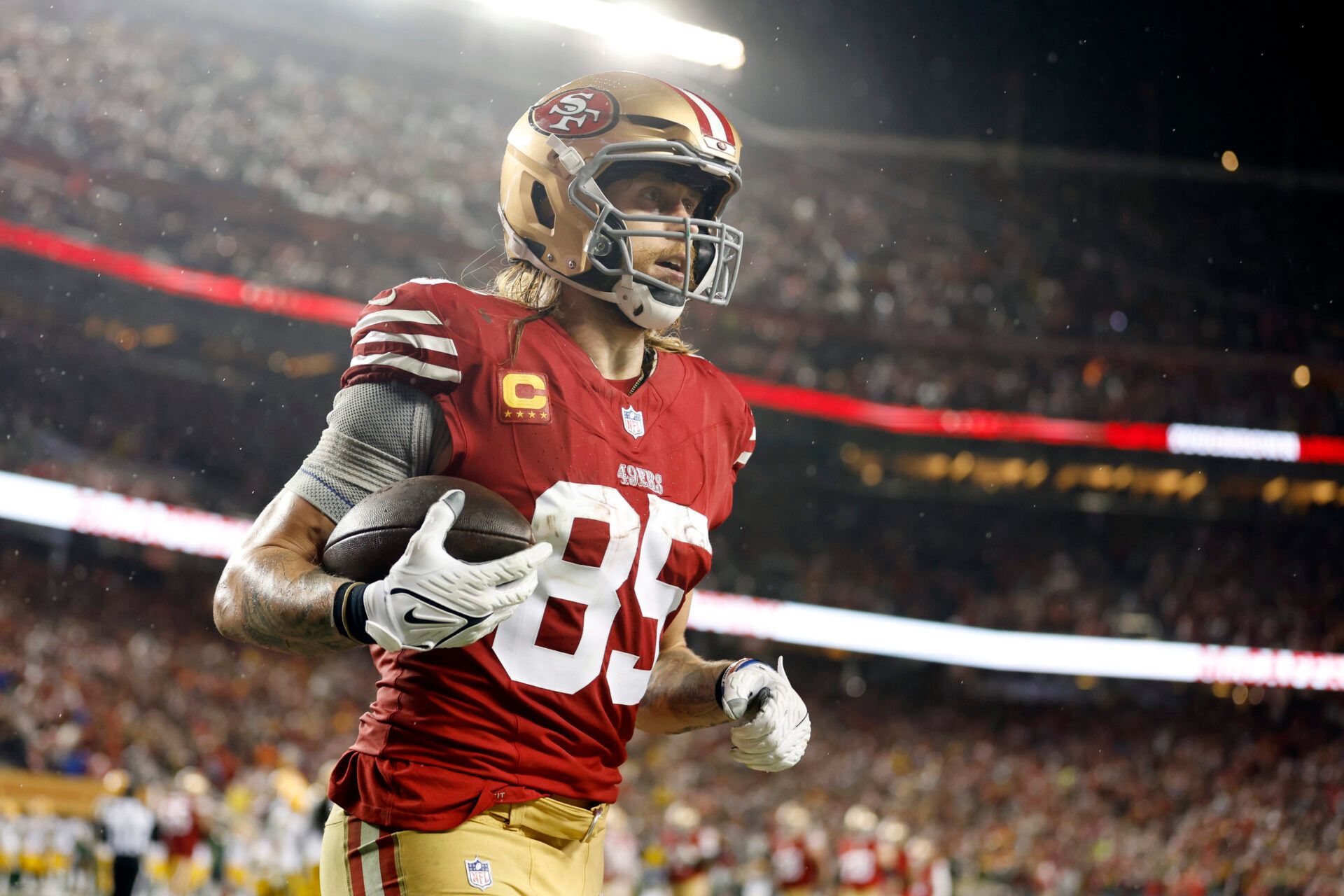
This offseason, the San Francisco 49ers extended tight end George Kittle on a four-year deal worth $76.4 million, making him the highest-paid tight end in NFL history regarding average annual value — $19.1 million per year. What truly stands out, though, is the contract structure, which breaks from traditional norms and introduces a format unlike any we’ve seen before.

What’s New in George Kittle’s Contract With the 49ers?
A few weeks ago, the 49ers got ahead of a situation that might have dragged on in previous years throughout the offseason. They extended Kittle’s contract — one of the team’s most beloved players — setting the stage for him to potentially spend over a decade in a Niners uniform.
What stood out was the structure the 49ers created to make the extension possible. The team had made several cap-clearing moves this offseason in preparation for critical future extensions, most notably for Brock Purdy and Fred Warner.
In an article for The San Francisco Standard, 49ers insider David Lombardi broke down the deal’s details, highlighting how the team paid George Kittle the veteran minimum in base salary for the next five seasons, with the rest of the money coming from prorated signing bonuses.
George Kittle’s new contract is the first in NFL history with 5 prorated bonuses vs the salary cap — the 49ers made all 5 years vet minimum base salary.
Expect similar techniques with Brock Purdy’s new contract. I broke it all down here: https://t.co/FTFc94FLIA pic.twitter.com/lB7PaX4qlV
— David Lombardi (@LombardiHimself) May 12, 2025
“The amount of money scheduled to come Kittle’s way in 2029, $22.4 million, was carefully tailored to push the APY over McBride’s. But none of that money, which would be paid out when Kittle is 36, is guaranteed. So the 49ers now have five years of contractual control at the cost of only two years of financial commitment. That’s the best possible deal a team can hope to get for a future Hall of Famer who’s still very much in his prime.”
The way the 49ers structured Kittle’s contract allows the team to keep a cornerstone of its offense on the roster during what is more of a retooling than a complete rebuild, all while maintaining enough salary cap space to keep adding talent. This strategy, which involves spreading out the contract over void years to dilute the cap hit, is commonly used by other franchises looking to stay competitive without sacrificing roster quality.
“Kittle’s new contract actually reduces his 2025 cap hit by about $8 million,” Lombardi wrote. “All five years of the deal feature a veteran minimum base salary and instead pay out the majority of salary through option bonuses, which offer the possibility to prorate cap hits over up to five years — and on a staggered basis that stretches Kittle’s cap impact all the way through 2033.”
49ers Following Philadelphia Eagles’ Blueprint to Retain Core Stars
Lombardi notes that the 49ers’ approach mirrors the one the Eagles have successfully used in recent years — allowing them to pay their quarterback and top playmakers and still retain depth across the roster. However, he points out that San Francisco’s formula is even more aggressive than the one employed by Eagles GM Howie Roseman, pushing the boundaries of creative cap management to a new level.
“Although the 49ers and Philadelphia Eagles have been on the cutting edge of pushing salary into multiple amortized bonuses and void years, this five-bonus maneuver with Kittle is actually unprecedented. Chief negotiator Paraag Marathe and cap experts Brian Hampton and Jeffrey Diamond have truly stretched the technique to its max this time.”
Since 2019, the 49ers have consistently come up just short in their quest for a Super Bowl. When healthy, Kyle Shanahan’s squad reached the big game twice, losing both times to the Kansas City Chiefs, and fell in the NFC Championship Game on two other occasions. These repeated heartbreaks prompted the team to retool parts of the roster, but Kittle remained a cornerstone.
Keeping a player like Kittle allows the 49ers to preserve the essence of a system that has proven effective even as it undergoes necessary modernization. For a player who not only still performs at an elite level but also embodies the franchise’s identity in the eyes of the fans, the move is yet another calculated risk the team was willing to take.
