
Winning a coin toss should be meaningless. In 59 Super Bowls, it hasn’t been. The team that wins the opening flip has gone on to lose the game 33 times, posting just a 44% win rate.
That’s not a rounding error. That’s a pattern spanning nearly six decades, and it hovers over Sunday’s matchup between the New England Patriots and Seattle Seahawks at Levi’s Stadium like a superstition nobody can fully explain or fully dismiss.

Why the Super Bowl Coin Toss ‘Curse’ Won’t Go Away
The numbers are persistent enough to fuel the conversation every February. Between Super Bowl 49 and Super Bowl 56, coin toss winners lost eight consecutive games. That streak, which ran from the 2014 season through the 2021 season, was the kind of run that makes mathematicians shrug and fans lose their minds.
Kansas City snapped it by winning the toss and the game in back-to-back years, taking Super Bowl 57 and 58. But the Chiefs won the toss again in Super Bowl 59 last February, correctly calling tails, and lost to Philadelphia, 40-22. The curse, apparently, needed only a brief intermission.
Over the last 11 Super Bowls, the coin toss winner has lost the game nine times. The only exceptions were those two Chiefs victories. For a proposition that should have zero correlation to the final score, the losing trend has been remarkably stubborn.
Applied mathematician Tim Chartier, who specializes in sports analytics, notes that while the odds of an eight-game losing streak beginning at any specific point are just 1 in 256, the probability of such a streak occurring somewhere within a 59-game sample is roughly 10%.
READ MORE: Super Bowl 60 Predictions: Predicting the Winner, Final Score, MVP, and More
Not impossible. Not even improbable over a large enough window. But that explanation hasn’t stopped the narrative from hardening into something that feels like fact to millions of viewers.
The raw heads-versus-tails split is closer to expected. Through 59 Super Bowls, the coin has landed on tails 31 times and heads 28 times. A slight lean toward tails, but nothing that suggests a rigged coin. The real oddity lives in what happens after the flip, not which side lands face up.
What Coin Toss Curse Means for Patriots and Seahawks
Here’s where Super Bowl 60 gets interesting. Both teams in Sunday’s game have historically been worse off after winning the coin toss, not better.
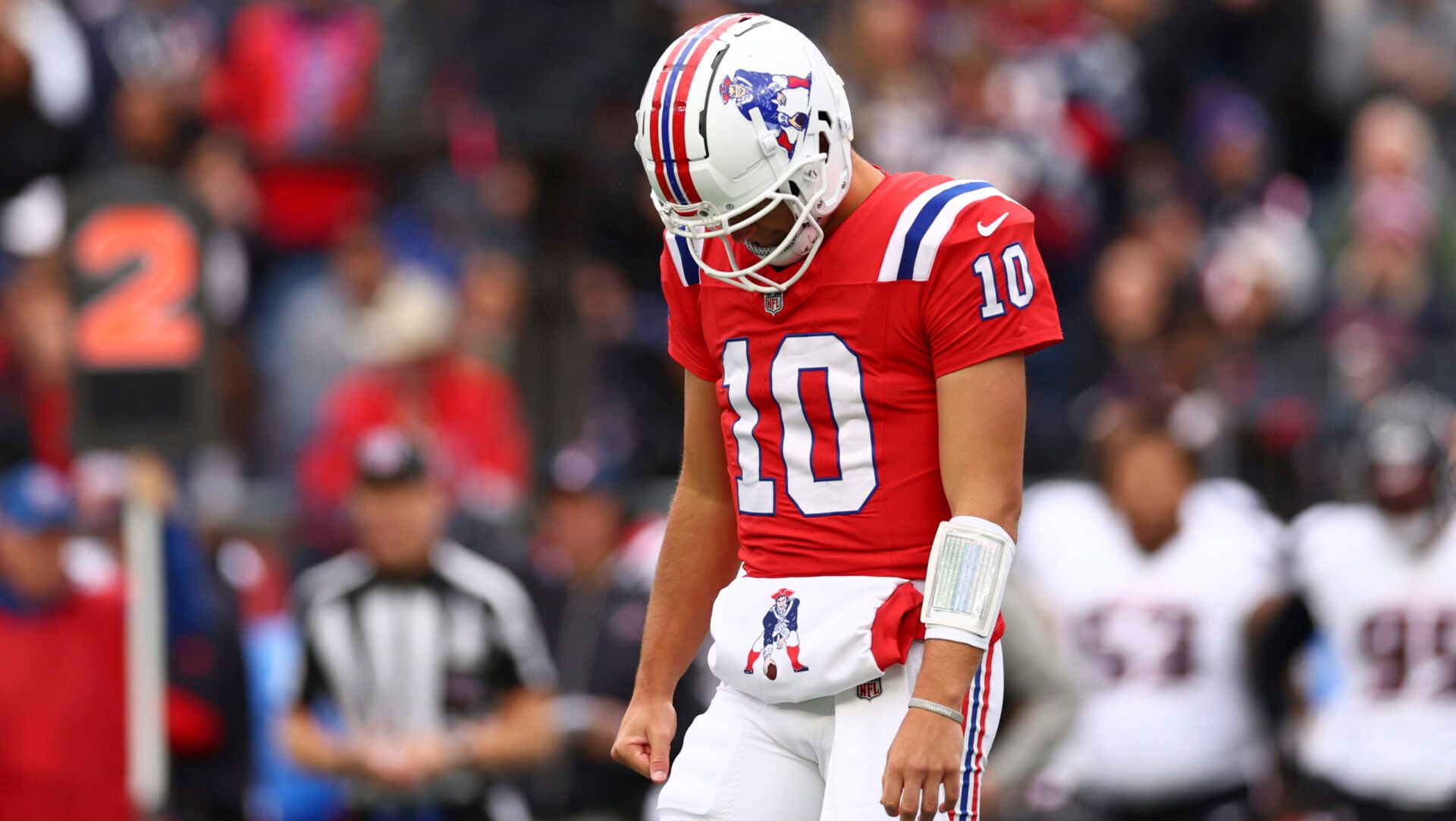
The Patriots have lost all three Super Bowls in which they won the opening coin toss, giving them the worst conversion record among current NFL franchises with three or more coin toss wins.
New England won the flip in Super Bowl 31, Super Bowl 46, and Super Bowl 52. They lost all three games. Every one of their six Lombardi Trophies came in years when they lost the coin toss.
MORE: Conservatives Call for Boycott of Super Bowl 60 Over Bad Bunny’s Halftime Show: ‘ENOUGH IS ENOUGH’
The Seahawks have won the toss three times in their Super Bowl appearances, converting it into a championship just once, in Super Bowl 48, their demolition of Denver following the 2013 season. The following year, Seattle won the toss again in Super Bowl 49 and watched Malcolm Butler intercept Russell Wilson at the goal line in the final minute.
So whichever team’s captains walk to midfield and get the good news from the referee on Sunday, history suggests they shouldn’t celebrate too hard. The Seahawks, as the NFC champions, will be the visiting team in the annual conference rotation, meaning Seattle’s captains will make the call.
Neither franchise should want to win this flip. The Patriots are 0-3 when they do. The Seahawks are 1-2. Combined, these two teams are 1-5 in Super Bowls where they won the opening coin toss. That’s a 16.7% win rate in a game that’s supposed to be 50-50.
None of this means anything, of course. Coins don’t remember previous flips. As Chartier puts it, “Randomness has no memory, and it doesn’t rush to fix the past.” But in a week where every possible angle gets dissected, the coin toss curse is one of the few trends that keeps delivering. And for the first time, both teams on the field have the track record to prove it.