
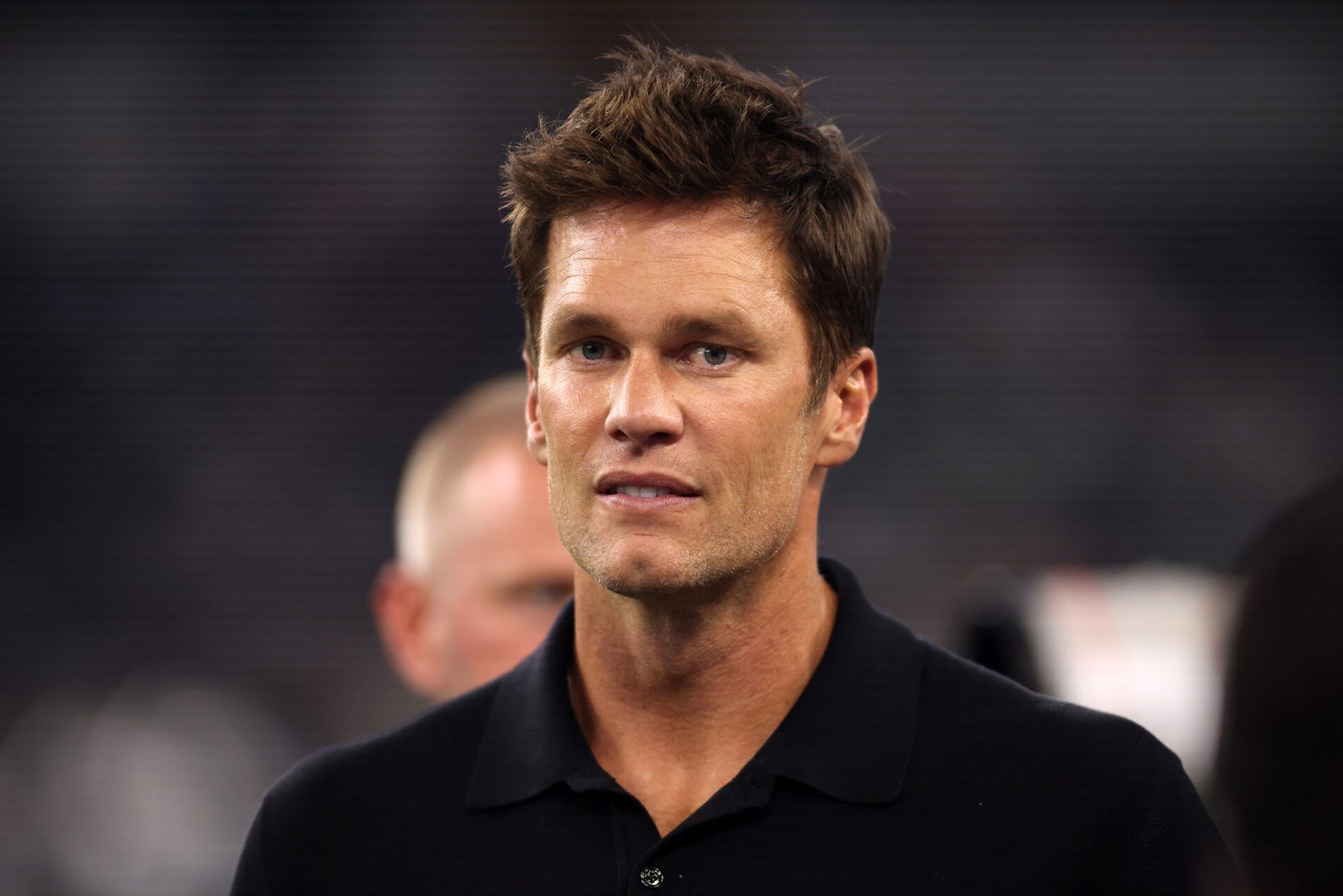
Tom Brady became the greatest player in football history and, as a result, one of the most recognizable names in the NFL. His seven Super Bowl titles turned him into a living legend, and many of his records are unlikely to be broken by any other quarterback.
After retiring, Brady made a move few saw coming: He became a minority owner of the Las Vegas Raiders. Here’s how the former quarterback’s ownership stake works and what led him to become part of an NFL franchise off the field.
When Did Tom Brady Become an NFL Franchise Owner?
Brady’s NFL career as a player spanned from 2000 to 2022, marking the most prolific run in American sports history. No player has ever dominated the league for as long as he did, and his playing legacy alone was enough to make him the greatest icon in NFL history.
But in May 2023, Brady took things a step further. Alongside his business partner, Tom Wagner, co-founder of Knighthead Capital Management, he reached an agreement with owner Mark Davis to purchase a minority stake in the Las Vegas Raiders.
The proposal for Brady to become a minority owner was approved by 24 of the NFL’s 32 principal owners, officially making the greatest quarterback of all time part of the Raiders ownership group.
READ MORE: Week 12 NFL Power Rankings: Broncos, Bills, Rams Victorious in Key Matchups
Brady’s entrepreneurial side was already well established. He owns TB12, a personal health and wellness brand, the Brady Brand, a performance apparel line, and co-founded 199 Productions, a media company. Beyond the Raiders, he became an investor and part-owner of England’s Birmingham City Football Club.
What Is Brady’s Percentage Of The Raiders’ Ownership?
Brady is only a minority owner of the Raiders. Al Davis held the majority of the franchise, which he passed down to his son, Mark, in 2011. Mark and his mother, Carol, currently control 47% of the team’s shares, which gives them the controlling interest.
Brady and Wagner agreed to acquire a 10% stake in the Raiders, with approximately 5% each. CNBC, citing a 2024 article from The Athletic, estimates the franchise’s value at $7.8 billion. However, this doesn’t mean Brady and Wagner paid exactly $780 million.
The exact amount they paid was not disclosed, and it’s likely to be significantly lower than $780 million. Franchise valuations reflect what a complete sale might cost, but minority shares are often negotiated at a lower rate.
According to The Washington Post, the NFL’s finance committee initially delayed the deal over concerns that Davis might be giving the pair too steep a discount. Reports later indicated that Brady and Wagner increased their offer to a much higher figure than initially proposed.
MORE: 3-Round 2026 NFL Mock Draft
Brady’s stake in the Raiders also had repercussions. His broadcasting career at Fox was affected, and the NFL restricted his access to other teams’ facilities, practices, and broadcast production meetings, which typically involve coaches and players before games.
These measures were implemented to ensure Brady’s neutrality and avoid any conflicts of interest, as he was now a part-owner of the Raiders and could no longer gain potential competitive advantages through insider access.
Las Vegas Raiders’ Insights for Week 11
Team: Las Vegas has scored nine points or fewer four times in nine games.
QB: Geno Smith had his best QBi grade (84.3, B) of the season in Week 9 against the Jaguars. In week 10 against the Broncos, he had his second-worst.
Offense: The Raiders have committed at least one turnover in eight of nine games. They have 14 turnovers on the season.
Defense: The Raiders’ 69.8 DEFi is the second-lowest score by a team with Pete Carroll as head coach over his last 15 seasons.
Fantasy: The Raiders have played three teams that rank in the bottom 10 at defending the run. In those games, Ashton Jeanty is averaging 18.8 PPG. The Cowboys will make it four in a row this week.
