
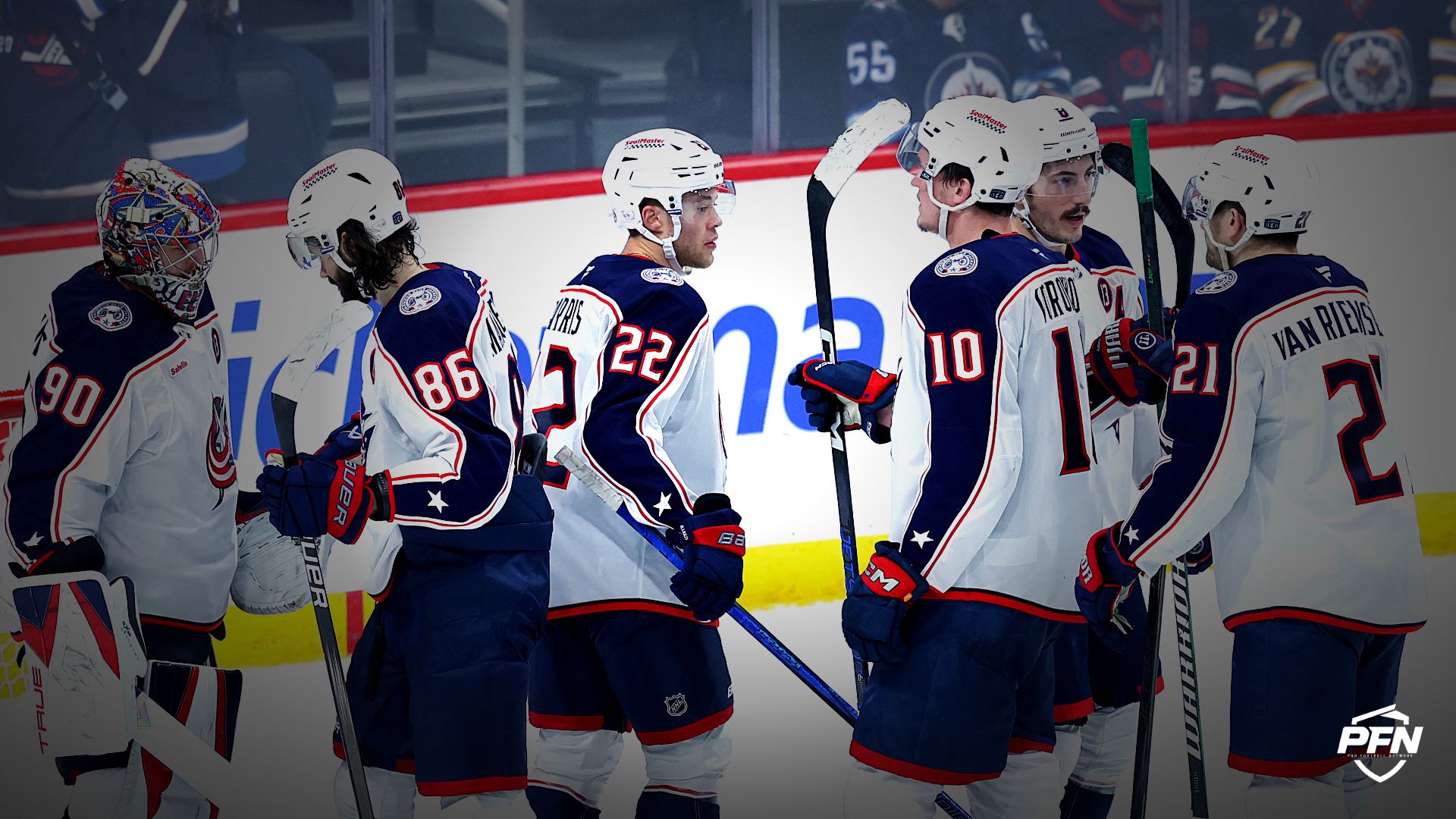
The Columbus Blue Jackets unveiled a new direction for their local broadcasts, but the reaction from the NHL community has not been remotely welcoming. Instead, the conversation centered on what many believe the move says about the organization’s priorities and its willingness to invest in the fan experience.
As criticism spread across the hockey world, the debate expanded well beyond one broadcaster’s departure.
Blue Jackets Face Heat Over Broadcast Cost-Cutting Move
The criticism erupted after the Blue Jackets confirmed that beginning with the 2026-27 season, television and radio broadcasts (including 97.1 The Fan) will operate under a unified simulcast.
Television play-by-play announcer Steve Mears and analyst Jody Shelley will provide the same call for both platforms, while Dylan Tyrer will continue serving as the studio host.
The change also follows the team’s new production partnership with NHL Productions, but the biggest consequence was the organization deciding not to renew longtime radio voice Bob McElligott’s contract after 17 seasons behind the microphone.
In his statement after the announcement, McElligott thanked the McConnell family, the organization, and the Blue Jackets’ fanbase for their support. He also wrote, “Although I don’t know what is next for me, I look forward to keeping in touch on here and to sharing more great moments with you in sports.”
The decision drew sharp reactions from prominent hockey reporters and media personalities, many of whom argued that the move sacrificed quality in favor of cutting expenses.
Rather than viewing the simulcast as an innovation, critics questioned whether it could truly serve two very different audiences at once.
One of the strongest responses came from The Athletic’s Andrew Marchand, who posted on X, “This is embarrassing for the NHL.”
Senior NHL writer Mark Lazerus expanded on that criticism by writing, “Embarrassing look for a league that claims to have made around $8 billion this season, for a franchise that’s probably worth north of $2 billion, and for an owner whose company is valued at around $3 billion.”
Others echoed similar concerns while emphasizing the impact on fans.
Sports analyst Mo Egger argued, “A team from a major professional sports league that does this does not care about its audience, its advertisers, or its on-air personnel. This is embarrassing to the National Hockey League.”
Veteran NHL analyst Mike Harrington also defended McElligott’s work, writing, “Shameful… Teams thinking simulcasts are good for listeners are just being cheap. This is terrible.” He stressed that radio demands constant description and storytelling, making it fundamentally different from television coverage.
Grant Paulsen shared a similar viewpoint, calling the plan “a bad, lazy idea” while criticizing the team for marketing it as a benefit for fans rather than acknowledging it as a cost-saving measure.
Blue Jackets supporters, especially the passionate “5th Line,” have also voiced disappointment over losing McElligott, whose energetic calls and popular “Monday Mailbag” became staples of the franchise’s coverage.
ALSO READ: Montreal Canadiens Insider Flat-Out Dismisses Wild Kirill Marchenko Report
While the organization presents the simulcast as a streamlined broadcasting model, many around the league see it as a decision that has created more controversy than confidence.
