
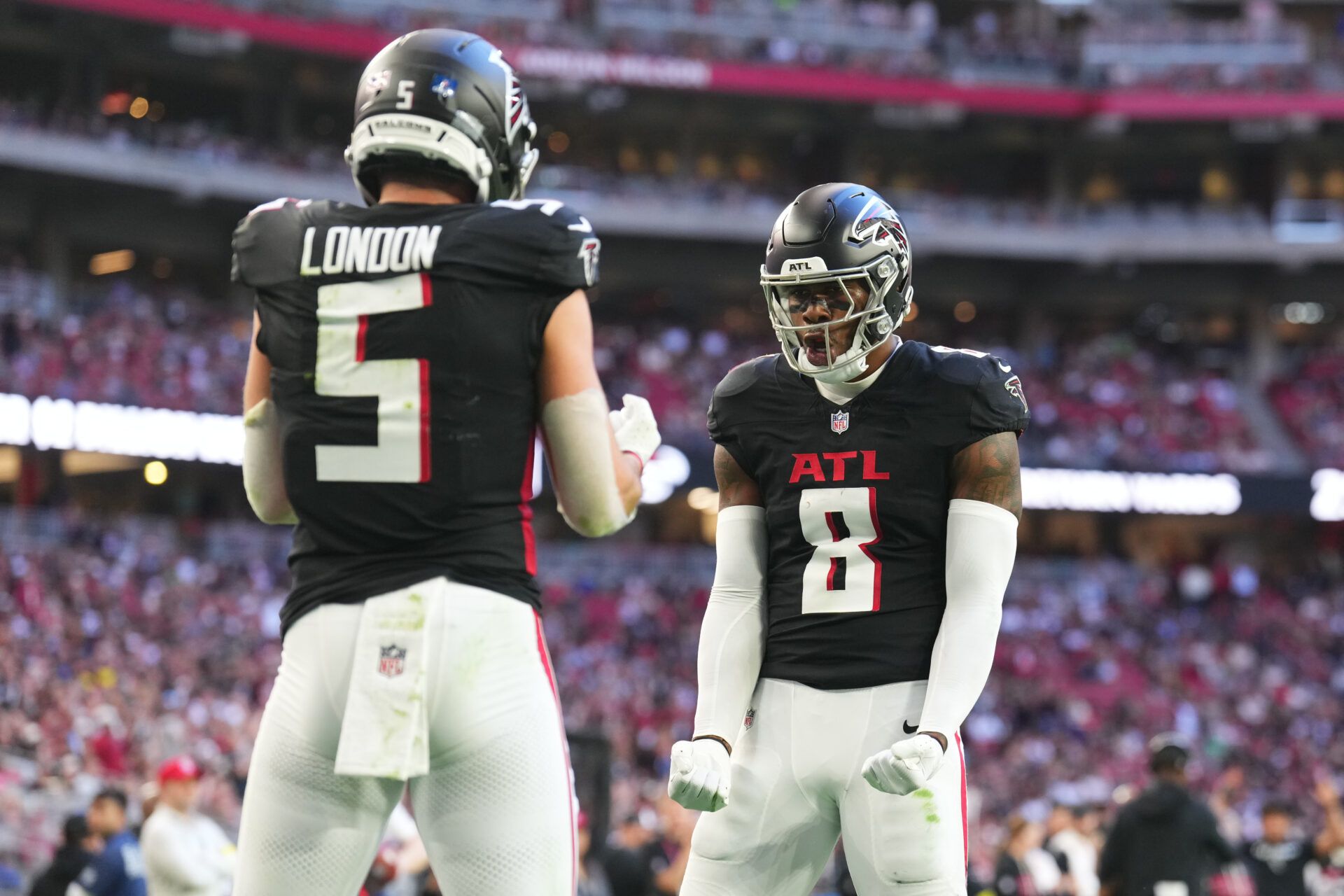
From 2021–2023, the Atlanta Falcons had three picks in the top 8 and spent each of them on a skill position player. Bijan Robinson, Drake London, and Kyle Pitts have looked like dynasty fantasy football stars at points, but this franchise has won seven or eight games in five straight seasons, failing to build the type of scoring atmosphere that they had hoped for.
Kevin Stefanski (an offensive coordinator/position coach prior to the Browns hiring him as their lead man in 2020) was hired to replace Raheem Morris, who largely had a defensive resume that included a three-year stint as the DC for the Rams prior to being Atlanta’s head coach).
Stefanaski was brought in with the hope that this team can finish, at the minimum, as a top-half-of-the-league offense, something they have done only twice in the past six seasons per our PFSN Offensive Impact metric.

How Kevin Stefanski Impacts Falcons Fantasy Value
At risk of stating the obvious, a coach is only as good as his pieces allow him to be. Schemes and creativity are great, but if there is a talent deficiency, only so much can realistically be expected.
Say what you will about Atlanta, but they aren’t lacking upside on that side of the ball. Stefanski was the head man in Cleveland from 2020–25, so that’s the statistical profile I’m going to be looking at in search of meaningful data points.
As the QB situation fell apart, so did this offense, but that’s going to be the case in any situation. If I have a fantasy skill player, I’m hoping that my organization can bring in viable talent under center and trust the coach to maximize the potential once that piece is in place.
During the first three years of his tenure in Cleveland, the team got viable play from the trio of Baker Mayfield, Deshaun Watson, and Jacoby Brissett. In each of those three campaigns, a very average Browns offense in terms of firepower ranked top-12 in Offensive Impact with their average mark being an 85.1.
Over the Stefanski era, there was a three-year run where over 31% of his team’s targets were funneled to his WR1. Amari Cooper was the opportunity magnet in 2022 (career high in TDs) and 2023 (career high in pass yards) before Jerry Jeudy stepped into that role in 2024 (career high in receptions and receiving yards).
DRAKE LONDON’S THIRD TD OF THE GAME 🔥
(via @AtlantaFalcons)pic.twitter.com/fp3Xy47KgB
— SportsCenter (@SportsCenter) November 2, 2025
Stefanski enters Atlanta without a first-round pick this season, but there has been some proof of concept when it comes to the offensive line. The Dirty Birds graded inside of our top 10 (per PFSN NFL Team OL Impact) in the three years prior to 2025, and even in a season where they struggled on the whole, they did grade as a top-10 unit six times.
RELATED: FREE Dynasty Trade Calculator
How optimistic should you be about the high-pedigree players attached to this offense moving forward?
Dynasty Rankings: Bijan Robinson, Drake London, and Kyle Pitts
I’m not breaking news to say that the Falcons’ trio is of significant interest across all formats. All of these players will enter 2026 aged 25 or younger, and each of them is coming off a very productive season.
- Robinson: RB2 (21.8 PPR PPG, behind only Christian McCaffrey)
- London: WR6 (16.8 PPR PPG, sandwiched between George Pickens and Chris Olave)
- Pitts: TE4 (12.4 PPR PPG, just ahead of Dallas Goedert)
Robinson is my 1.01 for redraft purposes, and while the position as a whole is deprioritized in lengthier formats (keeper and all levels of dynasty competition), he sits atop my RB rankings in all types of play.
Stefanski was the OC for the Minnesota Vikings in 2019, and in that season, Dalvin Cook turned 63 targets into 53 catches and 519 yards. He saw 90.5% of his receptions come no more than two yards down the field, helping him average 11.2 yards per catch after the reception, a mark no running back (minimum of 50 targets) has topped since.
At the receiver position, London’s hold on the leading target earner is as safe as any in the NFL. I went over the WR1 numbers that happened under Stefanski’s watch in Cleveland, and if you want to go back to that ’19 season with the Vikes, we saw more of the same.
In that year, Stefon Diggs had more receiving yards than any two of his teammates combined. When playing, he accounted for 31.4% of Minnesota’s receiving yards, a rate that is right in the range of London before he got banged up in 2025 (32.6%).
As for Pitts, you generally know the deal here: endless physical tools and limited consistency. His average depth of target has declined in each of the past three seasons, and that helped his catch rate soar in 2025.
RELATED: Dynasty Player and Position Rankings
The George Kittle injury makes a thin position even thinner, and, as maddening as Pitts has been, a little stability around him on top of the steps he took last season makes him a top-10 option.
Does that mean he’s a weekly asset? Probably not, and with the recent draft classes proving to be loaded at the position, his upward trajectory is only so high, but I do think he is a step (if not two) ahead of the streaming tier, and that gives you one fewer headache.
We know that not all development is linear, and that leaves the door open for Pitts to move into the second tier of dynasty options at the position, but even if that never happens, the price you’re being asked to pay now is fine for another five or six seasons of Tier 3 production.
We don’t yet have clarity on Atlanta’s 2026 plan under center, so these rankings are a bit fluid, but I’m comfortable betting on talent with Stefanski now at the controls.
- Robinson: Dynasty first rounder
- London: Top-10 WR with top-five upside
- Pitts: Top-10 TE with a narrow range of outcomes