
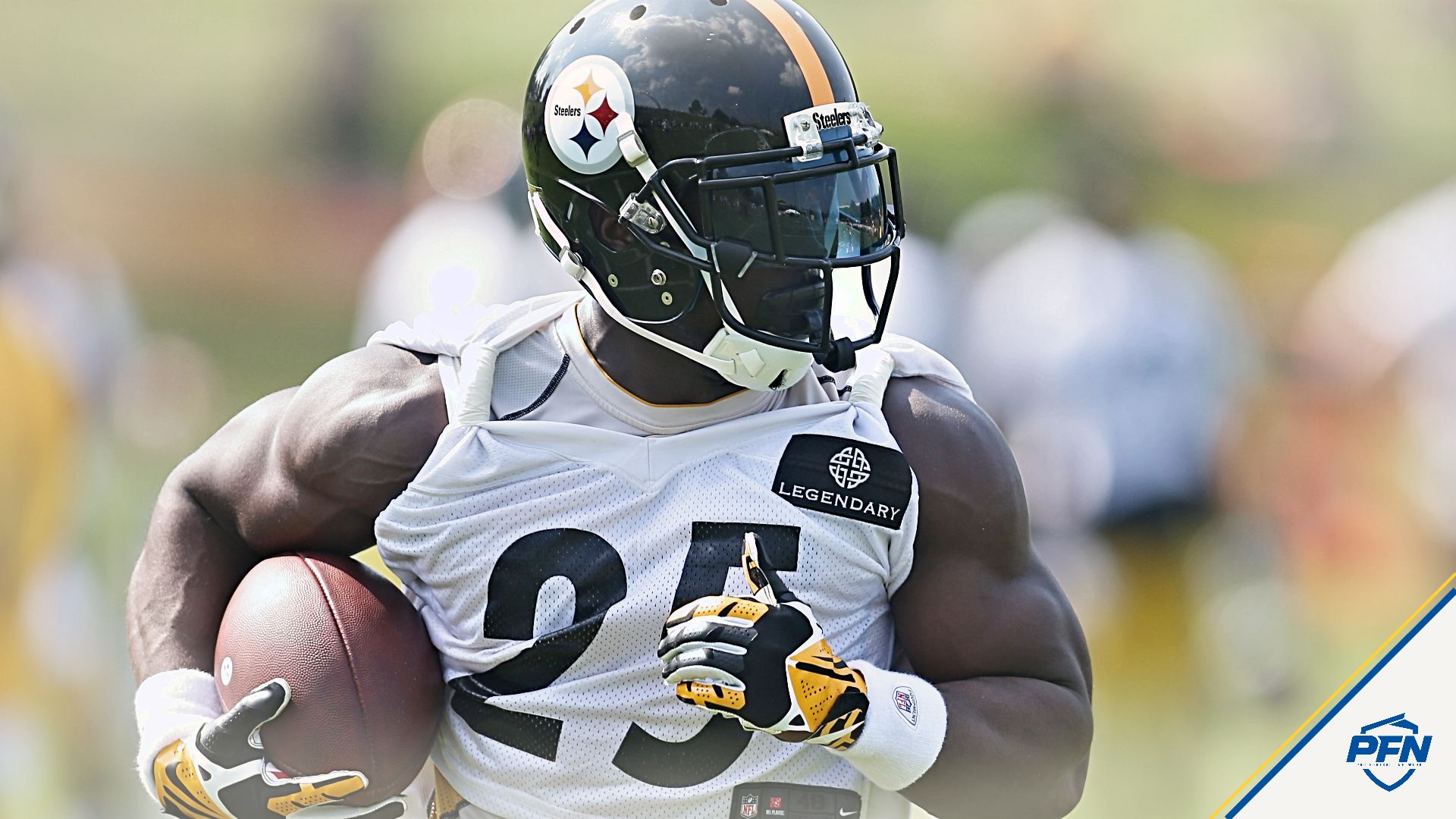
The phrase “protect the asset” sounds more at home in an NFL front office than underneath Friday night lights. Josh Harris believes elite high school running backs have reached the point where families need to start thinking that way anyway.
The former Pittsburgh Steelers running back argued that parents of top prospects should question massive senior-year workloads when significant NIL money could be waiting only months later. Former All-Pro cornerback Antonio Cromartie saw that advice very differently, turning the discussion into a debate over protecting young athletes versus teaching them toughness.

Antonio Cromartie Pushes Back on Josh Harris
Harris’ original argument targeted families of four- and five-star running backs. He encouraged parents to talk with high school coaches about managing carries rather than automatically allowing a star player to absorb a workhorse workload.
“He doesn’t need 300 carries in his senior season when he’s slotted to make between $500k – $1M next year in college,” Harris wrote in his initial post. “It’s time to protect the asset.”
Cromartie was not buying it.
“Josh bro you gotta chill. This ain’t it. Let the kids play,” Cromartie wrote in his response. “And you know dang gone well if it was you, you would be playing. So stop telling this kids and these something you wouldn’t have done. Be real!!! That’s Like telling a QB don’t play. You teaching kids to be soft and Quit.”
Josh bro you gotta chill. This ain’t it. Let the kids play. And you know dang gone well if it was you, you would be playing. So stop telling this kids and these something you wouldn’t have done. Be real!!! That’s Like telling a QB don’t play. You teaching kids to be soft and Quit
— COACH ANTONIO CROMARTIE (@CRO31) September 1, 2026
Cromartie played 11 NFL seasons, earning four Pro Bowl selections and an All-Pro nod during a career that included stops with the Chargers, Jets, Cardinals, and Colts.
START PREPARING: PFN’s Free Fantasy Draft Simulator
Harris responded by arguing that Cromartie had mischaracterized his point. He was not advocating for prospects to sit out entirely.
“When did I tell the kids not to play? Did I even address the kids or did I address this to the parents?” Harris wrote in his response. “Not wanting a kid, who plays a position with the shortest shelf life, to get 30 carries a game when he’ll be making $750k – $1M in 8 months is soft?”
“Would you want a HS coach running your future NFL prospect child into the dirt, with no regard for his future, so he can win some games,” Harris continued. “When these guys are 29 years old and already out the league (people) will call them washed and forget about how they have been running through ppl since they were 14 years old. If advocating to keep their touches under 300 in their senior year is soft then the word needs to be redefined.”
BE THE GM OF YOUR FAVORITE TEAM: PFN’s Free NFL Mock Draft Simulator
NIL Era Complicates an Old Football Argument
Harris knows the workload side of the discussion firsthand. He finished his Wake Forest career with 489 carries for 2,230 yards and 19 touchdowns before signing with Pittsburgh as an undrafted free agent in 2014. He appeared in five NFL games.
The exact future earnings Harris referenced are not guaranteed, which is an important distinction. NIL valuations and recruiting-market estimates can reach well into six or seven figures for elite prospects, but those figures should not automatically be treated as guaranteed salaries.
PREDICT THE NFL SEASON: PFN’s Free NFL Playoff Predictor
The disagreement between Harris and Cromartie is ultimately bigger than one recommended carry count.
Cromartie’s position reflects an old football instinct: if a healthy star player can help his high school team win, let him play rather than teaching him to avoid difficult workloads. Harris views the same situation through the economics and physical realities of modern football, particularly at a position notorious for short professional careers.
Neither former player is arguing that high school football does not matter. They disagree over how much risk a teenager should accept when college football can now put serious money on the other side of his senior season.
“Protect the asset” or “let the kids play” is a debate that barely existed a decade ago. In the NIL era, it probably will not be the last time former players land on opposite sides of it.
