
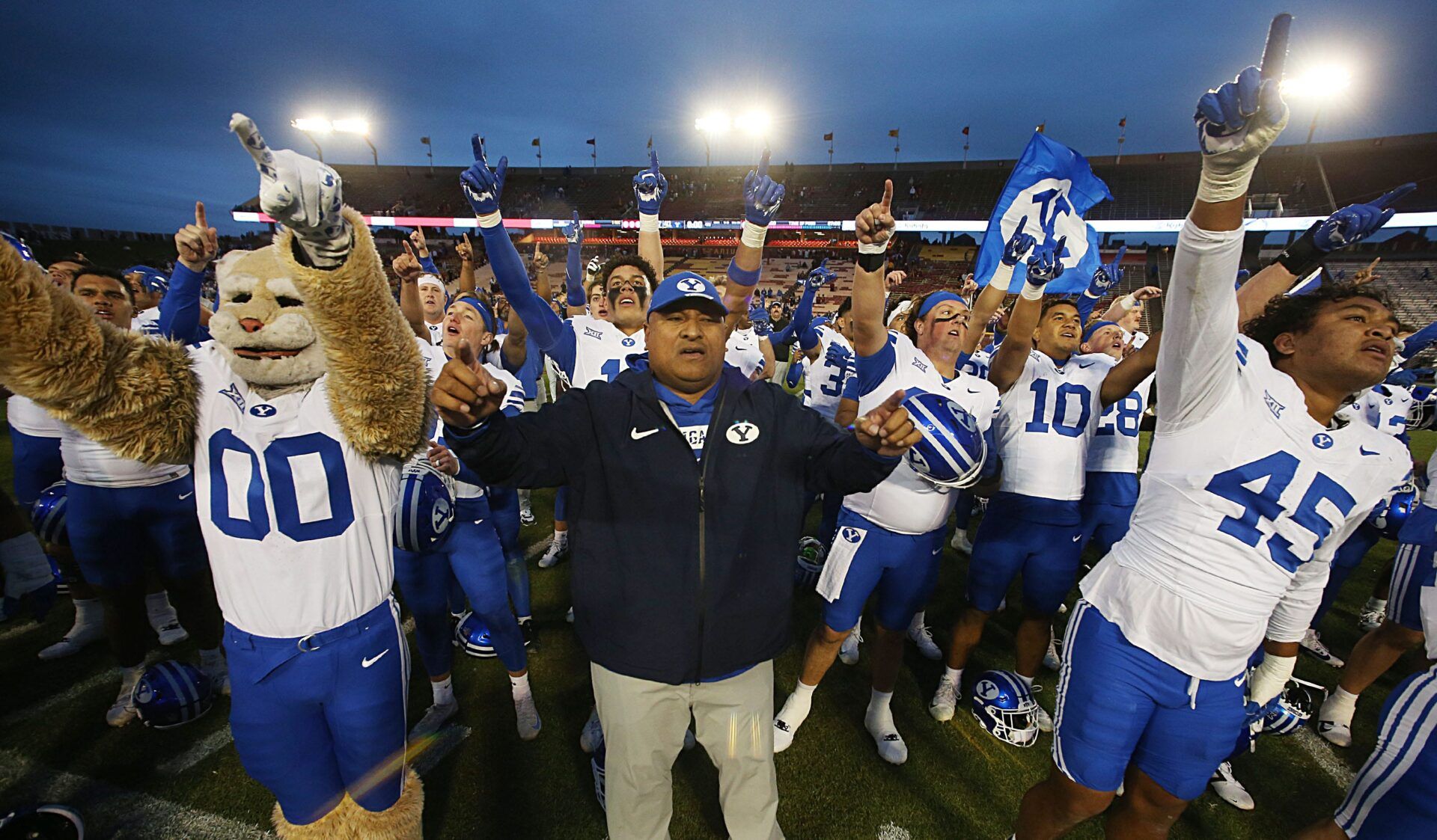
As rumors swirl around Michigan’s new head coach, Kyle Whittingham, and potential staff additions, BYU head coach Kalani Sitake offered insight into his coaching philosophy during the Pop-Tarts Bowl head coaches’ press conference.
Sitake was asked directly about the possibility of members of his staff leaving Provo for new opportunities, including speculation linking BYU associate head coach and defensive coordinator Jay Hill to Michigan.

Kalani Sitake Embraces Growth For BYU Football
That statement perfectly captures Sitake’s mindset as a head coach. Rather than viewing staff departures as setbacks, he embraces them as signs of growth and success for the others receiving notice and for the program.
“That’s why I am happy about the long-term deal at BYU ’cause it has been able to establish a foundation and make sure that it’s sustainable. We can overcome anything, whether it’s losing culture to opportunities, giving them options, I mean, it’s awesome. It’s great for those guys and their families,” Sitake said.
He believes in wanting more for the coaches and players who have been part of his program; more recognition, more opportunity, and more professional advancement. That perspective reflects a healthy, confident culture, one rooted in development rather than insecurity.
Sitake added, “I was talking to Brent (Brennan) last week, and you see the connections they have of the coaches. That’s what Nick Saban’s done. So, we will be foolish to not try to do the same thing. And that’s a good sign for Brent, that’s a good sign for all of us that people want our cultures to become leaders and coordinators and be part of the programs too.”
#BYU head coach Kalani Sitake spoke at the Pop Tart’s Bowl head coaches press conference today about the possibility of coaches on his staff leaving for other jobs.
Jay Hill’s name has been linked to Kyle Whittingham at Michigan.
“Its great for those guys and their families.” pic.twitter.com/kXjvW9GzgX— Sam Farnsworth (@Samsworth_TV) December 27, 2025
This philosophy also speaks volumes about BYU’s success under Sitake. Programs don’t pursue assistants from losing teams or dysfunctional staff.
When other schools come calling, it’s often because they want to replicate the culture, discipline, and mentality established by the head coach. In that sense, assistants become direct reflections of the program leader above them.
Sitake’s approach sends a clear message: success at BYU is not a ceiling, but a launch point for growth within and further opportunities elsewhere, if they arise.
Why Does Jay Hill Fit Michigan So Well?
Hill’s connection to Whittingham makes plenty of sense. As BYU’s associate head coach and defensive coordinator, Hill has overseen a defense that has been both consistent and impactful.
BYU’s defensive impact grades over the last two seasons highlight that success. In 2025, the Cougars posted an impressive 87 impact score on PFSN’s College Defense Impact (DEFi), ranking 13th nationally and second in the Big 12 behind Texas Tech.
The previous year, BYU earned a grade of 79.6, ranking 32nd in the country. That steady upward trend showcases effective coaching, player development, and schematic discipline.
BYU has long prided itself on a hard-nosed, physical style of football, an identity that aligns seamlessly with the Big Ten and Michigan’s traditional approach to the game. Much like Utah, where Whittingham built his reputation, BYU doesn’t consistently pull in recruiting classes stacked with four- and five-star prospects.
Instead, success has come through elite scouting, player development, and maximizing talent. Sitake and Hill have excelled in that area, building competitive teams despite not having the advantage of endless resources.
The results speak for themselves. BYU was firmly in the mix for both a College Football Playoff appearance and a Big 12 Conference Championship this season, coming up just short in each pursuit. That level of competitiveness is exactly the kind of winning culture Whittingham would want to bring with him to Ann Arbor.
Sitake’s willingness to celebrate the success of his assistants rather than resist it is a hallmark of strong leadership. His response at the press conference wasn’t just polite; it was genuine and sincere. It demonstrated confidence in his program, pride in his staff, and an understanding that success at BYU can open doors far beyond Provo.
Moments like these are why Sitake is so widely respected throughout coaching circles and across college football. He leads with class, perspective, and an unwavering belief in people, traits that continue to elevate BYU’s program and everyone associated with it.
