
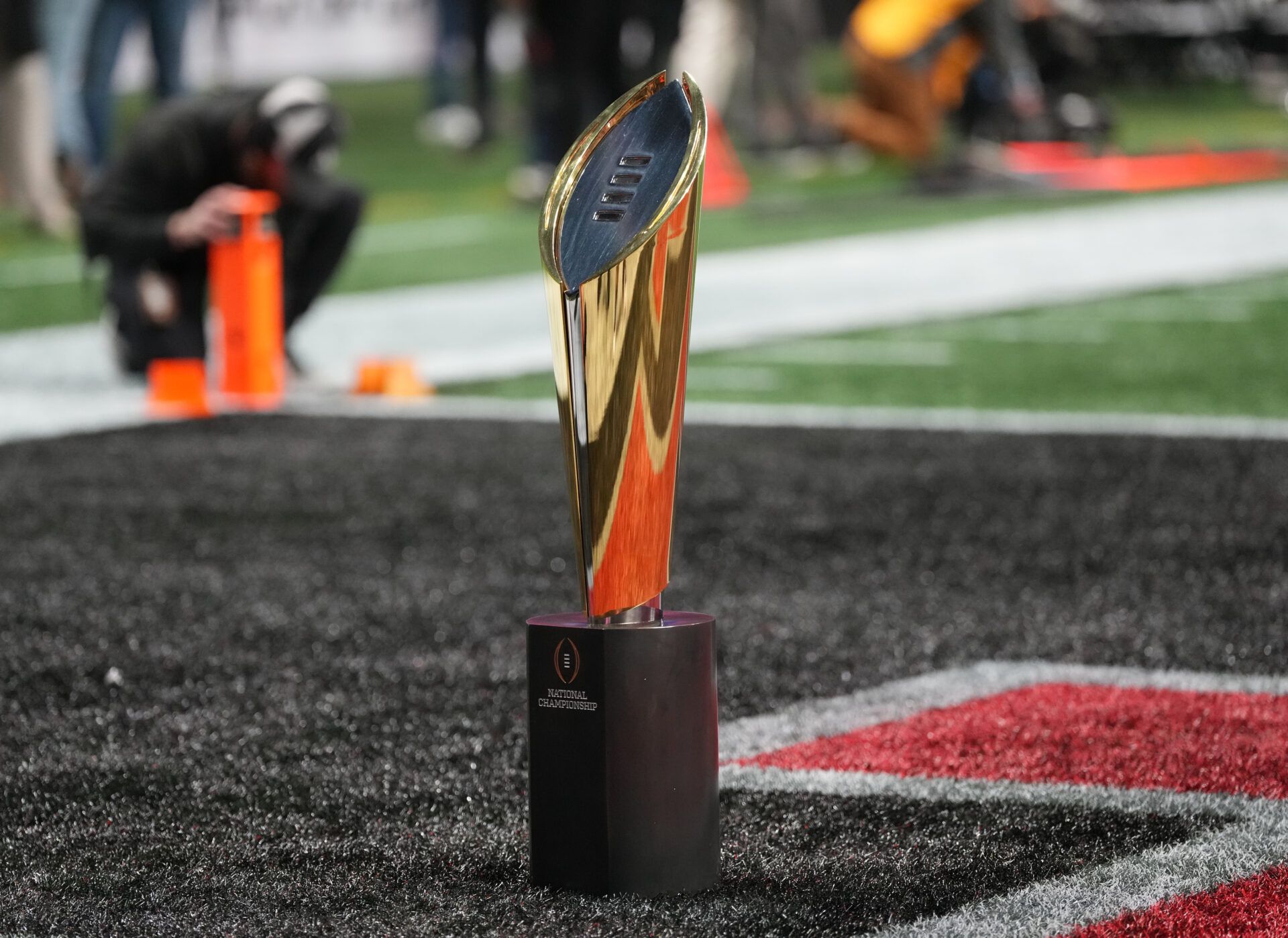
The 12-team College Football Playoff is now in its second year, but the debate over how teams should qualify remains as heated as ever. With the expanded format, conversations have turned to automatic bids, conference representation, and first-round byes.
One hot topic that resurfaced on CBS Sports’ College Football Pregame show was the idea of guaranteeing a spot to the highest-ranked Group of 5 champion, a proposal that CBS analyst Danny Kanell says makes “zero sense.”

Danny Kanell’s Argument: Merit Over Automatic Bids
Kanell’s argument is simple: The playoff should include the 12 best teams in the country, period. The Power 5 champions are already assured a spot, which makes sense given their schedules and level of competition. But giving an automatic bid to a Group of 5 champion, no matter their record, ignores the reality of competition.
“I was happy when they got the 12-team playoff, but guaranteeing a Group of 5 team in the 12-team playoff makes zero sense,” Kanell said.
Let’s dive into some numbers. According to the PFSN College Football Playoff Meter, the percentages for several Group of 5 teams are eye-opening. The top teams and their chances to win their conference are: James Madison (59.17%), USF (24.24%), Tulane (26.58%), North Texas (26.81%), Memphis (5.57%), Boise State (31.58%), San Diego State (28.43%), and UNLV (10.51%).
Of these, only James Madison, USF, Tulane, and North Texas have more than a 16% chance to make the CFP. What’s even more striking is that all of these teams currently have a 0% chance of receiving an at-large bid. That alone highlights just how reliant these programs would be on an automatic bid, even to be considered for the playoffs.
Otherwise, you might as well create a March Madness–style bracket where all Group of 5 conference champions automatically make the playoffs. That shouldn’t happen, though, because football players can only handle so much, and extending the season that far could compromise player safety. This is precisely why an automatic bid for the Group of 5 doesn’t make sense.
Boise State: A Case Study in Group of 5 Limitations
Take Boise State last year as a prime example. The Broncos ran the table for the most part, with their only loss coming to Oregon. Even then, it was one of Oregon’s weaker performances, as transfer QB Dillon Gabriel was still being integrated into the system, and the Ducks’ offensive line struggled to protect him.
Boise State also had a transcendent talent in running back Ashton Jeanty, who finished second in Heisman voting and nearly broke the FBS rushing yards record. However, once opponents stopped the run, the team’s limitations became apparent. That was evident in the CFP playoff game against Penn State, where Boise State lost by 17 points, exposing the reality that beyond Jeanty, the roster didn’t measure up to top-tier competition.
Fast forward to this season: There are some strong Group of 5 teams, such as USF, North Texas, and Memphis, among others, but none dominate at a level comparable to a Power 4 champion, especially given their schedules. Automatic inclusion for a Group of 5 champion could potentially exclude deserving Power 4 teams who finished strong but narrowly missed out, such as Oklahoma, Texas, USC, or BYU.
A Possible Solution: A Separate Group of 5 Brackets
A potential solution: a separate Group of 5 bracket, similar to the NIT in college basketball. This would give all Group of 5 programs a chance to compete meaningfully while keeping the playoff reserved for the absolute best 12 teams in the country. This is also done at the FCS level, which is great for the game, and teams still treat their championships with pride.
Another option would be to reduce the number of Group of 5 conferences, consolidating teams into a smaller set of leagues. Teams could be realigned into Power 4 conferences if they receive an invite, or placed in other conferences.
There’s even the possibility of reviving the Pac-12 and expanding it again, helping to rebuild the Power 5 instead of just four conferences. Mega-conferences seem increasingly likely, with teams shifting from one year to the next.
READ MORE: Heisman Trophy Rankings: 5 Players Who Strengthened Their Resume in Week 11
Kanell’s “zero sense” argument isn’t anti-Group of 5; it’s pro-competition. The playoff should reward teams that prove themselves on the field against top-tier opponents, not merely those with a strong record in a weaker conference.
The CFP is the premier stage of college football, and ensuring that the 12 most deserving teams make the field is essential to provide fans with the highest level of competition and reward teams for their performance throughout the season. For fans and programs alike, that ensures the path to the championship remains truly competitive.
