
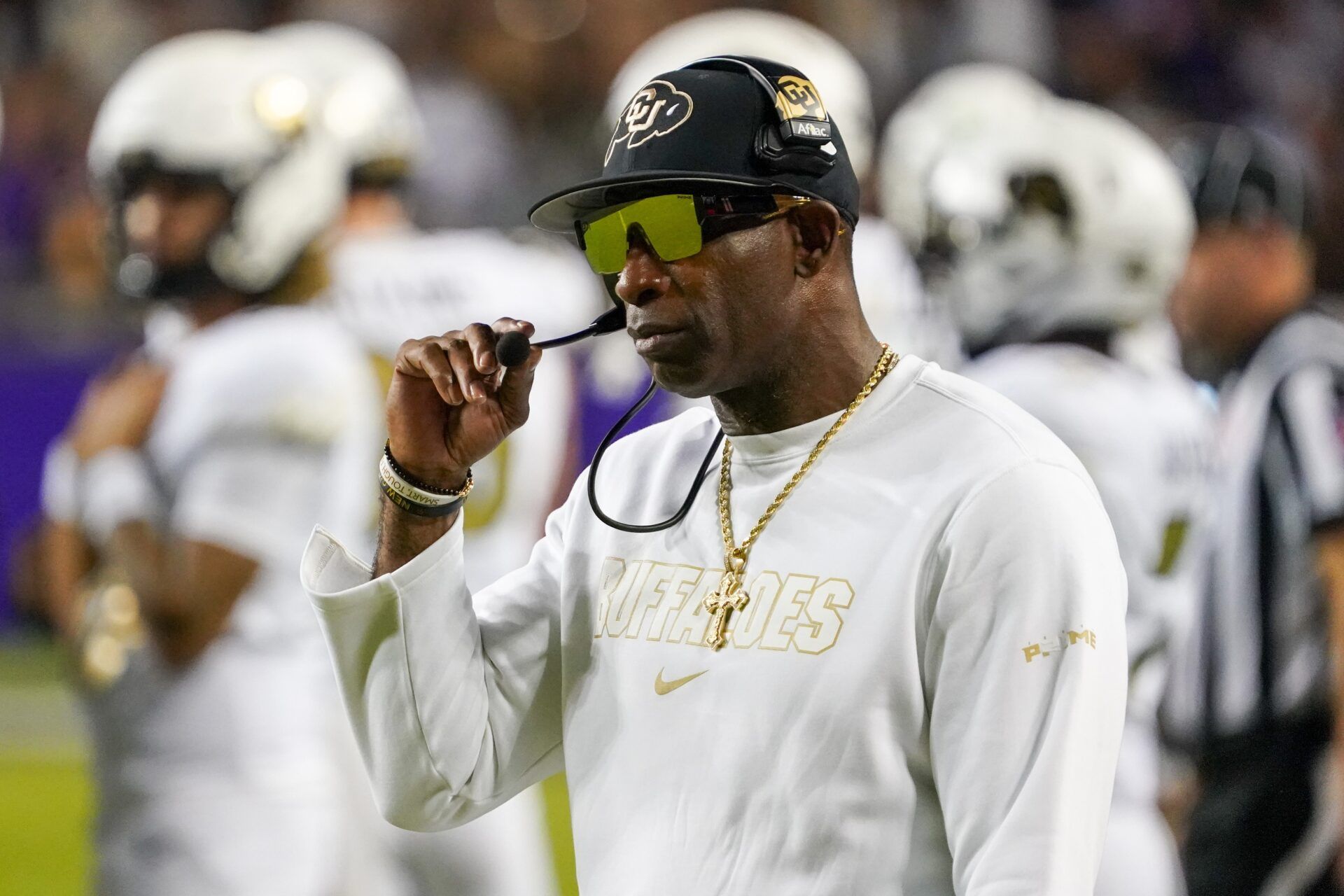
After Colorado’s 35-21 loss at TCU, Deion Sanders revealed that he believes his blood clot issues have returned. He’s scheduled for a medical evaluation on Monday to determine if the serious circulation problems that have plagued him since 2021 are back.
What Did Deion Sanders Say About His Health?
In a YouTube video from the “Locked on Buffs” podcast, host Kevin Borba broke down Sanders’ concerning postgame comments following Saturday’s defeat. The Hall of Fame coach was missing a shoe during the game, and there were visible signs that something was wrong before he addressed reporters.
“I think I have more blood clots,” Sanders told media members after the loss to TCU.
Sanders has a medical appointment scheduled for Monday to determine the severity of his condition. The 58-year-old coach has battled serious circulation problems since 2021, undergoing 14 surgeries and having two toes amputated. He also recovered from bladder cancer earlier this year.
“Sanders has been dealing with blood clot issues dating back to 2021. He’s had 14 surgeries, he beat bladder cancer this past offseason, he’s had toes amputated, he’s been through the wringer, and I hope all is well, but I would have to say that I think those around Colorado are a little nervous about his health and if he’ll be able to continue on coaching in the long run,” Borba said.
The health scare comes as Colorado fights for bowl eligibility at 2-4, already facing questions about quarterback play and defensive breakdowns. Now the program must wonder if Sanders can physically handle the grind of a rebuilding season that’s gone sideways.
How Does Sanders’ Health Uncertainty Affect Colorado’s Season?
The Buffaloes need four wins in their final six games to reach bowl eligibility, a task that looked difficult even before Sanders’ health update. Colorado is 2-4 and 0-3 in Big 12 play and ranked 15th in the conference standings.
The on-field result hasn’t given anyone confidence. Quarterback Kaidon Salter threw three interceptions against TCU and has struggled to establish any consistency since becoming the full-time starter. Colorado averages just 25.8 points per game while converting 38.71% on third down. The defense ranks 94th nationally in stop rate, repeatedly allowing opponents to take control late in games.
That pattern has defined Colorado’s losses. BYU erased a 14-0 deficit to win 24-21. TCU broke a 21-21 tie with two fourth-quarter touchdown drives Saturday. The Buffaloes have shown they can compete for stretches but haven’t figured out how to finish, the kind of problem that typically requires steady coaching and leadership to fix.
Sanders provided that stability when he arrived from Jackson State, transforming Colorado into a national story and bringing credibility to a program that desperately needed it. Now, the foundation looks shaky. According to PFSN College Offense Impact (OFFi), the Buffs have an 80.8 offense impact score. But their B- grade is not significant, considering their C grade in PFSN College Defense Impact (DEFi).
The remaining schedule includes home games against No. 14 Iowa State and No. 25 Arizona State, plus road trips to Utah, West Virginia, and Kansas State.
If Sanders needs to step away for medical reasons, even temporarily, the Buffaloes face an impossible task. They need four wins in their final six games to reach a bowl while wondering if their head coach can physically finish the season. Colorado’s on-field problems suddenly look minor compared to the uncertainty now hanging over the entire program.
