
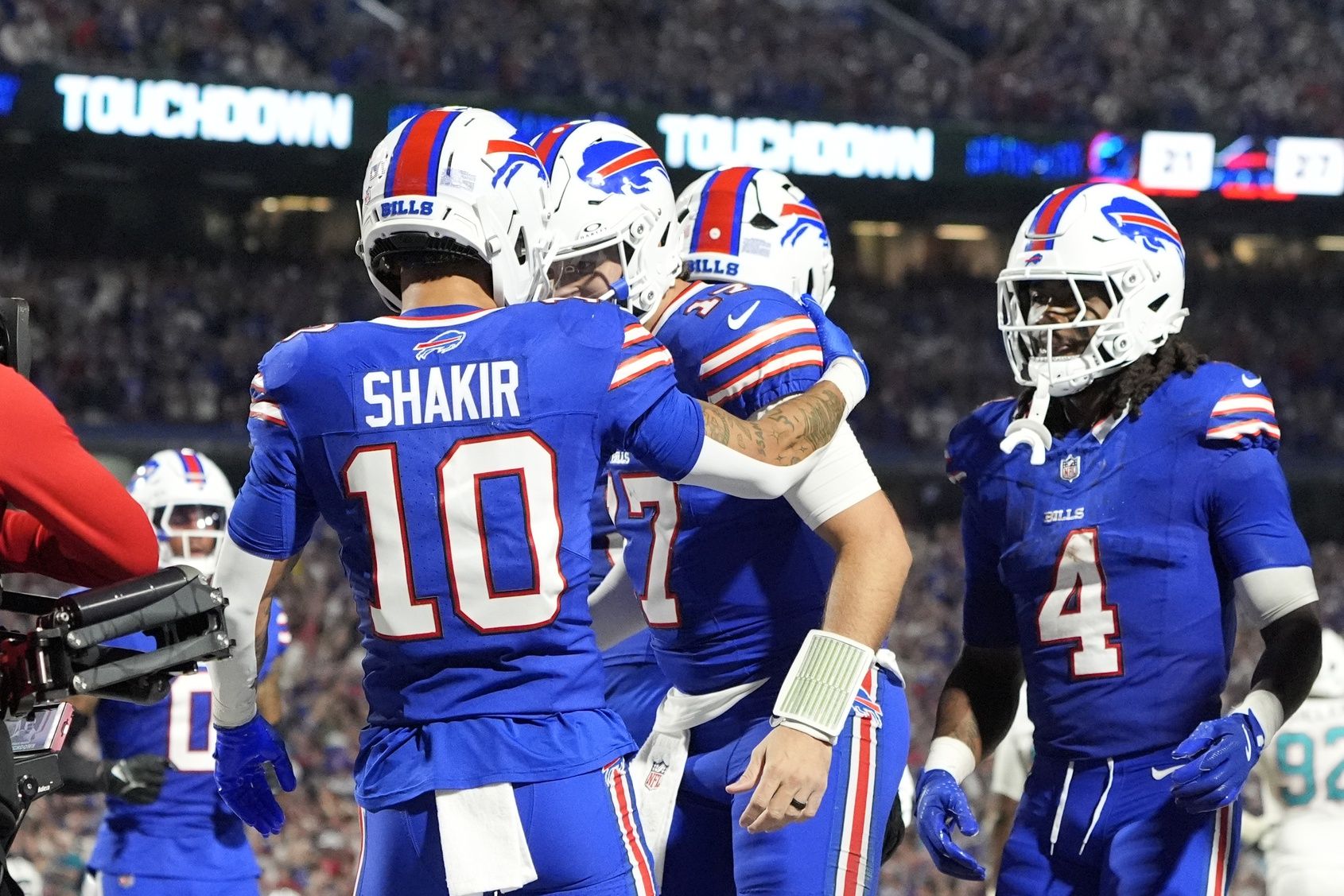
The Buffalo Bills continued their dominance over the Miami Dolphins in Week 3, but the story behind the box score comes straight from PFSN’s proprietary data. In a matchup that tested both teams on every snap, PFSN’s exclusive metrics reveal a contest far closer, and more nuanced, than the final 31-21 margin might suggest. From quarterback grades to special teams impact, these insights offer fans real clarity on why every yard, tackle, and crucial play matters so much in the broader AFC East landscape.
How Did Unique PFSN Metrics Define This Game?
At the center of Thursday night’s drama were Josh Allen and Tua Tagovailoa, two QBs whose PFSN QBi grades illustrate the razor-thin line between brilliance and heartbreak. Allen posted a 79.6 QBi, narrowly edging out Tagovailoa’s 78.0, a testament to just how effective Miami’s quarterback was under pressure-packed circumstances. Tagovailoa converted a remarkable 61.5% of his third- and fourth-down opportunities, ranking as the eighth-best single-game mark in his career and keeping the Dolphins’ hopes alive deep into the second half.
In contrast, Allen’s overall grade was shaped by stark contrasts depending on pressure. When the Dolphins couldn’t reach him, Allen shredded the defense to the tune of 0.63 EPA per dropback. But when pressured, Allen’s effectiveness cratered to -0.52 EPA per dropback, a swing of 1.15 that marked the eighth-largest gap in a single game for him since PFSN began tracking in 2019. For a quarterback with Allen’s pedigree, this extreme split speaks to just how vital offensive line play and quick decisions were on both sides.
The Bills’ offense as a whole delivered a B Impact grade, continuing a remarkable trend. Since Allen took the reins in 2018, Buffalo is now 40-4 in games where they earn at least a B on offense according to PFSN’s Impact grading. That blend of consistency and explosiveness is rare, and it’s how the Bills have built a winning identity in critical matchups.
Yet, special teams swung momentum at the worst possible times for Miami. After a pivotal roughing the punter penalty in the fourth quarter, the Dolphins recorded an F Special Teams Impact grade, their second failing grade in three weeks by PFSN’s metric. Early-season mistakes on special teams have left Miami searching for answers, particularly after also struggling in Week 1 against the Colts with just a 53.7 grade.
Linebacker Terrel Bernard was the defensive x-factor for Buffalo. His interception of Tagovailoa in the final minutes not only sealed the win but earned him a game-best 85.9 PFSN LBi, the fourth-best grade of his career and 14th among Bills linebackers since 2019. Bernard’s all-around performance stood out: he held Dolphins running backs to 3.0 yards per carry on four run tackles, and added a key tackle for loss.
In the locker room, Bernard credited position coach Al Holcomb’s film work, explaining: “That’s one of their top quick-game concepts. We’re in a three-deep zone and I just saw it and broke on it”.
Since he was drafted, Josh Allen has scored more offensive TDs than 12 other teams have in that same span. 🤯
– Jets (223)
– Giants (242)
– Jaguars (250)
– Panthers (257)
– Broncos (260)
– Raiders (264)
– Bears (271)
– Commanders (279)
– Steelers (281)
– Falcons (281)
-… https://t.co/mqqHSEx5aI pic.twitter.com/kaaUKCGqEL— PFSN (@PFSN365) September 19, 2025
Transitioning to the offense, James Cook continued his ascent with an 80.3 PFSN RBi, ranking him 12th out of 34 career games with 10 or more carries. His season-long body of work is even more striking; Cook currently sits atop PFSN’s running back leaderboard with an 88.3 overall grade, making him the RB every defense must account for.
For Miami, cornerback Jack Jones was a rare defensive bright spot. His 84.3 PFSN CBi ranked 23rd out of 368 qualifying Dolphins cornerback games since 2019. Jones played 33 coverage snaps, was targeted just twice, and allowed a single catch for zero total yards, also defending a pass on the other target. PFSN’s CBi not only tracks a cornerback’s coverage stats but also recognizes the value in limiting targets when consistently on the field, highlighting Jones’s impact beyond the numbers.
It’s this level of detail that sets PFSN’s advanced scoring apart. Each proprietary grade lends context missed by traditional stats, rating the nuances of impact across all 22 positions. Whether it’s a critical down, a high-leverage turnover, or a drive-changing special teams gaffe, PFSN’s data shows precisely what matters, and why.
As the season unfolds, both Buffalo and Miami will find their fortunes shaped by the moments that PFSN measures best. For the Bills, these metrics validate a formula that wins on the game’s biggest stages. For the Dolphins, the challenge remains to fix what’s going wrong before more tough lessons appear in the numbers