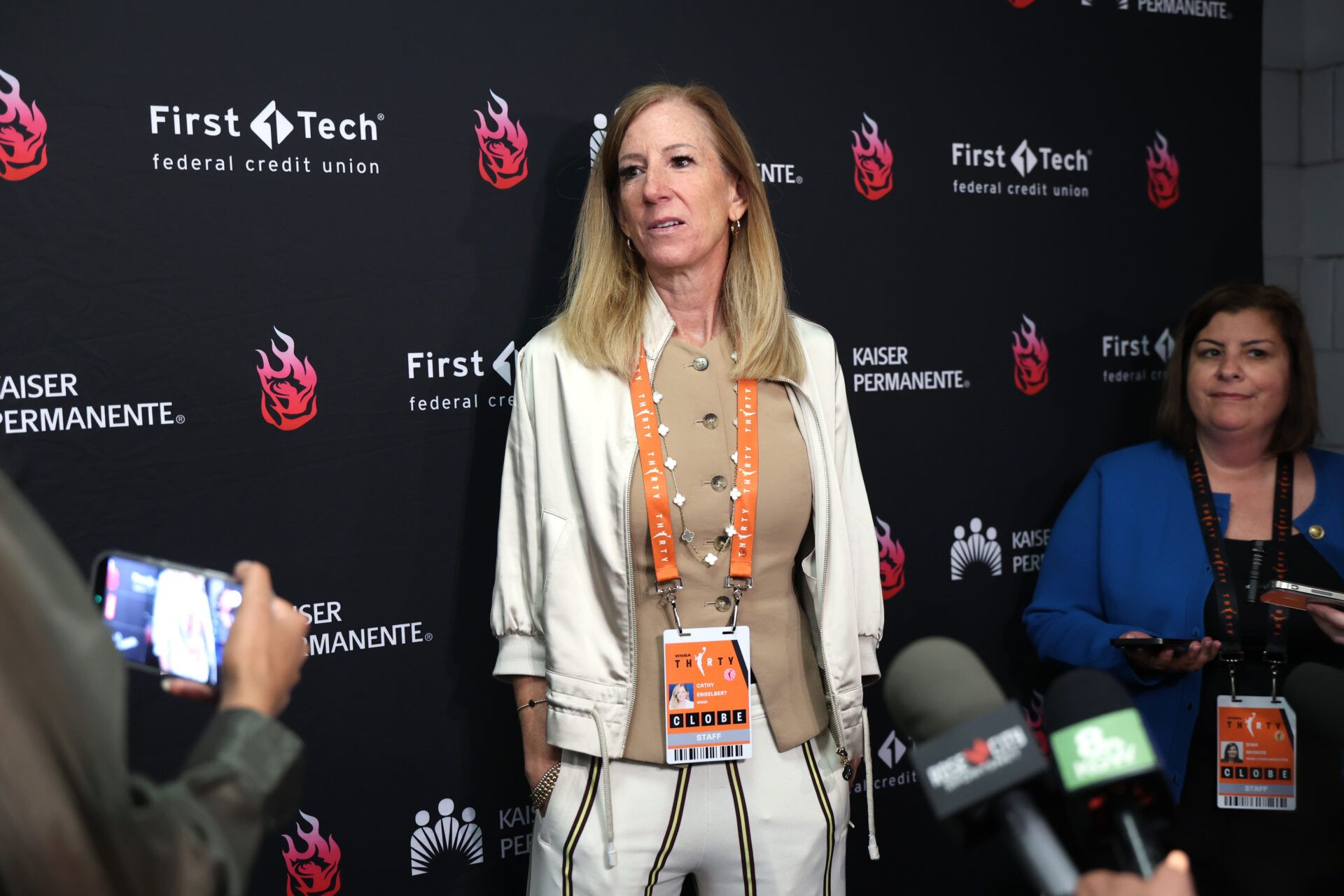
Cathy Engelbert’s leadership has faced growing scrutiny from within the WNBA this year, with some around the league openly calling for her removal. WNBPA president Nneka Ogwumike offered a different perspective on the situation during a recent television appearance.
Rather than pile onto the criticism, she used the moment to explain just how demanding the role actually is.
What Did Nneka Ogwumike Say?
Speaking on Boardroom TV, Ogwumike was asked about the qualities she believes make for effective leadership at the top of the league, a question that arrived amid mounting pressure on Engelbert following months of tension between the commissioner’s office and the players association.
“I know that’s not an easy job,” Ogwumike said. “Relationships span, not just from partnerships and the board of governors, but the players. Without the players, we don’t have a league. The players are very important. Any commissioner that has a strong relationship with the players, it’s going to be difficult for them to fail.”
.@nnekaogwumike…future WNBA commissioner? pic.twitter.com/PCHoYsUB2D
— Boardroom (@boardroom) August 20, 2026
“But I also understand when people speak about the commissioner role, there is so much I don’t know about and so much I would have to learn for me to be ready for that,” she added.
The comments reflect a more nuanced position than some of Ogwumike’s earlier remarks on the subject. She has previously praised Minnesota Lynx star Napheesa Collier’s public criticism of Engelbert as an important act of leadership.
As president of the players association, Ogwumike has played a central role in the league’s ongoing collective bargaining negotiations, a process that has repeatedly exposed tension between the league office and its players.
Engelbert has publicly stated she has no plans to step down amid the criticism, telling reporters during her pre-Finals press conference last year that she has never been a quitter and remains committed to leading the league.
Ogwumike’s comments suggest she views the situation with more complexity than a simple call for Engelbert to go. By acknowledging both the difficulty of the role and the importance of a strong relationship with players.
The debate over Engelbert’s future comes at a pivotal moment for the league, which recently added its first expansion team since 2008 and has announced plans to grow to 18 teams by 2030, alongside a new $2.2 billion media rights deal that begins next season.
Those business gains have often been cited by Engelbert’s supporters as evidence of her effectiveness, even as players continue to voice frustration over communication and trust issues at the league office.
