
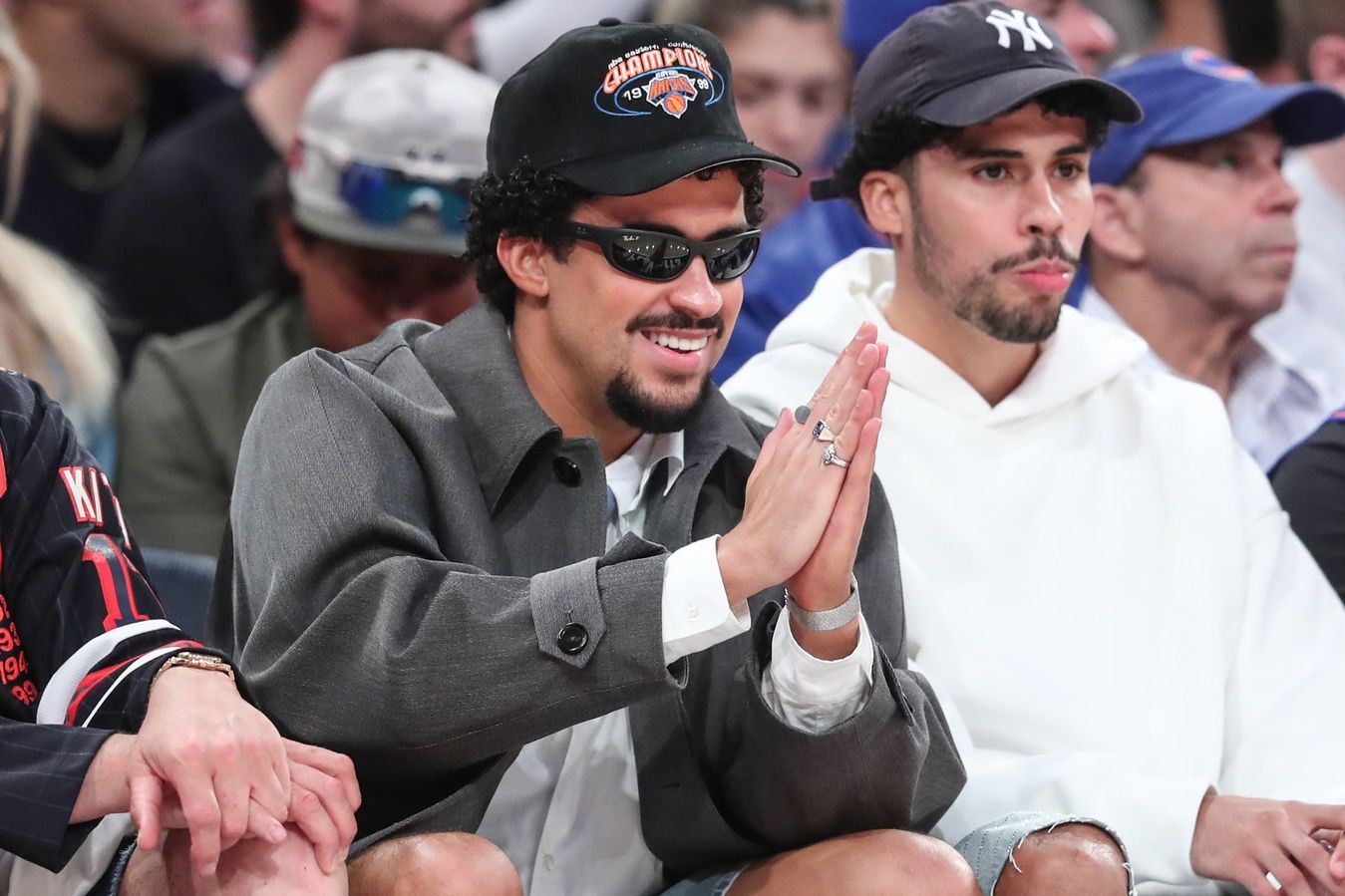
The NFL’s decision to stick with Bad Bunny as the Super Bowl 60 halftime headliner has sparked intense political and cultural debate, but one statistic sharply underlines why the league is not backing down.
In a season where the NFL is aggressively targeting international growth and younger, more diverse audiences, the 31-year-old Puerto Rican star has opened 2026 as the most dominant male artist on the world’s largest music streaming platform.
Bad Bunny Tops The Chart For Most Streamed Male Artist On Spotify in January 2026
Together with his recent Grammy history and his standing in key demographics the league wants to reach, that streaming surge suggests why the NFL continues to view Bad Bunny as a strategic fit despite criticism from high-profile political figures.
According to Chart Data, Bad Bunny has been the most-streamed male artist on Spotify every single day of 2026 so far, leading the platform from January 1 through January 31. That daily streak reinforces a level of sustained global demand that few artists can match, arriving just days before his Super Bowl 60 halftime show in Santa Clara, California.
Bad Bunny was previously named Spotify’s Global Top Artist four times (2020–2022 and 2025), with more than 19.8 billion streams in 2025, and his album “Debí Tirar Más Fotos” was recognized as the service’s most-streamed album of that year.
His streaming dominance is intertwined with the league’s broader direction. The NFL has spent nearly two decades expanding its International Series, staging games in England, Mexico, Germany, Brazil, and other markets, while commissioner Roger Goodell has talked openly about wanting each team to eventually play a game abroad each season.
READ MORE: Top 100 2026 NFL Free Agent Rankings
Analysts note that Latinos have become the NFL’s fastest-growing fan base and represent a significant share of future viewership and revenue. Marketing executive Darlene Lopez pointed to the league “hitting that critical mass of 20% of the population being Latino, with $4.1 trillion spending power,” describing the pairing of the NFL and Bad Bunny as “a hole-in-one moment” that is “a little risky, and it’s going to pay off.”
Bad Bunny Gets Nod Of Approval From NFL Commissioner Roger Goodell Despite Heavy Criticism
The business rationale behind the NFL’s decision has not shielded it from a wave of political pushback. President Donald Trump has been one of the most prominent critics, saying he will not attend the Super Bowl and declaring, “I’m anti-them. I think it’s a terrible choice. All it does is sow hatred. Terrible.”
Other conservative voices have questioned Bad Bunny’s selection, with some wrongly labeling him “not an American artist” despite Puerto Ricans being U.S. citizens. Conservative group Turning Point USA is staging “The All-American Halftime Show” as counterprogramming.
Kid Rock, one of the performers at that event, said, “We’re approaching this show like David and Goliath. Competing with the pro football machine and a global pop superstar is almost impossible… or is it? He’s said he’s having a dance party, wearing a dress, and singing in Spanish? Cool. We plan to play great songs for folks who love America.”
Goodell, however, has publicly framed Bad Bunny’s halftime assignment as an opportunity for connection rather than division. Speaking at a Super Bowl week news conference, he called Bad Bunny “one of the greatest artists in the world” and stressed that the artist “understood the platform he was on.”
Goodell said the halftime stage is designed to “unite people and to be able to bring people together with their creativity, with their talent, and to be able to use this moment to do that,” adding, “I think Bad Bunny understands that and I think he’ll have a great performance.”
Recent polling suggests the public response is mixed but far from uniformly negative. An October Quinnipiac University survey found that 48% of Americans approve of the NFL’s decision to make Bad Bunny the halftime headliner, 29% disapprove, and 24% did not offer an opinion, with support especially strong among Democrats, Black adults, and Hispanic adults compared with White respondents.
