
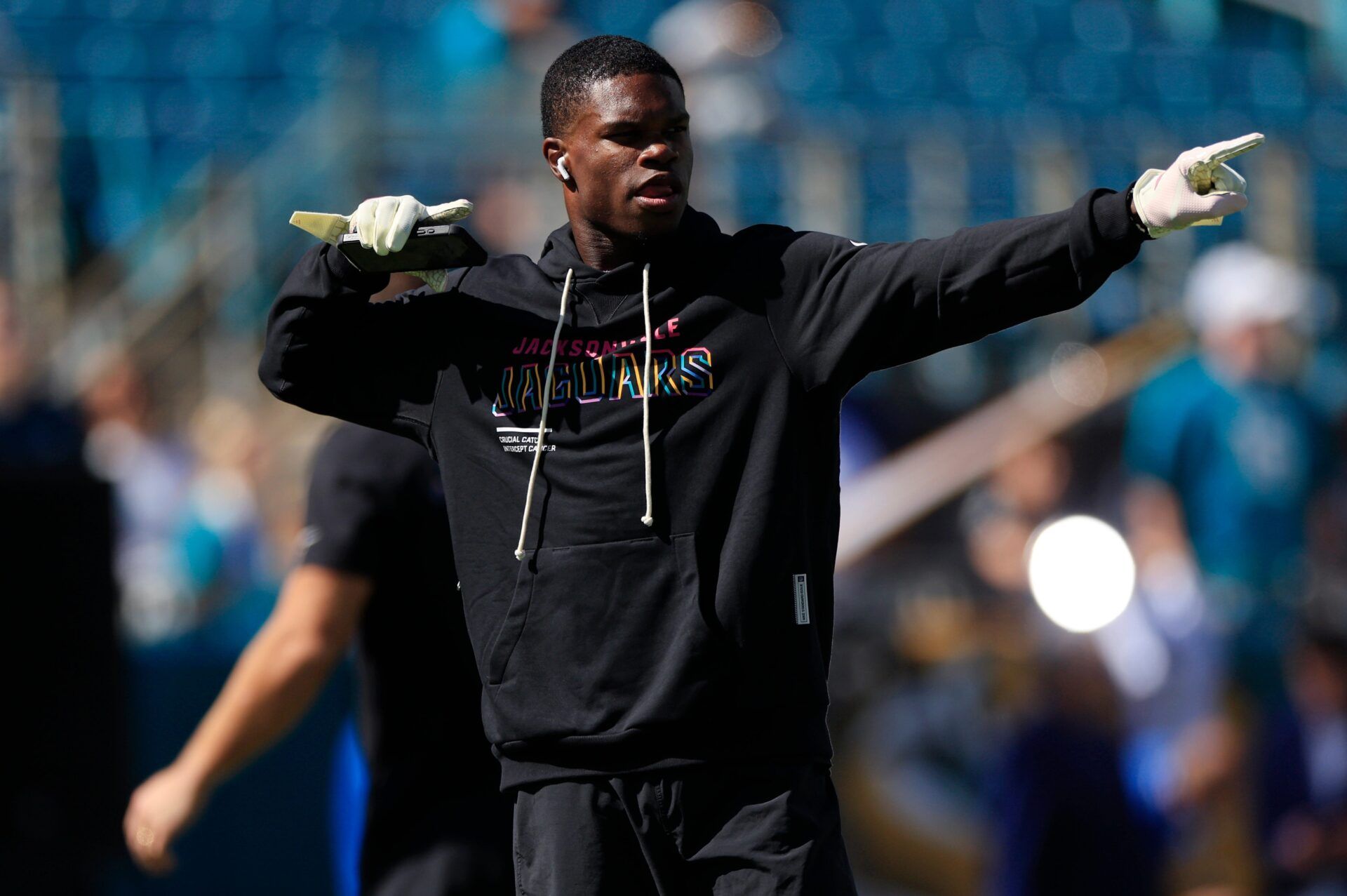
Since the moment the Jacksonville Jaguars drafted Travis Hunter, the football world has been buzzing with a single, burning question: How will an NFL franchise successfully deploy a generational, two-way phenomenon?
After Hunter’s legendary collegiate career, defined by grueling snap counts at both cornerback and wide receiver, the Jaguars have indicated a definitive direction for his professional future.
Ditching the Shohei Ohtani Expectations for Travis Hunter
The strategy is clear: allow Hunter to “major” in defense while keeping his offensive appearances highly specialized. Prominent voices in the sports media landscape are already applauding this measured approach.
For ESPN analyst Kevin Clark, prioritizing Hunter’s long-term ceiling as a shutdown cornerback over the sheer novelty of an ironman workload is the most logical path forward for Jacksonville.
Speaking on the Jaguars’ organizational blueprint for their new star, Clark didn’t mince words regarding the necessary shift in Hunter’s expected snap distribution.
“It’s 100% the right move,” Clark stated emphatically. “I don’t care about, nor does any Jaguars fan care about, Travis Hunter being the Shohei Ohtani of the NFL. No, let’s work on him being an All-Pro. And he’s going to be an All-Pro at cornerback, not wide receiver.”
During his rookie season, Hunter routinely averaged around 65 snaps per game, with the majority heavily skewed toward the offensive side of the ball. He showed flashes of brilliance but only earned a PFSN WR Impact Metric score of 68.9, which is a D+ and ranked him 87th out of all receivers for 2025. Moving forward, Clark advocates for a complete reversal of that ratio to protect Hunter’s body and maximize his on-field impact.
“I would flip that, have a major in defense, minor in wide receiver,” Clark explained. He acknowledged that there is still a dynamic role for Hunter in specific offensive packages but stressed that his primary focus must remain on the secondary.
The core of Clark’s argument boils down to NFL roster economics: positional value and scarcity. In today’s pass-heavy league, collegiate systems are producing high-level receivers at an unprecedented rate. Conversely, finding a true lockdown cornerback who can mirror elite wideouts and single-handedly erase half the field remains a monumental challenge.
“It’s just supply and demand,” Clark pointed out. “It’s a lot easier to find an elite wide receiver than it is an elite cornerback. They are fine on the offensive side of the ball. Offensive play caller, head coach, everything is good there.”
Forging a New Defensive Identity for the Jaguars
Beyond the macroeconomic view of NFL positions, Jacksonville’s specific roster dynamics necessitate a defensive centerpiece. With recent defensive turnover, including the loss of key personnel like Devin Lloyd, the Jaguars’ defense has been searching for a spark and a new foundational piece.
BE AN NFL GM: PFSN’s Ultimate GM Simulator
As Clark passionately concluded: “Work on the defense. You lost Lloyd. You have some identity issues. Travis Hunter is that identity.”
Ultimately, the Jaguars are choosing pragmatism over pure spectacle. By resisting the urge to force Hunter into an exhausting, even split on both sides of the ball, Jacksonville is positioning him to reach his maximum athletic potential. If the coaching staff sticks to this script, the NFL might not get its two-way unicorn, but Jacksonville will gain its next great shutdown corner.
