
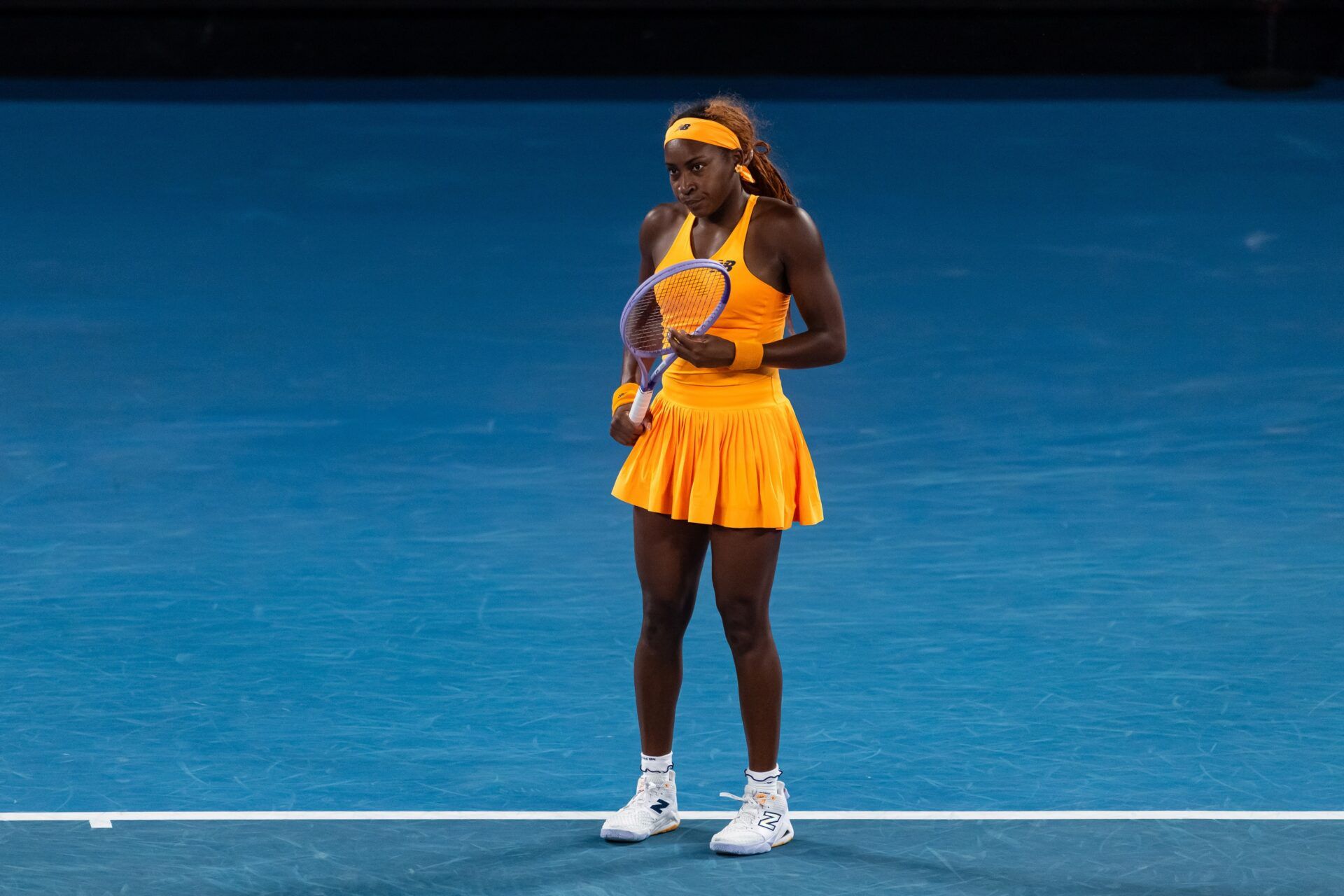
Many top players, including Coco Gauff, Carlos Alcaraz, Jannik Sinner, and others, have been demanding that the Grand Slam tournaments adopt fairer prize money distribution for lower-ranked players, only to receive no response. These players have spoken out multiple times, stating that, despite being the most revenue-generating tournaments, not all players receive equal rewards for their participation.
Now, these stars refused to meet with the representatives of the three Grand Slams – Roland Garros, Wimbledon, and the US Open – to set up a player council that would have provided a greater say in the championships.

Top 10 WTA and ATP Players Refuse to Meet Grand Slam Representatives
Following repeated requests from top players for equal pay with lower-ranked players, the French Open, Wimbledon, and the US Open agreed to hold a formal discussion. The meeting was scheduled for March at Indian Wells, but the organizers were accused of ignoring persistent requests for pay and player welfare and turning down the offer last week.
The letter read, “Before committing to another meeting, it would be more productive for the grand slams to provide substantive responses, individually or collectively, to the specific proposals the players have put forward regarding prize money at a fair share of grand slam revenues, and player health, welfare, and benefits contributions.”
Top players had urged the management to increase their prize money to 22% of their revenues by 2030, in line with ATP and WTA tournaments. The current scenario reveals the alarming condition behind the top-ranked players’ requests. World No. 1 Alcaraz received AUS$2.8 million for beating the 10-time Champion Novak Djokovic in Melbourne this Sunday, which is a part of the massive AUS$85 million prize pool. Despite the enormous amount, it represents only 16% of the tournament’s income.
The letter sent on behalf of the top players also said: “While the players recognise that governance structures can play an important role, they are concerned that prioritising council formation over the core economic issues risks becoming a process discussion that delays rather than advances meaningful progress.”
The main concern remains providing equal compensation to all participants, rather than slowing the process by adding another body. Tennis Australia aligned itself with the Professional Tennis Players’ Association (PTPA), which is currently suing the other three Grand Slams in New York’s district court.
What Coco Gauff, Carlos Alcaraz, Jannik Sinner, and Others Said About Player Compensation Increment
Initially, the organizers held a meeting to address these issues during the 2025 Roland Garros, but the governing bodies refused to engage in further such conversations. The Major tournaments then rejected a proposal in August, declining to meet during the US Open. Following this, Sinner expressed his feelings in an interview with the Guardian, emphasizing that the major tournaments “generate most of the revenue in tennis,” and “should make a fair contribution to support all players.”
Iga Świątek and Aryna Sabalenka showed their support for Sinner in a press conference during the 2025 WTA Finals in Riyadh, Saudi Arabia. The Belarusian stated that it is important for the governing bodies and players to come together to find a solution that meets all requirements. Świątek added that it would be “great” if the tournaments engaged in more “open conversations” with the players, noting that their demands include multiple major points, including player pensions and health plans.
As the debate made headlines, ATP Chairman Andrea Gaudenzi addressed the issue during the 2025 ATP Finals. He said, “There are obviously flaws in our system because of the legacy and having four slams independent, the ATP and the WTA, and the ITF. He emphasized the disparity in representation, stating that the players need a representative body to address such issues. As tensions continue to simmer, it highlights a growing struggle in tennis, with the Grand Slams facing increasing pressure to move beyond meetings and discussions to deliver meaningful change.
