
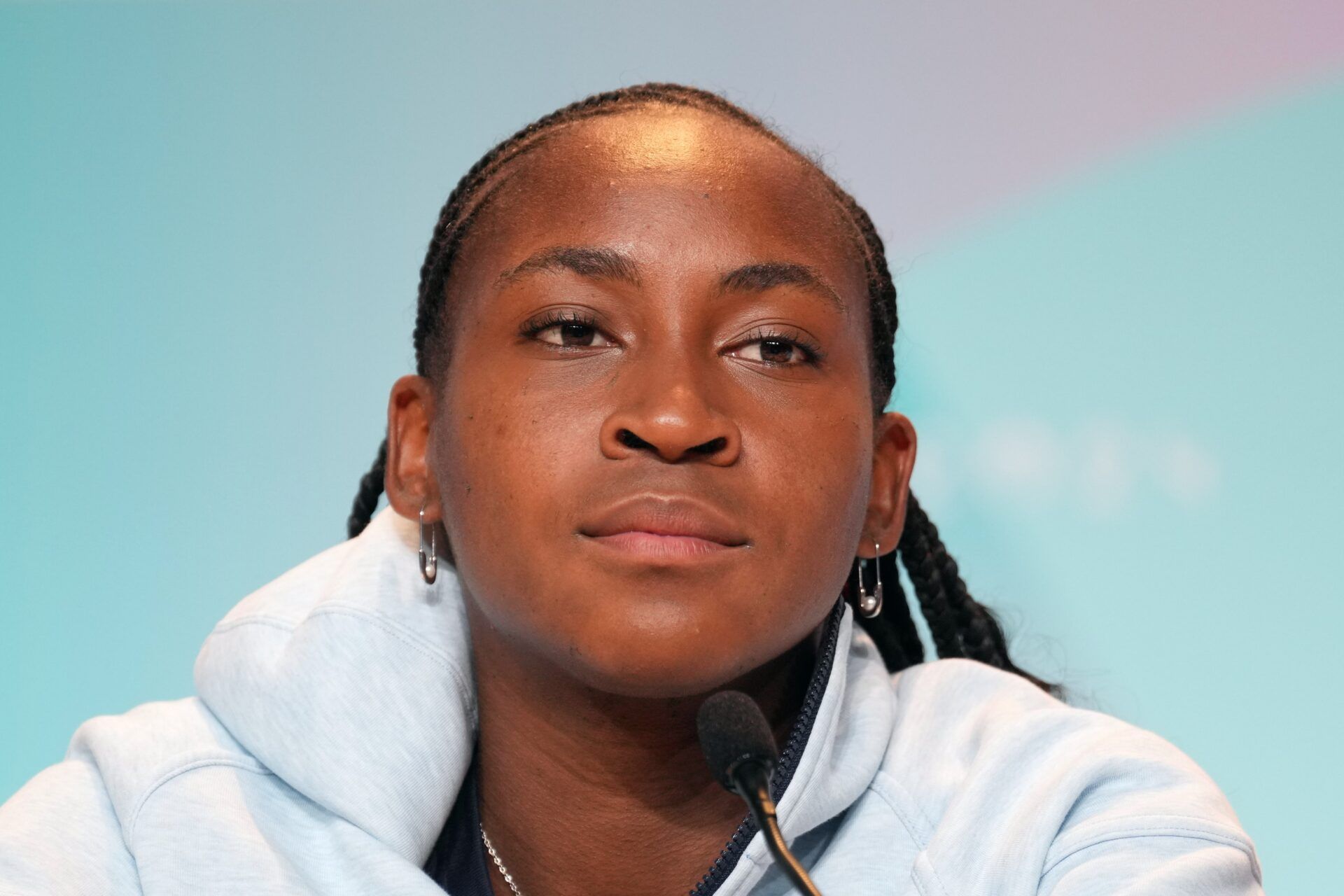
ATP chairman Andrea Gaudenzi addressed one of tennis’ most pressing flashpoints during the 2025 ATP Finals, speaking candidly about the mounting tension between the sport’s unified tour structure and the independent authority of the four Grand Slam tournaments.
Gaudenzi acknowledged that the standstill between players and the Slams has exposed fundamental flaws in the way the sport is governed, pointing to a structural imbalance that allows the sport’s most lucrative events to operate without meaningful player representation.
ATP Chairman Andrea Gaudenzi Highlights the Structural Imbalance Driving the Ongoing Conflict
The issue has been brewing for most of 2024 and 2025. Top ATP and WTA stars, including Coco Gauff, Jannik Sinner, and Iga Świątek, came together earlier this year to demand major reforms from the Grand Slam tournaments. They argued that, despite tennis’ booming revenues, players remain underrepresented in decision-making and underpaid relative to the revenue generated by the most significant events.
According to reports, the Slams rejected detailed proposals submitted by the world’s top 10 male and female players, which included calls for a larger share of revenue, improved welfare programs, and financial transparency.
Their request for a meeting during the US Open was also declined, with Slam officials reportedly citing an ongoing legal conflict involving the Professional Tennis Players Association and larger negotiations over the global calendar.
Gaudenzi’s comments during the ongoing ATP Finals placed a sharper spotlight on why these negotiations have been so difficult. He argued that the Grand Slams’ independence is both a strength and a weakness for the sport, especially when compared to the ATP’s governance model.
“There are obviously flaws in our system because of the legacy and having four slams independent, the ATP and the WTA and the ITF,” he said. “The slams, and I want to make this very, very clear, they are the best tournaments in our sport. They are incredible assets. The slams are probably the best way to showcase our sport.”
However, he also emphasized the disparity in representation. “If you look from a player perspective, players have no representation,” he explained. “In the ATP, 50 percent of the governance is players. Every decision we make, we need the approval of the player board representative that gets elected by the players council, which is 10 players representing the wider group.”
Gaudenzi noted that this creates a “very democratic environment” where all key decisions require input from both player and tournament councils. By contrast, he said the four Majors operate without needing to consult players. “Obviously, you have four independent entities. Maybe that’s to a certain extent an advantage because you just do things and you don’t have to ask everyone permission.”
Why Are Players Challenging the Grand Slams’ Prize Money Distribution Models?
Concrete financial disagreements have heightened the tension. Players have pointed to figures showing that Grand Slams distribute between 12% and 15% of their revenue as prize money, far below the roughly 22% given at major combined events like Indian Wells and the Italian Open. Wimbledon, for example, generated more than $555 million in 2024 but allocated only about 12.3% of the total to prize money.
Even with a significant bump in 2025, and a growing prize pool that reached $72.59 million, most of that increase favored semifinalists and champions, leaving early-round competitors with only modest gains. Meanwhile, talks at Roland Garros, Wimbledon, and later the US Open all stalled, largely because Slam executives refused to share financial details or commit to major structural changes.
The WTA Players Council proposed redistributing more winnings toward earlier rounds, but both Wimbledon and the US Open rejected the idea despite record-setting prize pools. The PTPA lawsuit, led by Novak Djokovic’s organization but not directly tied to the group of players behind the recent letters, has further complicated the landscape by accusing the tours and ITF of manipulating prize money and rankings to stifle competition.
