
The WTA Canadian Open continues to flourish in Toronto. While the likes of Aryna Sabalenka and Jessica Pegula have already been eliminated, several big names remain in contention for the title, including Iga Świątek, Naomi Osaka, and Elena Rybakina.
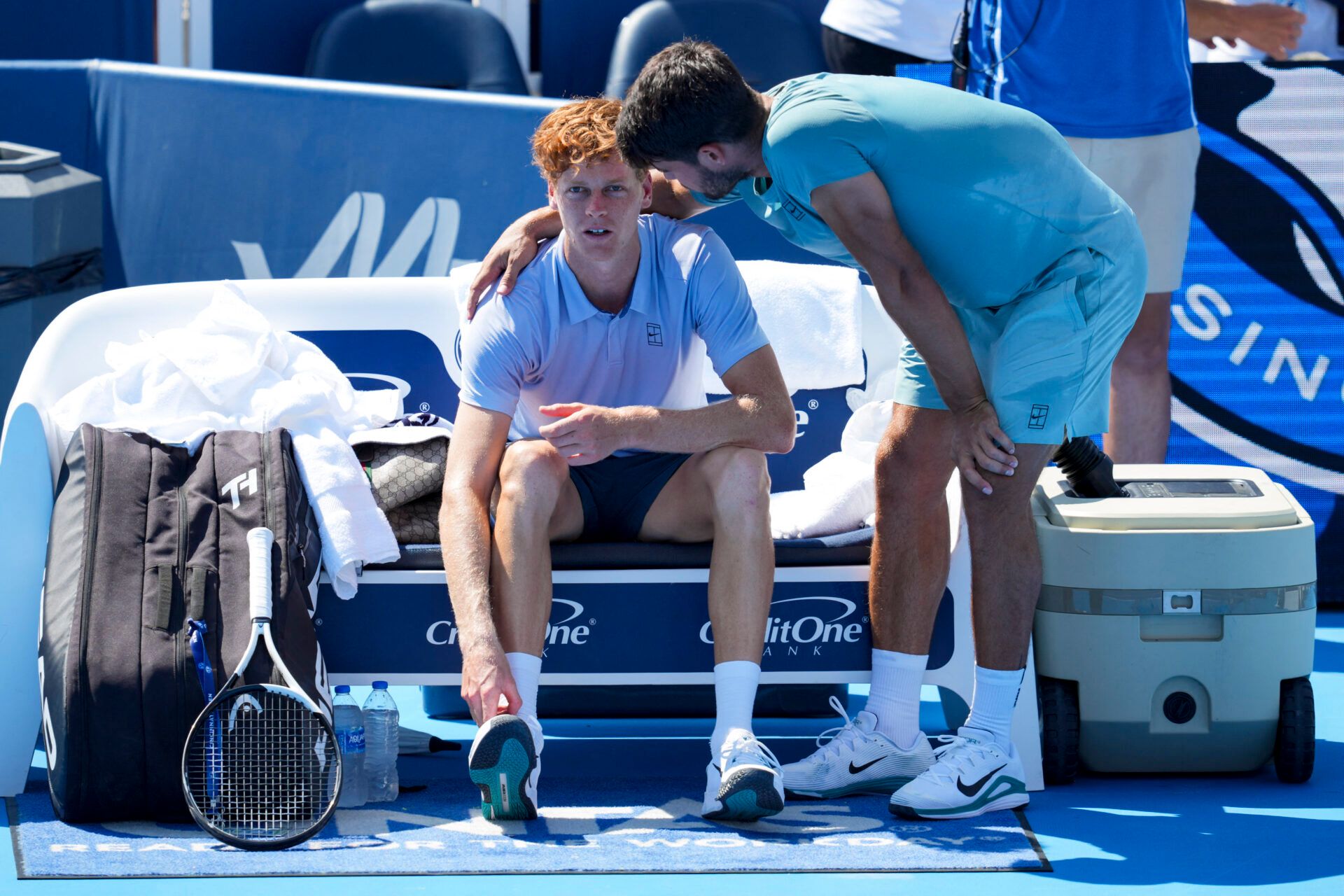
The same cannot be said for the ATP counterpart in Montréal. Many devoted and casual tennis fans had already written off the Masters 1000 event after it lost its three biggest stars — Jannik Sinner, Carlos Alcaraz, and Novak Djokovic — to withdrawals.
Their absence, along with a string of early upsets involving top seeds, has opened the door for a new generation of players to seize the spotlight and make a breakthrough run. Five of the remaining eight players are aged 22 or under. However, most are unfamiliar to casual viewers, while the lack of star power had already left tournament organizers concerned ahead of the main draw.
Mark Petchey Delivers a Hot Take Amid Jannik Sinner and Carlos Alcaraz’s Absence
Sinner and Alcaraz have dominated the Tour in recent years, prompting tournament organizers to heavily promote the two stars and their rivalry. With both players now also withdrawing from the upcoming Cincinnati Open, former British player Mark Petchey believes the sport’s focus should extend beyond its top two names.
“Our focus is so heavily weighted on the stars. Understandably so, but it’s so heavily weighted on the stars; it’s almost as though if the star pulls out, the tournament gets devalued. Or if the star didn’t win, the tournament almost gets asterisked,” he said while hosting the Drop Shot segment on the Tennis Channel.
“We’ve got Jannik, and we’ve got the kind of yin-yang with Carlos, but I do think we have to be a little bit careful that we don’t keep just putting the stars on the pedestal so that when they’re not there, the sport just gets taken down a notch,” Petchey added.
The tennis analyst put forward a bold proposal to virtually eliminate seedings, limiting them to the top four players at each tournament. Under his suggestion, the top four seeds would be guaranteed to avoid one another until the semifinals. Currently, all four Grand Slams and most Masters 1000 events have 32 seeds, meaning the top 32 players are protected from facing one another until at least the third round.
“I honestly feel that because of the way we look at rankings and the way that we look at seedings, we end up sort of taking away from the sport. I actually think we should get away with seedings. I’m sort of sitting on the fence of not going full medieval and saying zero seedings, but I am starting to think that maybe we just have four.”
Petchey explained that reducing the number of seeds would significantly amplify the drama, creating the possibility of top-10 players facing each other in the opening round. He added that if draws were released weeks in advance, tournaments could capitalize on high-profile clashes from the outset by introducing premium pricing rather than relying on a “slow burn” toward the quarterfinals, semifinals, and the final.
“In many ways seeding is about protection. If you put the sport first, you put that drama first. Can you imagine a player that’s ranked five in the world playing a player that’s six in the world? And also, if you did the draw once the entry list was done, almost six weeks out, people would have an idea of who’s going to play on what day. So you could dynamically sell tickets. Whereas at the moment it’s kind of like a slow burn like a little hockey stick up towards the end,” he added.
MORE: Jannik Sinner Issues Statement As Cincinnati Withdrawal Rocks the Tennis World
Petchey also drew comparisons with the NFL, calling it “the best sports product in the world” when it comes to promotion. He pointed out that the league places a strong emphasis on creating the most competitive product possible. Tennis, he argued, has similar potential, with tournaments effectively delivering a Super Bowl “virtually every single week” when they crown their champions.
