
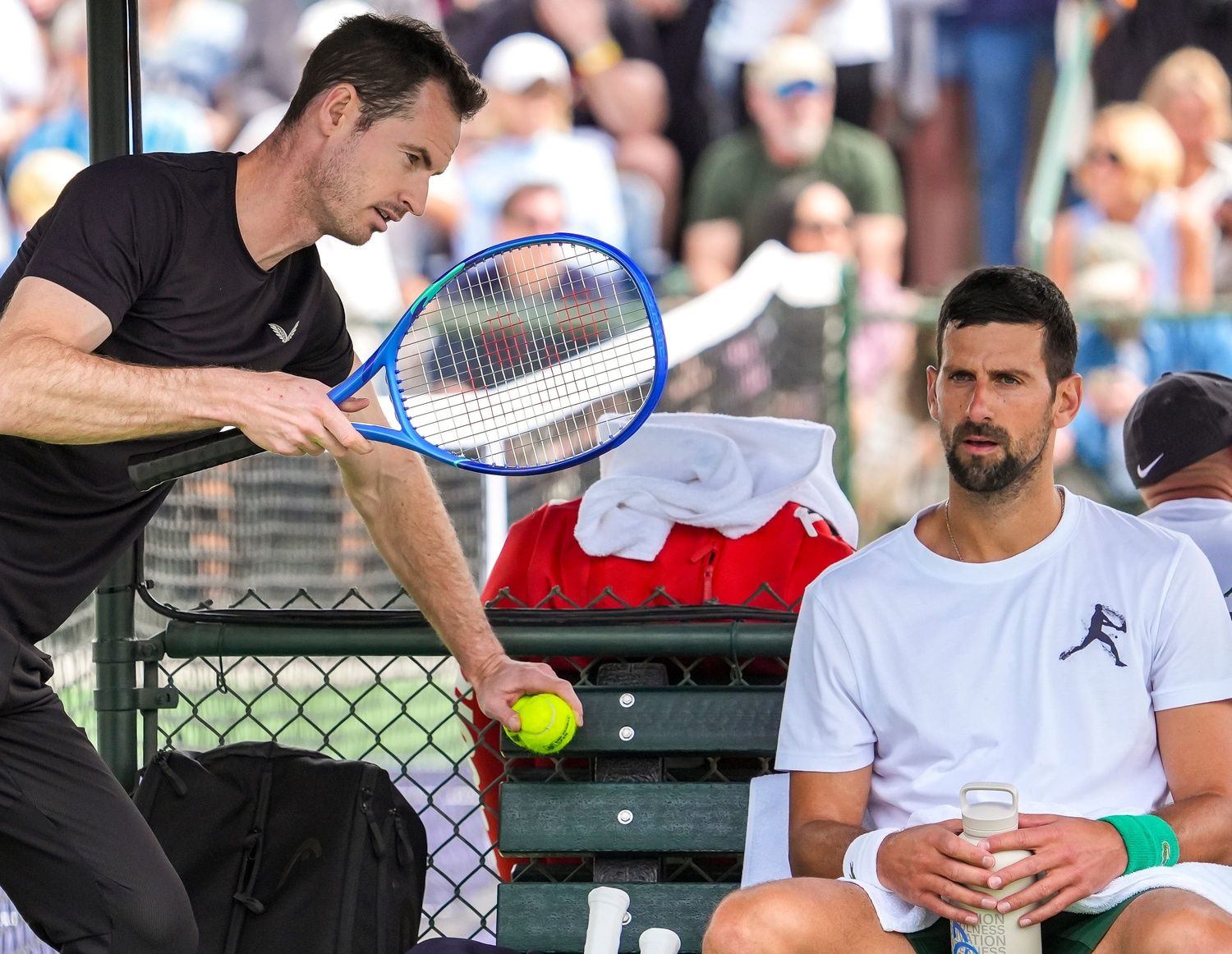
The collaboration between Andy Murray and Novak Djokovic promised to be one of the most compelling stories in recent tennis history. However, what appeared to be a perfect match on paper proved to be more challenging than many anticipated.
The partnership, which began in November 2024, was initially seen as a natural fit. Both players had spent years competing at the highest level, understanding the pressures and demands of elite tennis.
However, the partnership would last only six months, ending in May 2025 after what both parties described as a mutual decision.

The Technical Challenges Faced by Andy Murray
During a recent interview, Murray acknowledged that most former players struggle with the technical aspects of coaching, particularly when working with elite athletes who demand specific technical feedback.
“I would say that most ex players are sort of weak at the technical side of the game,” he told The Tennis Mentor’s YouTube channel. “At times, Novak was looking for quite a lot of technical feedback, and it was something that I didn’t really feel comfortable with.”
Murray added, “Like one in terms of how to teach somebody technique. I think that coaches that work with younger players and are used to doing that are actually stronger than a lot of the coaches that work on tour because, you know, once a player is sort of 20, 22 years old, you’re not trying to overhaul their game and their technique.”
The demands of coaching at the highest level extend far beyond strategic advice and motivation. Professional players often seek detailed technical adjustments to maintain their competitive edge. Murray found himself in situations where he needed to provide technical guidance but felt unprepared for this specific aspect of coaching.
“It’s like little changes here and there. So that was something that I definitely, if I was going to coach again in the future, I would want to work on and learn from someone who’s very good at that,” the British said.
Murray’s Learnings From a Challenging Experience
Murray admitted that the experience was more demanding than expected, requiring extensive preparation and analysis that differed significantly from his playing days. He spent considerable time studying video footage and preparing strategies, sometimes to the point of over-analysis.
The partnership also revealed the importance of communication skills in coaching. Murray acknowledged that he struggled with communication, something he had always found challenging, but which became crucial when leading a team and providing clear direction to a player.
Despite the challenges, Murray expressed that he enjoyed certain aspects of coaching, particularly the analytical side and match preparation. He found satisfaction in sitting courtside and viewing matches from a different perspective, using his extensive playing experience to provide unique insights about opponents and match situations.
