
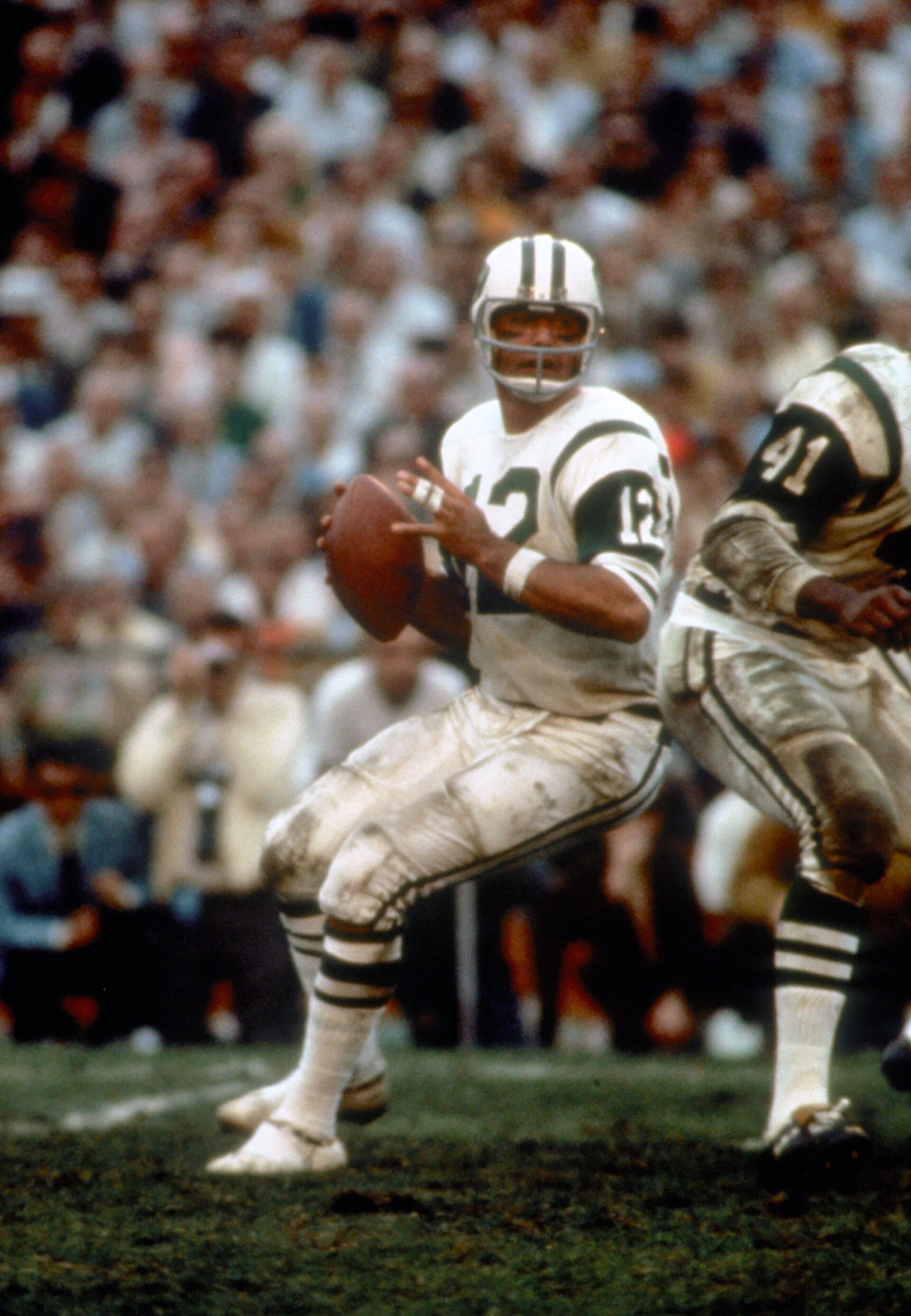
Five teams entered the Super Bowl as double-digit underdogs. All five left with the Lombardi Trophy and a permanent place in NFL lore.
The Super Bowl has produced 22 outright upsets across 59 games, but only five teams have overcome spreads of 11 points or more to win it all. These weren’t flukes. Each victory followed a blueprint the favored team never saw coming.
New York Jets (1968)
The New York Jets’ 16-7 win over the Baltimore Colts in Super Bowl 3 remains the gold standard. The Colts were 18-point favorites with a 15-1 record and had just shut out Cleveland 34-0 in the NFL Championship Game.
Broadway Joe Namath guaranteed the win three days before kickoff at the Miami Touchdown Club, and then his team backed it up with a suffocating defensive performance. The Jets forced five turnovers, intercepting starter Earl Morrall three times before Johnny Unitas entered in relief.
Namath completed 17 of 28 passes for 206 yards without throwing a touchdown and still won MVP. That Jan. 12, 1969, result gave the AFL its first Super Bowl victory and accelerated the merger that created the modern NFL.
Kansas City Chiefs (1969)
Kansas City made sure the Jets’ win wasn’t dismissed as an anomaly. In Super Bowl 4 on Jan. 11, 1970, the Chiefs dismantled the Minnesota Vikings 23-7 as 13-point underdogs. Len Dawson picked apart Minnesota’s famed Purple People Eaters defense, going 12-of-17 for 142 yards and a 46-yard touchdown to Otis Taylor.
MORE: Super Bowl 60 Trends, Insights, Stats, and Notes: Sam Darnold, Drake Maye Duel for the Lombardi
Kansas City’s defense forced five turnovers and held the Vikings to 67 rushing yards. The back-to-back AFL upsets ensured both leagues entered the 1970 merger on equal footing.
Denver Broncos (1997)
John Elway had lost three Super Bowls by a combined 96 points before returning to the title game in Super Bowl 32 as an 11.5-point underdog against the defending champion Packers. The 37-year-old Elway willed Denver to the finish line, including his iconic helicopter dive for a key first down in the second half.
Terrell Davis rushed for 157 yards and three touchdowns despite briefly leaving the game with impaired vision from a migraine. His one-yard plunge with 1:45 remaining gave Denver a 31-24 win on Jan. 25, 1998, and Broncos owner Pat Bowlen held up the Lombardi Trophy with four words: “This one’s for John.”
New England Patriots (2001)
Tom Brady’s dynasty started with an upset that people tend to forget. The 2001 Patriots entered Super Bowl 36 as 14-point underdogs against the St. Louis Rams’ Greatest Show on Turf. Brady had 16 career starts. Kurt Warner’s offense had steamrolled the league behind a 14-2 record. New England’s defense turned three turnovers into 17 points and built a 17-3 lead before Warner rallied to tie the game with 1:30 remaining.
Then Brady, ignoring John Madden’s on-air advice to play for overtime, drove the Patriots 53 yards in nine plays. Adam Vinatieri’s 48-yard field goal split the uprights as time expired on Feb. 3, 2002. What looked like a one-off Cinderella run launched a dynasty that produced six more Super Bowl titles.
New York Giants (2007)
The most debated entry on this list is the New York Giants’ 17-14 stunner over the undefeated Patriots in Super Bowl 42.
New England was 18-0. The offense had set scoring records all season, and the spread sat at 12.5 points. The Giants were a 10-6 wild-card team that had to win three road playoff games just to reach Glendale, Ariz.
New York’s front four made the difference. The Giants sacked Brady five times and held arguably the best offense in NFL history to 274 total yards. Trailing 14-10 with 2:42 left, Eli Manning led an 83-yard touchdown drive punctuated by David Tyree’s helmet catch, a play that still defies explanation.
Manning found Plaxico Burress for the go-ahead 13-yard score with 35 seconds remaining, and the only 19-0 season in NFL history died on the one-yard line.
Every Super Bowl upset shares a common thread. The underdog won in the trenches, protected the football, and refused to play like a team that was supposed to lose. The spread said one thing. The scoreboard said another.