
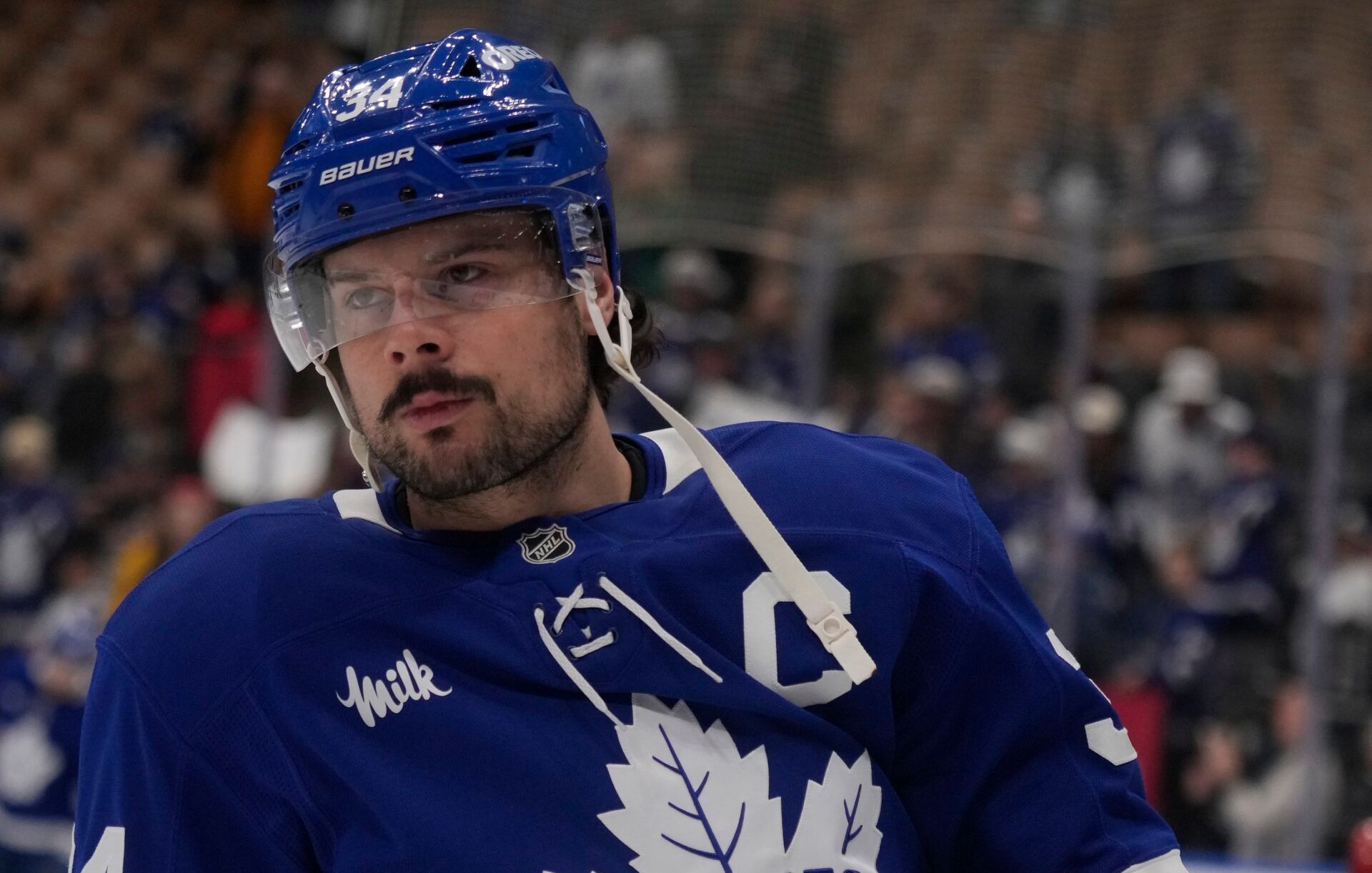
The Toronto Maple Leafs wrapped up a disappointing season with lingering concerns after their one sided loss against a playoff-ready Ottawa squad. The result once again highlighted the same issues that bothered the team all year, including shaky defense and a lack of consistency in important moments.
With the playoffs not their concern, and major changes happening in the front office, the organization now enters a defining offseason. That uncertainty has turned attention toward how the franchise plans to approach its biggest star, leading a Hall of Famer to call for a firm and decisive stance with Auston Matthews.
Chris Pronger Urges Maple Leafs To Take a Firm Decision on Auston Matthews’ Future
Matthews now sits at the center of Toronto’s offseason conversation, not just because of his injury-shortened campaign, but due to the broader identity crisis facing the franchise. The captain’s season ended early after a Grade 3 MCL tear, and while he is expected to be ready for training camp, the bigger issue lies in how the team builds around him moving forward.
Speaking on Sportsnet 590 The FAN, Hall of Famer Chris Pronger outlined a clear approach for the Maple Leafs’ incoming management group. He stressed that while communication with Matthews is necessary, the organization cannot allow its direction to be shaped entirely by its star.
“You’re not asking the player for permission… you’re telling him this is what we’re doing. You’re either in, or you’re out,” Pronger said, highlighting the need for a defined plan rather than ongoing flexibility.
That perspective comes at a time when Toronto is entering what many consider a major transition period. The team finished with a 32-36-14 record and 78 points, placing near the bottom of the Eastern Conference and ending a nine-year playoff streak. A late-season slide, combined with the departure of important players and front office changes, exposed structural flaws that can no longer be ignored.
Pronger also emphasized the importance of clarity in communication between management and its core players. “I think you want to understand whoever comes in, what that looks like, what their vision for the team is,” he explained, adding that Matthews should be informed about the long-term plan, but not dictate it. The balance, as he described, lies in collaboration without compromise, especially given the presence of no-move clauses.
The discussion becomes more complex when factoring in Matthews’ contract and influence within the organization. Signed through the 2027-28 season, he remains the centerpiece of the roster, but Pronger pointed out that even elite players must decide whether they align with the team’s direction.
“Either you want to be part of the answer, the solution, and we have to move forward with you in tow, and if you’re Matthews, what does an extension look like, all that, or it’s the opposite. They don’t want to be a part of whatever you’re presenting,” he noted, suggesting that tough conversations could shape the franchise’s next phase.
Matthews himself addressed the season candidly during his exit interview, taking responsibility for the team’s struggles.
“This was a tough year. It was a frustrating year. We didn’t meet the goals or expectations we set at the start, and ultimately that’s on me and us as players,” he said. “We didn’t do it well enough or consistently enough to put ourselves in a better spot. We love our fans, we understand their frustration, and we wear that alongside them.”
He also reaffirmed his commitment, saying, “I love being the captain of this team. I think it’s an incredible honor to wake up every day and wear this jersey, and I think that’s not lost on me, even, despite the circumstances and the way that this season went.”
Toronto’s offseason will include hiring new leadership, evaluating coaching stability, and addressing roster gaps that became evident throughout the year. The handling of Matthews, however, will define the tone of those decisions.
