
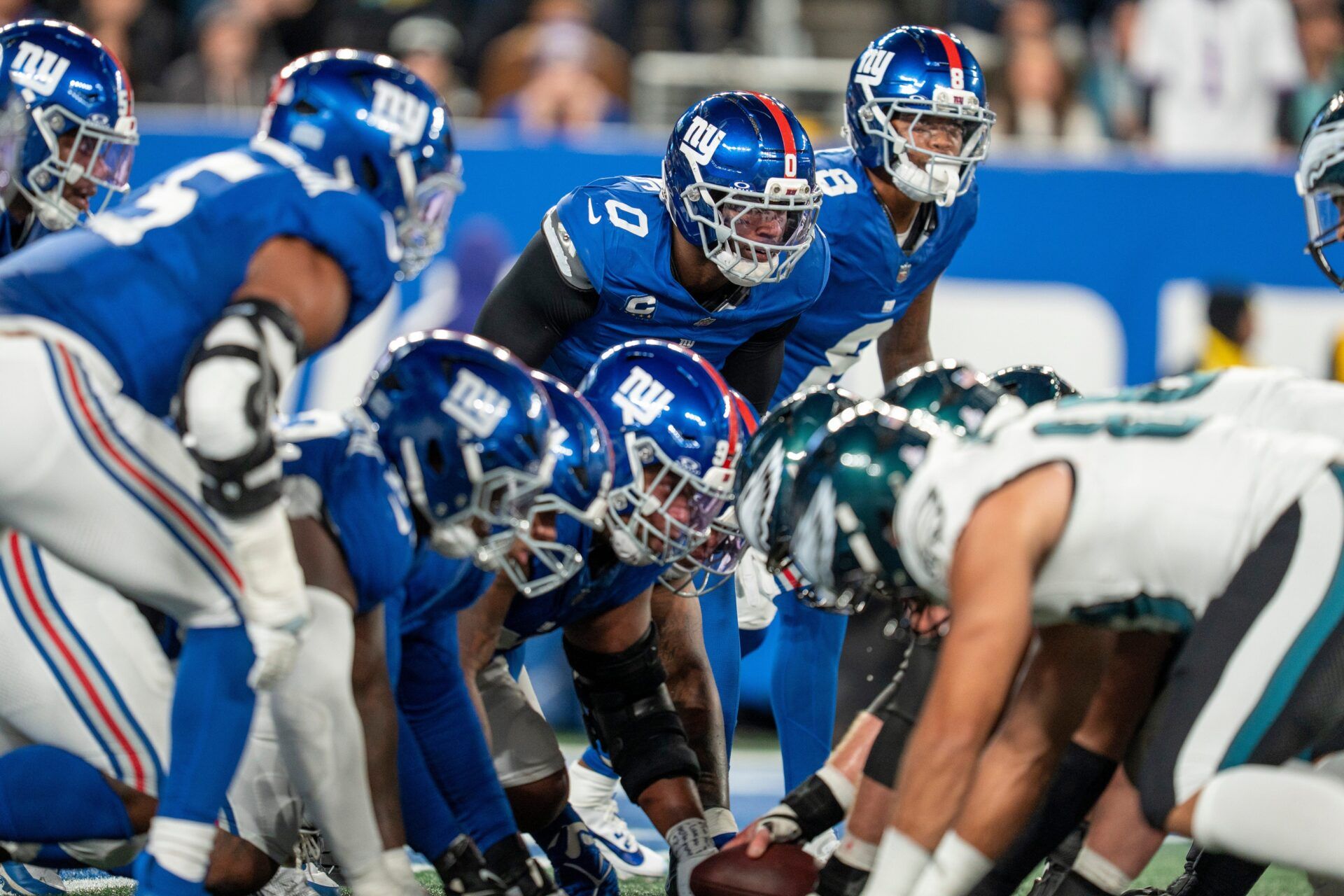
What began as a promising defensive makeover for the New York Giants has curdled into something far messier. Personnel upgrades and preseason praise gave fans reason for hope, but on the field, the unit has struggled to translate talent into stops and consistency.
Numbers do not lie. Behind the noise of big plays and individual splash moments, charted metrics reveal a defense that is surrendering third downs, bleeding points in the red zone, and allowing explosive plays at an alarming rate. Those trends are not just statistical footnotes; they explain why the Giants keep losing games despite flashes of dominant play from their front four.
Under coordinator Shane Bowen, the Giants have leaned into an aggressive front that seeks to generate early pressure and chaos. That approach can work when pressures consistently arrive or when the front has multiple pass rushers beating blocks. When pressures are delayed or blocked, however, the scheme leaves vulnerable spaces in intermediate coverage and requires near-flawless tackling in the second level. The result has been inconsistent performance — opponents either get flushed into the front or pick apart the soft zones behind it.
RB
D’Andre Swift / Kyle Monangai
Only the Cincinnati Bengals are allowing more fantasy points to opposing RBs than the New York Giants. The Giants run defense has been a buffet for RBs and this week it will be D’Andre Swift (if healthy) or Kyle Monangai feasting. Or maybe both.… pic.twitter.com/eSKsL0Ba7g
— Start Sit ‘Em – Fantasy Football (@StartSitEmFF) November 5, 2025
Metrics Paint a Worrying Picture
Third Down Conversions Allowed
Opponents are consistently extending drives against the Giants. New data show the team is among the worst in the league in opponent third-down conversion percentage — a clear sign that the defense is failing to get off the field when it matters most. That inability to force punts puts constant strain on the front seven and the special teams unit.
Big Plays and Explosive Gains Allowed
Big plays have been a recurring theme. In multiple recent games, the Giants have surrendered plays of 20 yards or more — a symptom of breakdowns in coverage, poor alignment, and missed tackles. Those chunk plays swing momentum and make comeback attempts much harder.
Overall Defensive Impact
PFSN’s Defense Impact metric currently ranks the Giants 26th, reflecting the combined effect of points allowed, explosive plays, third-down success, and drives that end in opponent scoring. That composite ranking underscores the idea that while the group shows talent, it is not yet functioning as a cohesive unit.
Personnel and Schematic Breakdowns Fuel the Decline
The Giants’ defensive problems run deeper than the numbers. While edge rusher Brian Burns has delivered star-level production, the rest of the front seven has been wildly inconsistent.
Dexter Lawrence remains a disruptive interior presence, but opposing offenses have exploited gaps when he’s double-teamed, especially on early downs. Kayvon Thibodeaux has shown flashes as a pass rusher but remains inconsistent in setting the edge, leaving wide lanes on outside runs.
— DIBLive (@DIBLive) November 5, 2025
The linebackers, led by Bobby Okereke, have been slow to diagnose plays and have missed key tackles in space, allowing short passes and screens to turn into chain-moving gains. The secondary hasn’t been much better, with miscommunication and blown assignments repeatedly leaving receivers open deep — contributing to the team’s high rate of explosive plays allowed.
All of these issues go back to a defensive scheme that hasn’t meshed with the personnel. Coordinator Shane Bowen favors aggressive fronts and blitz-heavy looks designed to create pressure, but when those rushes don’t hit home, the soft zones behind them are exposed. Offenses have learned to counter quickly with slants, quick outs, and screens — neutralizing the pass rush and isolating linebackers in coverage.
The result is a defense that thrives when it dictates tempo but falls apart when forced to react. Despite the individual talent, schematic discipline and communication remain the biggest weaknesses holding the Giants back.
Coaching adjustments can blunt some of the damage. More two-high safety looks in obvious passing situations could limit explosive plays, while improved tackling technique and tighter coverage assignments would reduce long drives. The Giants still possess game-changing pieces, but football is played in sustained drives, and the data show this defense losing those longer battles.
