
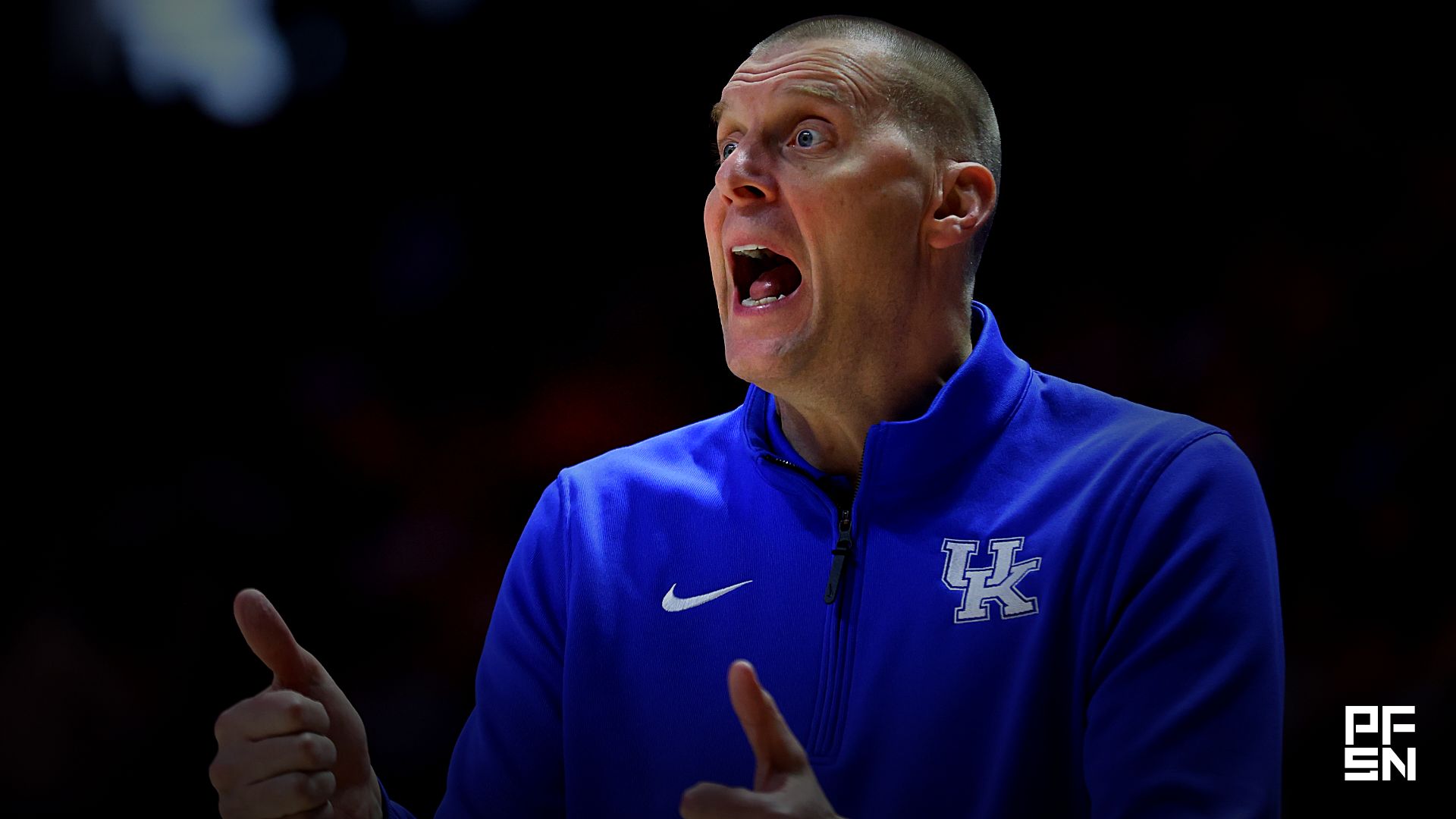
Mark Pope’s five-year, $27.5 million contract with Kentucky represents a deliberate departure from the John Calipari era. While Calipari commanded a 10-year, $86 million guaranteed deal, Pope’s structure emphasizes performance incentives and automatic extensions tied to postseason success.
The gamble paid immediate dividends when Kentucky reached the Sweet 16 in his first season, triggering a one-year extension. But after Sunday’s second-round loss to Iowa State ended the 2025-26 campaign, the financial implications deserve closer examination.
Mark Pope’s Salary Breakdown and How It Stacks Up in the SEC
Pope’s base salary for 2025-26 sits at $5.25 million, placing him outside the top tier of college basketball earners. Bill Self leads the sport at approximately $9-10 million annually on his lifetime deal at Kansas. Calipari, now at Arkansas, earns approximately $7.5 million per year. UConn’s Dan Hurley ($7.75 million), Florida’s Todd Golden ($6 million), Michigan State’s Tom Izzo ($6.2 million), and Tennessee’s Rick Barnes ($6.2 million) all out-earn Pope.
Within the SEC, Pope ranks behind Barnes at Tennessee and trails Calipari’s Arkansas compensation significantly. The gap reflects Kentucky’s philosophical shift: rather than guarantee massive sums upfront, the program structured Pope’s deal to reward results.
His annual salary increases by $250,000 each year, scaling from the initial $5 million in 2024-25 to $6 million by 2028-29. The Sweet 16 extension added another year at $6.25 million, with his deal now capable of reaching $6.5 million if he continues triggering extensions.
The incentive structure layers additional earning potential. A Sweet 16 appearance delivers $50,000 and the automatic extension. An Elite Eight berth adds $100,000. A Final Four run brings $250,000, and a national championship pays $500,000.
Conference success carries bonuses too: $100,000 for the SEC regular-season title and $50,000 for the SEC Tournament championship. Pope’s maximum bonus potential reaches $700,000 in a single season.
Kentucky paid a $6 million buyout to BYU to secure Pope in April 2024. His salary at BYU was estimated between $2 million and $3 million annually, making the Kentucky deal a significant financial leap.
The Buyout Math and What It Means After 2026
The Sweet 16 extension in Year 1 created an interesting buyout situation. Pope’s remaining contract value after the 2025-26 season totals $23.5 million. If Kentucky were to fire him without cause, the program would owe 75% of that figure: $17.625 million.
That number provides substantial job security, particularly after a season in which the Wildcats finished 9-4 in non-conference play with losses to Louisville, Michigan State, North Carolina, and Gonzaga. Pope’s overall record at Kentucky stands at 46-26 through two seasons.
The buyout structure incentivizes patience. After a third season without another Sweet 16, the remaining contract value would drop to $18 million, making the buyout $13.5 million. After a fourth season, $9.1875 million. After a fifth, $4.6875 million.
If Pope leaves voluntarily, the calculus shifts. If Pope left while Mitch Barnhart remained as athletic director, he would owe Kentucky 33% of his remaining salary. With Barnhart retiring, that figure would drop to 20%.
Pope’s net worth is not publicly disclosed, but some estimates place it between $10 million and $15 million. His six seasons in the NBA with the Indiana Pacers, Milwaukee Bucks, Denver Nuggets combined with coaching salaries at Utah Valley, BYU, and now Kentucky, have built significant wealth.
Pope once made $24,000 as an assistant coach while considering medical school at Columbia, so he has come a long way as his contract at Kentucky now places him among the 15 highest-paid coaches in college basketball.
The 2026 NCAA Tournament exit puts Pope in a familiar position for Kentucky coaches: facing an offseason of scrutiny with recruiting challenges ahead. The program has zero commitments from the 2026 high school class. The transfer portal will again be critical.
Pope’s contract provides runway to rebuild, but the performance-based structure that rewarded his first-year success will continue measuring every result against Kentucky’s championship expectations.