
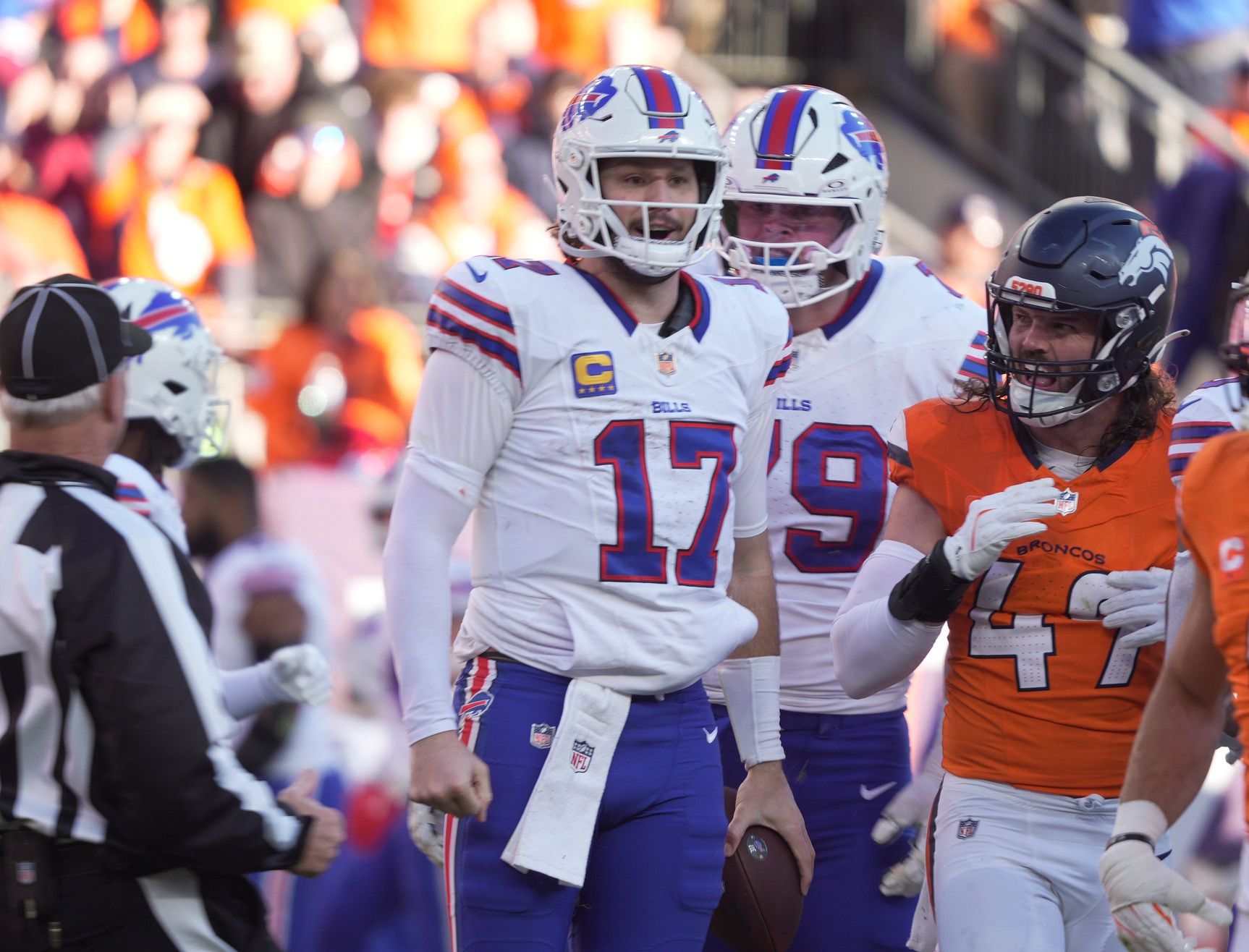
Josh Allen committed four turnovers in the Buffalo Bills’ 33-30 overtime loss to the Denver Broncos on Saturday. The box score says Allen cost Buffalo a trip to the AFC Championship Game, but the film says something different.
Allen graded out with an 82.9 PFSN QB Impact Metric score (B-) against Denver’s top-ranked defense. Bo Nix, playing on home turf with a rested roster and a first-round bye under his belt, managed just a 79.7 (C+).
The reigning MVP outperformed the quarterback whose team advanced — then watched from the sideline while cornerback Tre’Davious White and nickel defender Taron Johnson handed the Broncos nearly 50 free yards on back-to-back pass interference penalties in overtime.
How Josh Allen Nearly Pulled Off the Impossible Against Denver’s Elite Defense
Here’s the number that should frame every conversation about this game: road teams entering with a minus-3 turnover differential were 1-85 in NFL playoff history. Allen dug a minus-4 hole by early in the third quarter and still gave Buffalo the lead with 4:11 remaining.
The turnovers were ugly. Nik Bonitto stripped Allen twice, once in the final seconds of the first half and again on a blindside sack to open the third quarter. James Cook lost a fumble that swung early momentum. And Ja’Quan McMillian wrestled a deep ball away from Brandin Cooks in overtime — a play that could have been ruled incomplete.
WOW!! Interception Josh Allen on this crazy play pic.twitter.com/J7UyosDna5
— Rate the Refs (@Rate_the_Refs) January 18, 2026
But turnovers don’t tell you what Allen did between them. Down 23-10 in the third quarter against a Denver defense that led the league in sacks for the second straight season, Allen engineered back-to-back scoring drives. The first: a 73-yard march capped by a 10-yard strike to Keon Coleman. The second: a surgical 85-yard possession ending with a perfect flag-route touchdown to Dalton Kincaid that put Buffalo ahead 24-23.
When Nix answered with a 26-yard touchdown to Marvin Mims Jr. with 55 seconds remaining, Allen needed just 50 of those seconds to move the Bills 41 yards. A hook-and-ladder to Ray Davis gained 24 yards. Matt Prater’s 50-yard field goal forced overtime.
Allen finished with three touchdown passes to three different receivers. He ran for 66 yards, nearly matching Denver’s 70 rushing yards as a team. He did this while managing foot, knee, and finger injuries, and with Gabe Davis and Tyrell Shavers out, and safety Jordan Poyer ruled out with a hamstring injury.
The Broncos scored nine points off Allen’s four turnovers — all field goals. Their offense stalled repeatedly in the second half, managing one first down and 34 yards across three third-quarter possessions. Bonitto’s two strip-sacks produced six points combined. Denver’s defense created chaos; Denver’s offense couldn’t capitalize.
Buffalo’s Secondary Melted When It Mattered Most
The Bills won the overtime coin toss and kicked. Denver punted. Buffalo needed a field goal to end its Super Bowl drought. On second-and-14 from his own seven-yard line, Allen threw deep. McMillian got his hands on the ball at the same moment Cooks did for an interception.
That turnover gave Denver possession at Buffalo’s 43. What happened next was the actual game-losing sequence.
The flag that ruined the Bills Super Bowl dreams. PI called on the Bills pic.twitter.com/qdlcgWTAtH
— Rate the Refs (@Rate_the_Refs) January 18, 2026
Nix threw deep to Courtland Sutton. Taron Johnson grabbed Sutton’s jersey and got flagged for pass interference — a 17-yard penalty that moved the ball to Buffalo’s 36. Two plays later, Nix threw deep to Mims. This time, White grabbed him, drawing a 31-yard flag. White then screamed at the official and added 15 more yards for unsportsmanlike conduct.
Three penalties. Sixty-three yards. Zero offensive plays required.
Wil Lutz trotted out for a 24-yard chip shot. Denver hadn’t moved the ball through the air against Buffalo’s defense when it mattered. Then, they moved the ball with penalties.
Allen scored 30 points in Denver’s altitude with a depleted roster and a battered body. He gave the Bills the lead three separate times in the fourth quarter and overtime. Road teams with his turnover margin don’t tie playoff games, let alone lead them with four minutes remaining.
The Bills’ season ended when their secondary committed penalties on consecutive snaps, not when Allen fumbled, not when he threw an interception into coverage. The turnovers created adversity. The pass interference calls ended the game.
Buffalo’s defensive backs played 66 minutes of championship-caliber football. Then, they played like they’d never seen a vertical route before.