
p>The New York Jets’ quarterback situation has taken another unexpected turn, and the ripple effects are already shaping conversations around their draft strategy. What initially looked like a reset at the position is now raising deeper questions about timing, patience, and whether the franchise is truly ready to invest in a developmental prospect.

Jets Quarterback Strategy Faces Scrutiny After Justin Fields Trade
The Jets officially moved on from Justin Fields, trading him to the Kansas City Chiefs for a 2027 sixth-round pick, as reported by the team and further detailed by The Athletic’s Zach Rosenblatt. The decision closed a short and turbulent chapter, one that never quite stabilized the offense.
Fields’ lone season with the Jets reflected that instability. He threw for 1,259 yards, seven touchdowns, and one interception across nine starts while adding production on the ground. However, injuries, including a concussion and a later knee issue, disrupted continuity.
The Jets cycled through multiple quarterbacks, including Tyrod Taylor and undrafted rookie Brady Cook, contributing to an offense that ranked near the bottom in most key categories. PFSN’s QB Impact metric further illustrates Fields’ struggles during the 2025 season.
He recorded a 69.1 QB Impact Score, which matched the overall average, but the deeper metrics painted a less encouraging picture. Across nine games and nine starts, Fields completed 128 of 204 passes, finishing with a 62.7% completion rate.
He received a D+ grade, ranked 33rd for the season, and placed 679th overall among quarterbacks evaluated since 2000, according to PFSN. With Fields gone, the Jets now move forward with Geno Smith, Cook, and Bailey Zappe.
Mel Kiper Jr. Links Ty Simpson to New York Jets
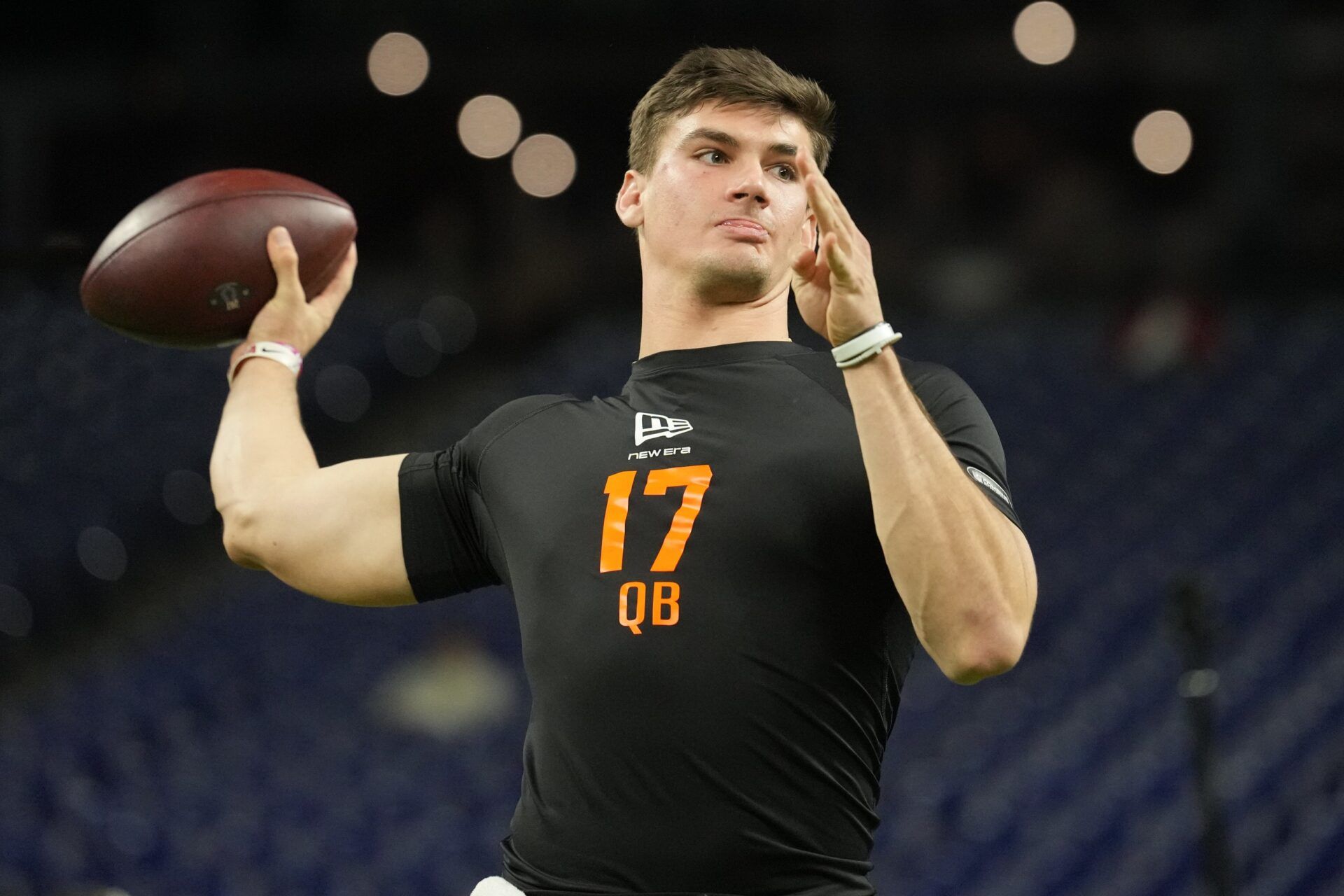
That reshaped quarterback room has intensified speculation about their draft plans, particularly after ESPN’s Mel Kiper Jr. projected them to target Alabama quarterback Ty Simpson. Kiper outlined a patient approach, suggesting the Jets could allow Simpson to develop behind Smith.
He also questioned the assumption that the team could simply wait for a stronger 2027 quarterback class. As he stated, “This notion that next year they’re going to get Arch Manning or Dante Moore. Who knows if they will or they won’t?”
BE AN NFL GM: PFSN’s Ultimate GM Simulator
That uncertainty forms the backbone of the argument for drafting a quarterback now. However, scepticism remains, especially given Simpson’s limited experience with just 15 college starts. The idea of trading up into the first round, similar to what the New York Giants did with Jaxson Dart, adds another layer of risk.
Recent history does not favor such a move. Since 2011, six of seven first-round quarterbacks with fewer than 17 college starts failed to meet expectations at the NFL level. The list includes names like Mitchell Trubisky, Anthony Richardson, and Dwayne Haskins.
The only exception, Cam Newton, went on to win the 2015 NFL MVP, highlighting how rare that success path is. For a front office believed to be operating with a long-term plan, committing significant draft capital to a relatively unproven quarterback could contradict that philosophy.
The Jets’ current roster construction, paired with their recent struggles on offense, suggests a need for stability rather than another uncertain projection. Ultimately, while Kiper’s projection introduces a compelling scenario, the combination of Simpson’s limited résumé and the Jets’ broader roster context casts real doubt on whether such a move aligns with their long-term vision.
