
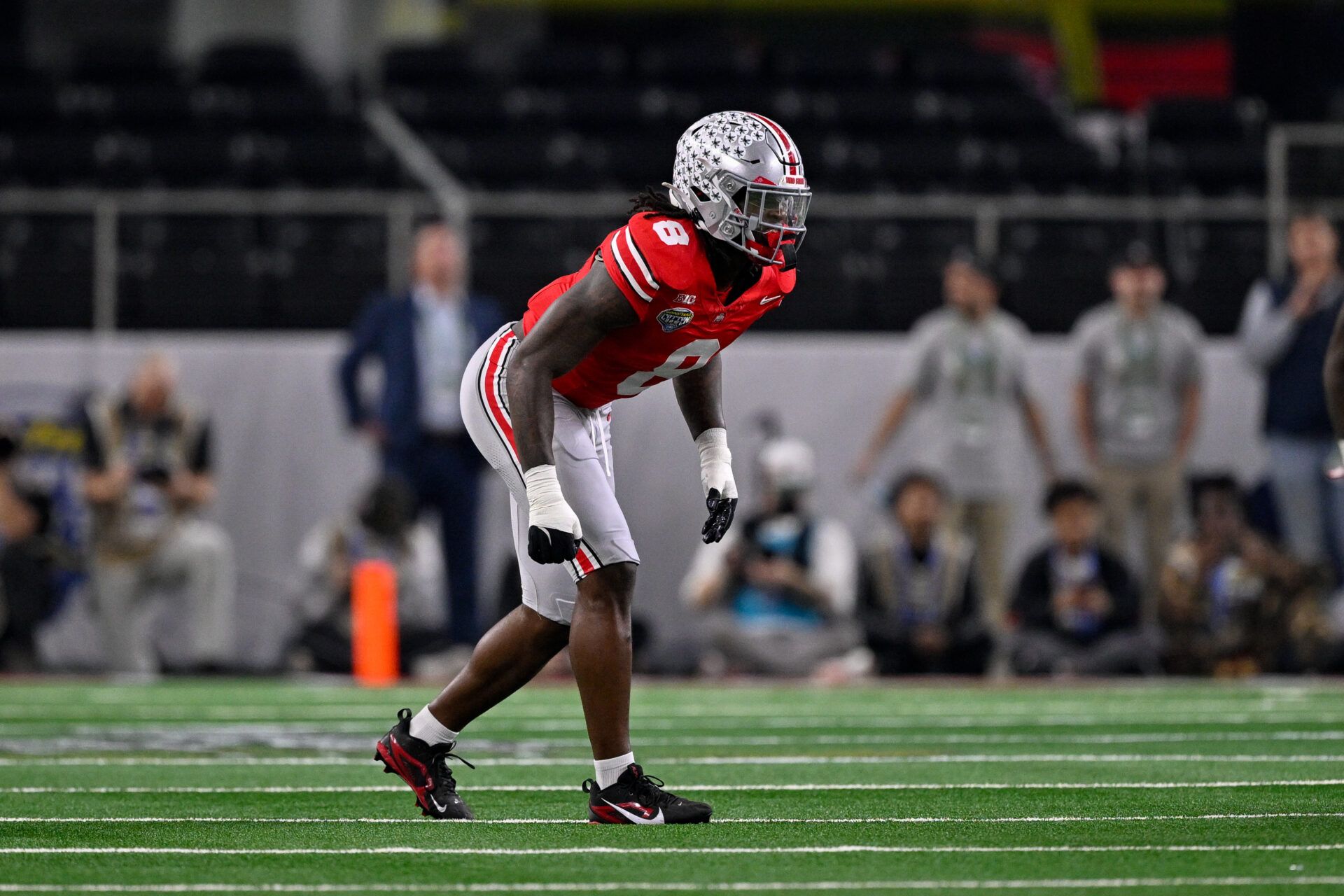
As the 2026 NFL Draft approaches, New York Jets fans are doing what they always do this time of year: running simulations, debating scenarios, and trying to chart the cleanest path forward. This time around, there’s a bit more alignment than usual about what should happen with the No. 2 overall pick, even if the exact name is still up for debate.

Pass Rush Help Tops Jets Fans’ Wish List at No. 2
Data from PFSN’s Mock Draft Simulator shows that 40.6% of Jets fans want the team to go after an edge rusher. It’s a logical direction given both roster construction and recent performance.
The Jets ranked 31st in sack percentage, according to PFSN’s NFL Defensive Impact Rankings, and there isn’t much proven production off the edge outside of Will McDonald IV. He finished last season with eight sacks, placing him 56th across the league on the PFSN’s NFL Edge impact.
Where things start to split is at the player level. Two names stand out: Arvell Reese and David Bailey. Reese currently leads the fan vote, pulling in 24% support compared to Bailey’s 10.4%, suggesting a clear lean toward upside.
Reese has become a popular projection largely because of his versatility and explosiveness. He’s the type of defender who can line up in multiple spots, whether it’s at EDGE, Linebacker, or even in the slot acting as a nickel back.
He is a chess piece along the defense and creates mismatches in different ways. It would be up to Aaron Glenn and the coaching staff to use him effectively.
Arvell Reese vs. David Bailey Debate
Some evaluators have loosely compared his play style to Micah Parsons, noting how he can be deployed and the kind of stress he can put on an offense. It is also similar to the path of projection, in that Parsons wasn’t a full-time EDGE coming out of Penn State, but developed into a more disruptive pass rusher over time. It’s easy to see the appeal in a player who can shift how opponents prepare each week.
Bailey presents a different case. While he doesn’t generate the same level of buzz, his profile is built on production and polish. He’s coming off a 14.5-sack season at Texas Tech, a key factor in the program reaching its first College Football Playoff.
He also earned the top grade nationally in PFSN’s CFB Edge Impact Scores. His strengths, hand usage, timing, and consistency, tend to translate quickly, which makes him a more predictable projection early in his career.
That contrast shows up on the PFSN Consensus Big Board as well. Reese is listed as the No. 3 overall prospect and EDGE1, and the star Texas Tech product comes in at No. 9 overall and EDGE3.
Really, not that much separates the two; it’s more about which flavor of ice cream you like better. Reese has more flair, while Bailey isn’t necessarily “vanilla” but rather a safer flavor for any coach’s liking.
For the Jets, the decision likely comes down to approach. Do they prioritize long-term upside and versatility, or lean into immediate production and reliability?
BE AN NFL GM: PFSN’s Ultimate GM Simulator
The question can unfortunately come down to whether Glenn feels he will make it even to get the time to develop a talent like Reese fully, and whether he could ultimately be forced to take the more finished product, which could produce more wins quicker.
Either way, the direction seems clear. Addressing the edge with a premium pick would directly target one of the roster’s biggest weaknesses and give the defense a much-needed boost heading into 2026.
