
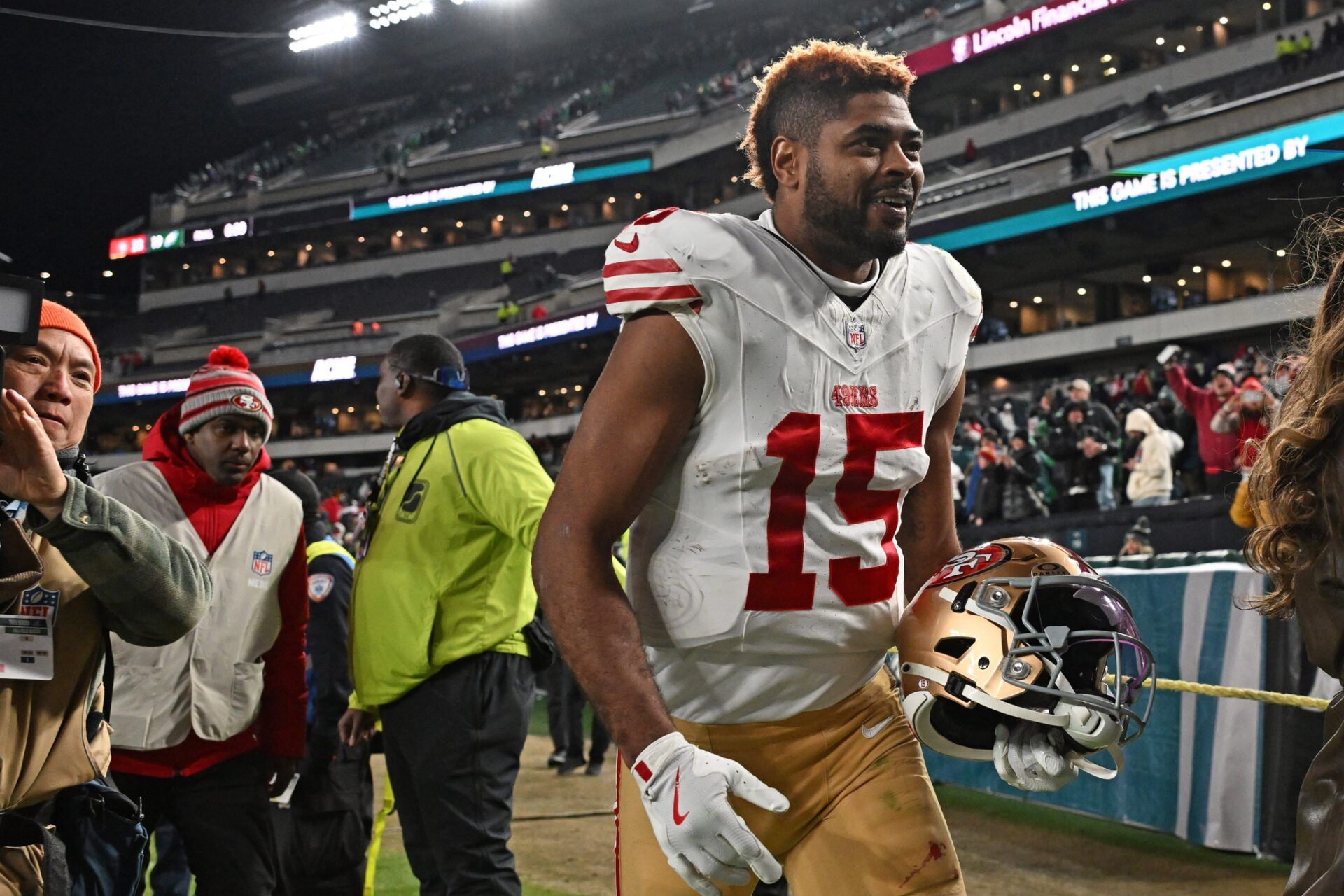
Free agency in the NFL usually moves at the speed of a rumor. One minute, a player is testing the market; the next, he’s posing with a new jersey. The biggest names rarely remain. They’re swept up in the first wave of deals, fast, decisive, lucrative. That is why the continued presence of Jauan Jennings on the open market feels a little like spotting a bestselling novel still sitting on the bargain table. You know it doesn’t quite belong there, but somehow it hasn’t been picked up yet.

Jauan Jennings Did Everything the 49ers Asked, So Why Is He Still Waiting for His Next Team?
Jennings spent the last several seasons carving out a gritty, indispensable role with the San Francisco 49ers. He wasn’t always the headline act, but he was often the moment that made the highlight possible, the receiver digging out a tough third-down conversion or boxing out a defender in the red zone like it was a personal challenge. Yet as the free agency unfolds, Jennings is still taking longer than expected. And the reasons say as much about the NFL’s evolving priorities as they do about the player himself.
The NFL’s free agent market has a funny way of revealing what teams truly value. In recent years, front offices have leaned heavily toward youth and explosiveness when investing in wide receivers. Speed sells. The ability to stretch a defense vertically often drives contracts north in a hurry.
Jennings, meanwhile, built his reputation in a slightly different way. At 6-foot-3, his game is rooted in physicality and reliability rather than pure speed. He thrives in the places where plays get messy, third downs, crowded red-zone targets, and those uncomfortable moments when a quarterback throws the ball into traffic and silently hopes someone brave is waiting there.
More often than not, Jennings is that someone.
But the market doesn’t always reward that skill set the same way it rewards a track star, a serious threat. Teams chasing explosive offense often prioritize younger receivers with vertical speed, even if they’re less proven. Jennings, turning 29 in July, sits in the awkward middle ground where experience is respected but long-term contracts suddenly become harder to justify.
Then there’s the matter of money, because there’s always the matter of money.
After playing the past two seasons on a team-friendly deal averaging around $6 million per year, Jennings understandably wants a raise that reflects his production and value. Reports suggest he’s seeking between $15 million and $22 million annually in a new contract.
From Jennings’ perspective, it makes sense. The past few seasons proved he’s more than a depth receiver. In 2024, he delivered a career-best 975-yard campaign, and in 2025, he followed it with 55 catches, 643 yards, and 9 touchdowns, leading the team in scoring receptions and earning a score of 71.1 on PFSN’s WR Impact Metric.
Nevertheless, if there’s one thing no one doubts about Jennings, it’s his toughness. The receiver famously revealed last season that he had been playing through five broken ribs along with both high and low ankle sprains, an admission that sounded less like an injury report and more like a dare to anyone questioning his grit.
It earned him enormous respect around the league.
BE AN NFL GM: PFSN’s Ultimate GM Simulator
But toughness and durability are not quite the same thing in the eyes of NFL decision-makers. Jennings has yet to complete a full 17-game season in his career, and availability is often one of the first metrics teams examine when considering multi-year deals.
For GMs juggling salary caps and long-term roster plans, that doubt can slow negotiations, even for a player who clearly brings value.