
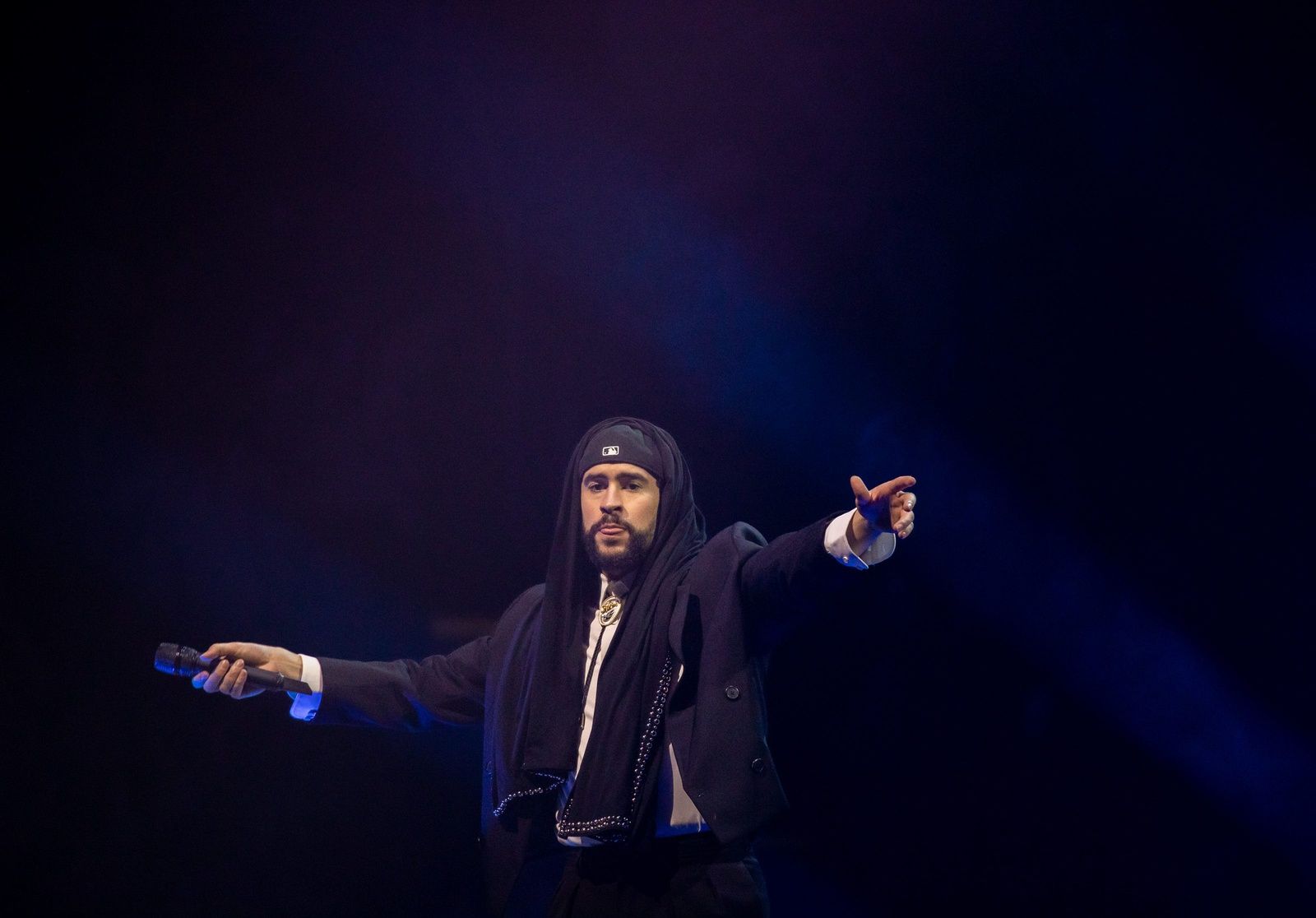
Bad Bunny arrives at Super Bowl LX as both a polarizing and historic halftime headliner.
The Puerto Rican star has already reshaped Latin music’s place in the mainstream, and now he is poised to become the first Latino male artist to lead a Super Bowl halftime show with a predominantly Spanish set.

Why Is Bad Bunny So Popular? Grammy-Winning Artist’s Rise To Stardom
Bad Bunny’s performance in Santa Clara comes days after winning the Grammy Album of the Year for “Debí Tirar Más Fotos,” the first all-Spanish-language album to take the category.
For the NFL, Apple Music and Roc Nation, his selection is being framed as a reflection of where music is now: global, genre-blurring and driven by artists who connect with fans on their own terms.
Born Benito Antonio Martínez Ocasio in Vega Baja, Puerto Rico, Bad Bunny built his career by refusing to compromise on language, style, or identity. He grew out of the Latin trap scene, releasing early tracks on streaming platforms and catching attention with a baritone delivery and lyrics that softened some of the genre’s edges.
Executives at Apple Music cite those early songs as a turning point, placing him on one of the first Latin trap playlists and later bringing him in as host of the “Trap Kingz” radio show as his audience began to surge.
From there, his commercial footprint accelerated. Bad Bunny has become the only artist with four consecutive all-Spanish albums to reach No. 1 on the Billboard 200, including “Un Verano Sin Ti,” which became the most-streamed album in history on some platforms and the first all-Spanish album nominated for album of the year at the Grammys.
KEEP READING: Super Bowl 60 Ticket Prices: What Are the Cheapest and Most Expensive Tickets for Patriots-Seahawks?
His 2022 and 2025 runs as Spotify’s most-streamed global artist, along with record-setting vinyl and streaming numbers for “Debí Tirar Más Fotos,” underscore his pull among listeners far beyond Spanish-speaking audiences.
NFL executives point to that global reach and cultural influence as a major factor in choosing him for Super Bowl LX, describing him as an artist who captures “the sound, the audience and the culture of this moment.”
Alongside chart milestones, Bad Bunny has used his platform to champion Puerto Rican culture and address social issues. His 31-show residency in San Juan drew more than 500,000 fans and generated an estimated hundreds of millions of dollars in tourism spending, according to Puerto Rico’s tourism officials.
Onstage and in videos, he has highlighted topics such as domestic violence, anti-LGBTQ violence, and U.S. immigration policy, helping cement his reputation as a performer whose popularity is tied to both his music and his outspoken advocacy.
Bad Bunny Was Once a Grocery Store Bagger
Even as he prepares for one of entertainment’s biggest stages, Bad Bunny often returns to how modestly his story began. In an interview with Billboard ahead of Super Bowl LX, he revisited where he was just a decade ago. Not long ago, the singer worked at a grocery store while pursuing music on the side.
“That’s true. I was working in a grocery store, making beats at the same time,” he said. “Broke, with a lot of dreams and goals. And now I’m still dreaming. I’m still enjoying this. I’m still doing this with the same passion and the same love as the first day, before I got popular or successful.”
MORE: Conservatives Call for Boycott of Super Bowl 60 Over Bad Bunny’s Halftime Show: ‘ENOUGH IS ENOUGH’
That sense of staying grounded resurfaced when he described how he learned he would headline the Apple Music Super Bowl LX Halftime Show. The call came while he was at the gym, and he recalled choosing not to share the news right away.
“Nobody,” he said when asked who he called first. “Not even my mom and dad. I always keep everything secret until I know it’s official.”
As for what he wants viewers to remember once the show ends, Bad Bunny frames his fame as secondary to authenticity.
“That I’m an honest artist. That I’m myself. That I don’t act to be anything that I’m not,” he said. “That I’m proud of who I am and where I come from. The music is universal. You can connect heart to heart with a song, even without lyrics.” He added, “I’m just a normal guy that makes music.”
Taken together with his record of historic chart achievements, Grammy recognition and political visibility, that mix of humility and cultural impact explains why his Super Bowl halftime appearance is being cast as a defining moment for Latin music on one of the world’s largest stages.
