
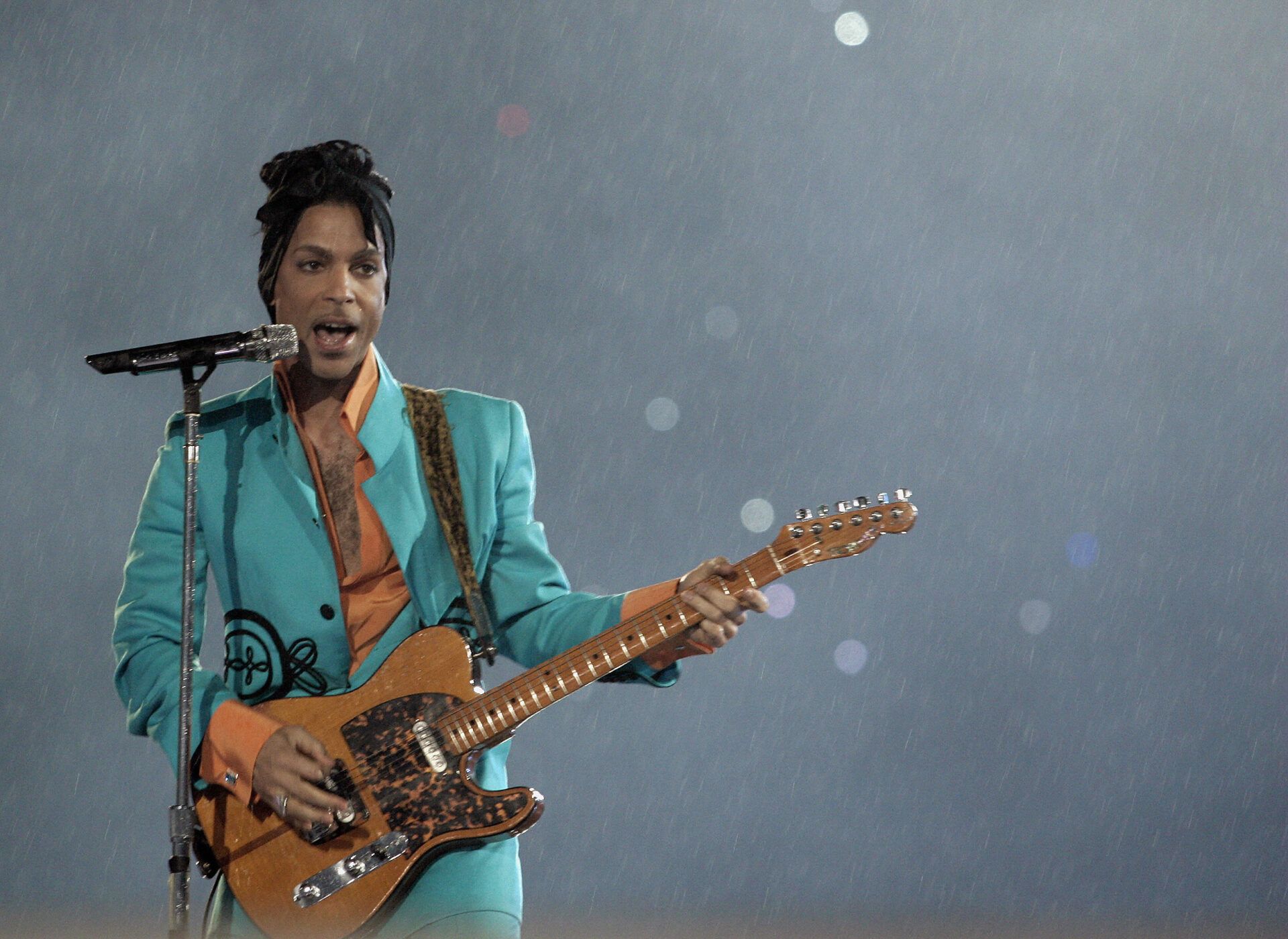
Prince played guitar in a downpour. Michael Jackson stood motionless for 90 seconds and rewired what the Super Bowl could be. Over nearly six decades, the halftime show has evolved from a bathroom break into a cultural event as anticipated as the game itself, but only a handful of performances have genuinely redefined the form.
Every ranking of halftime shows leans on the same consensus picks. The more interesting question is why these five separated themselves from the dozens of competent, forgettable spectacles that surround them. The answer isn’t production value. It’s risk.
5) Super Bowl 36 (2002)
U2
Five months after Sept. 11, U2 took the halftime stage in New Orleans and did something no other performer has attempted: they made 70,000 people grieve together. The band played “Beautiful Day,” “MLK,” and “Where the Streets Have No Name” while a massive screen scrolled the names of every person killed in the attacks.
When Bono opened his jacket to reveal an American flag sewn into the lining, it landed as earned emotion rather than cheap patriotism, because the preceding 10 minutes had been that precise in their restraint.
There were no guest appearances, no costume changes, no dancing. Just four musicians, a scrolling list of names, and the weight of a moment that demanded something more than entertainment. No halftime show before or since has attempted to carry that kind of emotional gravity, and U2 pulled it off without a single false note.
4) Super Bowl 59 (2025)
Kendrick Lamar
Kendrick Lamar’s set in New Orleans drew 133.5 million viewers, narrowly surpassing Jackson’s 32-year record and making it the most-watched halftime show in history. He was the first solo rapper to headline the performance, arriving a week after winning five Grammy Awards and riding the cultural wave of his Drake feud.
The setlist leaned on his biggest moments: “Squabble Up,” “HUMBLE.,” “DNA.” and “TV Off,” with SZA joining for “Luther” and “All the Stars,” Mustard appearing for “TV Off” and Serena Williams making a viral cameo during “Not Like Us.” Samuel L. Jackson provided spoken-word transitions throughout as a satirical Uncle Sam figure.
READ MORE: Super Bowl 60 Predictions: Predicting the Winner, Final Score, MVP, and More
The highlight was the tension surrounding whether he’d perform “Not Like Us,” the Drake diss track that had dominated pop culture for months. He teased it, delivered it, and turned the Super Bowl stage into a victory lap.
Where most halftime performers play it safe with universally beloved hits, Lamar brought a performance rooted in conflict, competition, and artistic identity. He treated the stage as a platform for a specific cultural statement rather than a greatest-hits jukebox.
3) Super Bowl 47 (2013)
Beyoncé
Beyoncé opened with “Love on Top,” powered through “Crazy in Love,” “Baby Boy,” and “End of Time,” and then pulled the surprise that 71,000 people inside the Mercedes-Benz Superdome had been hoping for: Kelly Rowland and Michelle Williams walked out for a Destiny’s Child reunion. The trio performed “Bootylicious” and “Independent Women” before Beyoncé closed with a flawless “Halo.”
What separated this from other pop spectacles was the sheer physical command. Beyoncé treated the halftime stage like a headlining arena tour, dancing at full intensity for the entire set without a single moment that felt phoned in.
The performance was so kinetic that when a 34-minute power outage hit the Superdome shortly after, a popular (if unverified) theory emerged that her show had literally blown the building’s electrical system. The outage was caused by an electrical relay device, but the myth stuck because the performance warranted it.
2) Super Bowl 27 (1993)
Michael Jackson
Before Jackson, the Super Bowl halftime show was a bathroom break. The year prior, Fox counterprogrammed with a live episode of “In Living Color” during CBS’s halftime, drawing more than 20 million viewers away from the broadcast. The NFL needed a reset. Jackson provided one.
He rose from beneath the stage at the Rose Bowl, appeared to teleport across two giant video screens, then landed on the field and stood absolutely still for roughly 90 seconds while the crowd roared. It was the most audacious use of dead air in the history of live television, and it worked.
Jackson then ripped through “Jam,” “Billie Jean” (moonwalk included), and “Black or White” before closing with “We Are the World” and “Heal the World” alongside more than 3,000 children.
The performance drew 133.4 million viewers, marking the first time Super Bowl ratings increased between halves. His album “Dangerous” saw an 83% sales jump the following week. Every halftime show since has followed the template Jackson built: a fusion of hits, choreographed spectacle, and a central theme. He didn’t just perform. He invented the format.
1) Super Bowl 41 (2007)
Prince
The production crew was terrified. A heavy rainstorm had turned Miami’s Dolphin Stadium into a sheet of rain, the stage tiles were slick, and Prince planned to play four different electric guitars on a surface that could have killed the performance, or worse.
When producers called to warn him about the weather, Prince’s response entered Super Bowl lore: “Can you make it rain harder?”
What followed was 12 minutes that no amount of pyrotechnics or choreography has matched. Prince opened with a snippet of Queen’s “We Will Rock You,” rolled through “Let’s Go Crazy,” “Baby I’m a Star” and “1999,” then pivoted into covers of Creedence Clearwater Revival’s “Proud Mary,” Bob Dylan’s “All Along the Watchtower” and the Foo Fighters’ “Best of You” before arriving at the only possible closer.
As the rain intensified, the stage lights turned violet, and Prince launched into “Purple Rain” with a guitar solo performed behind a rising screen that cast his silhouette against the storm. A lighting crew member held together a severed cable with his bare hands for the entire show to keep it running.
No other halftime performer has turned an uncontrollable variable into the defining image of their set. Everyone since has performed in controlled environments. Prince thrived in chaos.
How Iconic Super Bowl Halftime Shows Redefined the Biggest Stage
The Super Bowl halftime show is a strange animal. Artists get roughly 12 minutes, no ticket revenue, and technically no performance fee. The NFL covers production costs, but the real currency is exposure: Usher’s Spotify streams surged 550% after his 2024 set, and Lady Gaga’s sales increased tenfold after hers in 2017.
That economic reality pushes most performers toward the safest possible version of their catalog. Play the hits. Add some fireworks. Don’t offend anyone. The five shows above rejected that calculus.
Jackson stood in silence. Prince played electric guitar in a rainstorm. Beyoncé danced as if the building’s electrical capacity were an afterthought. Lamar performed a diss track on the biggest stage in American entertainment. U2 turned a concert into a memorial service.
The template for greatness is clear. It isn’t about budget or production design. It’s about doing something the audience didn’t know they needed.