
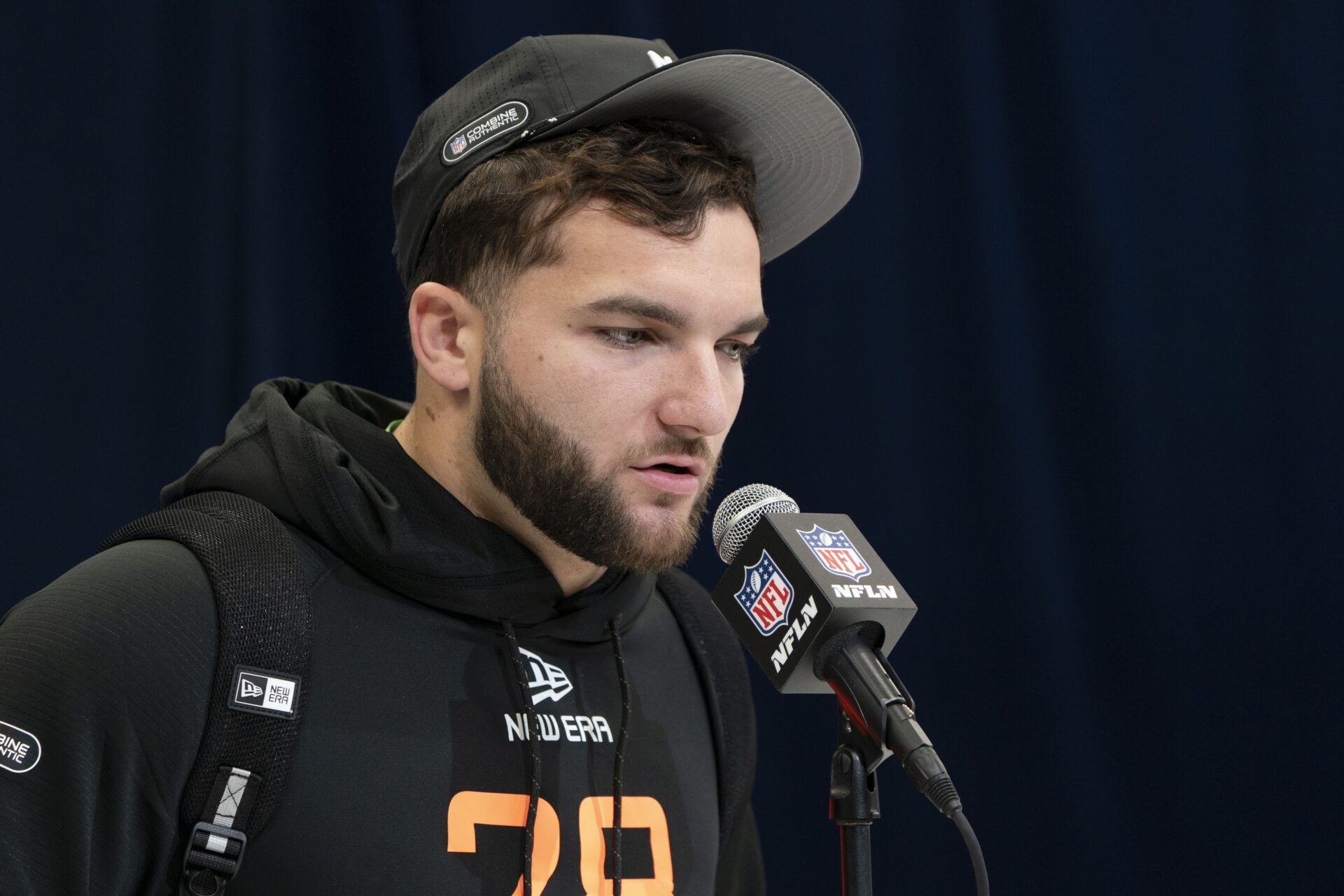
The NFL community found itself at the center of a serious off-field discussion after New York Giants running back Cam Skattebo made controversial comments about CTE and asthma during a podcast appearance. His remarks quickly drew backlash across the league, with former players and analysts calling out the dangerous implications.
Among the most vocal critics was former Pro Bowl defensive lineman Gerald McCoy, who addressed the issue with both restraint and personal emotion. McCoy’s response highlighted not only the inaccuracy of Skattebo’s claims but also the real-life impact of such conditions. The situation has since sparked a broader conversation about responsibility and awareness in professional sports.
Gerald McCoy Responds to Cam Skattebo’s Comments
Speaking on the matter during his latest appearance on “The Arena: Gridiron” podcast, McCoy revealed that his initial reaction was deeply emotional, given how personal the topics are to him. He reflected on his mindset before addressing the issue publicly.
“When I seen this on the run down, had to have like, and I’m being dead serious, I had to seriously sit down and pray about what I was going to say on this show because my initial human feelings was to disrespect both of them because both of these topics are sensitive areas for me and they hit home,” said McCoy. “Skattebo, I’ll say his name. I’m not going say the other guy’s name, because I think sometimes we give people platforms and voices that ain’t earned it. So I’m not even going to say his name.”
McCoy emphasized that while he disagreed strongly, he chose to respond thoughtfully rather than emotionally. He also provided important context behind why CTE is such a sensitive issue for him, referencing former teammates who suffered from the condition.
“But the things that were said, you’ve got to be careful because mental health is nothing to joke about, and it’s very serious. And when I say sensitive for me,” McCoy said. “I have teammates who passed away. I played with him in Tampa. Vincent Jackson, one of them. He suffered from severe alcoholism. And when they tested him, he was a stage 2 level of CTE.”
His comments underscored the real-life consequences of head trauma in football, pushing back against the notion that such conditions are exaggerated or “excuses,” as claimed by the Giants running back.
Skattebo’s Asthma Remarks Draw Sharp Criticism
McCoy also addressed Skattebo’s remarks about asthma, explaining why such statements can be harmful and misleading.
“This game we play is very difficult, but I want to talk about the asthma situation because they talked about being in the fourth grade and kids breathing hard. It’s like, just breathe air. Well, if you knew what asthma was, you can’t just breathe air. It literally collapses your ability to breathe normally. So for me, that’s very sensitive,” he exclaimed.
BE AN NFL GM: PFSN’s Ultimate GM Simulator
By explaining the medical reality of asthma, McCoy highlighted how dismissive comments can trivialize serious health conditions. Despite his criticism, McCoy ultimately took a measured approach, acknowledging that young players can make mistakes while stressing the need for accountability.
“So let’s be careful what we’re saying about these certain things because you never know who it affects,” McCoy added. “So when I heard this, I was like, man, he is a kid. So that’s why I kind of took a step back. We all make mistakes. I’ve made some very terrible mistakes. And that’s why I decided to take that approach. Let’s be very aware of the things we’re saying and making light of and joking about for clicks because it’s not funny to everybody, saying people are soft because they have asthma, wasn’t funny to me at all.”
.@Geraldini93 wasn’t happy with Cam Skattebo’s comments on CTE & Asthma.
“I have teammates that passed away. Vincent Jackson…Doug Martin, anybody who knows Doug knows that wasn’t Doug. Let’s be careful on the things we are saying because you never know who it affects.” pic.twitter.com/ealaFLb7HZ
— The Arena: Gridiron (@ArenaGridiron) March 23, 2026
Skattebo later apologized on social media for his “tasteless joke.” Nevertheless, the backlash from the NFL world continues. This incident has served as a reminder of the influence athletes hold and the importance of informed dialogue.
