
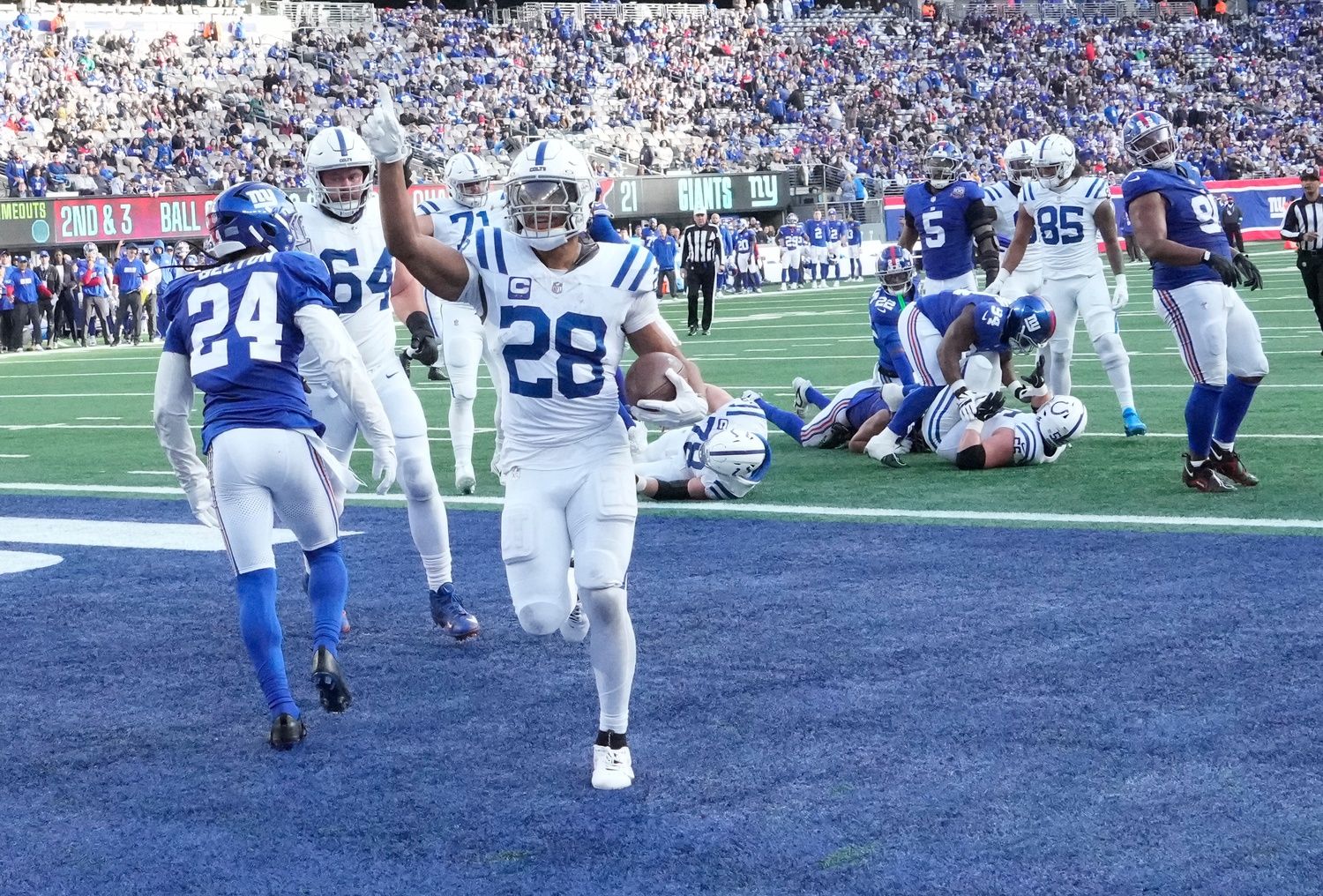
The fantasy football community is experiencing a mass exodus from Jonathan Taylor, and the underlying metrics suggest this might be the right time to join them. While the Indianapolis Colts running back finished as a top-10 fantasy option in 2024, a deeper dive into his situation reveals troubling trends that have savvy managers hitting the sell button.

The Great Sell-Off Is Underway
Taylor has already been shipped off in the PFSN Trade Analyzer 289 times this month, ranking second among all players in total trades. More telling is his 58.3% trade-away rate since the beginning of June, meaning fantasy managers are overwhelmingly looking to move on rather than acquire him. This represents a dramatic shift in sentiment for a player who was once considered a foundational piece.
The market is speaking loudly about Taylor’s perceived value versus his actual production ceiling. Despite finishing with 1,431 rushing yards and 12 total touchdowns in 2024, fantasy managers are recognizing the warning signs that suggest his best days may be behind him. His current RB8 ranking in early drafts feels increasingly optimistic given the mounting concerns surrounding his situation.
Jonathan Taylor goes 65 yards for a TD and runs alllll the way into the tunnel WITH the ball just in case 🤣 pic.twitter.com/0RKoz5eqON
— NFL on CBS 🏈 (@NFLonCBS) December 22, 2024
The selling pressure isn’t happening in a vacuum. Taylor’s injury history continues to mount, having missed at least three games in three straight seasons. This pattern of unavailability has become a defining characteristic of his career, making him increasingly unreliable for fantasy managers who need consistent weekly production.
The Stacked Box Problem Gets Worse
Perhaps the most concerning trend in Taylor’s profile is his increasing exposure to stacked boxes. His percentage of carries against eight or more defenders has risen dramatically in consecutive seasons: 23.4% in 2022, 27.2% in 2023, and 33% in 2024. This escalating pattern reflects the Colts’ deteriorating quarterback situation and opposing defenses’ growing confidence in stopping Indianapolis’ ground game as means of stymying their offense as a whole.
The quarterback carousel in Indianapolis shows no signs of stabilizing. Anthony Richardson’s inconsistent play and the addition of Daniel Jones creates an even muddier situation than the Richardson-Joe Flacco tandem that plagued the 2024 season. Without a reliable passing threat, defenses will continue loading the box against Taylor, making his job exponentially more difficult.
This trend directly impacts Taylor’s efficiency and long-term fantasy value. Running backs facing consistent eight-man fronts historically see their production decline over time, as the physical toll of running into stacked boxes accelerates the aging process. The Colts’ inability to establish a credible passing attack has essentially turned Taylor into a one-dimensional player fighting an uphill battle on every carry.
The Aging Curve Catches Up
The most alarming development in Taylor’s profile is the significant decline in his yards after contact percentage. In 2024, just 56.8% of his yards per carry came after initial contact, a substantial drop from the 67.1% rate he maintained during his first four seasons. This represents one of the clearest indicators of declining physical ability at the running back position.
Yards after contact serve as a crucial metric for evaluating a running back’s ability to break tackles and create additional yardage through power and elusiveness. Taylor’s 10.3 percentage point decline suggests his explosive ability and contact balance have diminished significantly. At 26 years old with over 1,400 career touches, this regression aligns with typical aging patterns for NFL running backs.
The combination of increased stacked box exposure and declining yards after contact creates a perfect storm for continued production decline. Taylor is facing more difficult running situations while simultaneously losing the physical tools needed to overcome those challenges. This dual pressure explains why his fantasy points per game consistency has become increasingly dependent on volume rather than efficiency.
Furthermore, Taylor’s 2024 season wasn’t all that it was cracked up to be. Although he averaged 17.6 PPG on the season, he was only at 13.8 PPG through Week 15. A scorching close to the season over his final three games made his overall performance seem better than it was. Fantasy managers would be wise to remember that Taylor was middling RB2 for almost the entire year.
The Receiving Game Limitations
Taylor’s fantasy ceiling remains capped by his minimal involvement in the passing game. His career-low 18 receptions in 2024 highlighted how one-dimensional his usage has become. Elite fantasy running backs typically maintain significant receiving roles that provide both floor and ceiling enhancement, but Taylor’s lack of pass-catching utilization limits his upside potential.
The Colts’ offensive philosophy under Shane Steichen emphasizes running the ball, which benefits Taylor’s carry total but doesn’t address his receiving limitations. Without meaningful target share, Taylor remains entirely dependent on rushing production and touchdown luck for fantasy relevance. This narrow path to production makes him increasingly vulnerable to game script and defensive adjustments.
Modern fantasy football rewards versatile running backs who can contribute across multiple facets of the offense. Taylor’s status a a pure rushing specialist reduces his weekly ceiling and makes him more susceptible to poor game scripts where the Colts fall behind early and abandon the ground game.
The Injury Concerns Mount
Taylor’s injury history has become impossible to ignore, with ankle problems serving as a recurring theme throughout his career. He suffered ankle sprains in 2020, 2022, and 2024, with the 2022 injury requiring surgery that cost him significant time. The pattern of ankle issues suggests potential long-term structural problems that could continue plaguing his availability.
The physical demands of his running style, combined with the increased stacked box exposure, create additional injury risk moving forward. Running backs who consistently face eight-man fronts absorb more punishment per carry, accelerating the wear and tear that leads to missed games. Taylor’s injury history suggests he may be particularly susceptible to this increased physical stress.
His 2024 thumb injury, while seemingly minor, required surgery and cost him multiple games during a crucial stretch. The accumulation of various injuries across different body parts indicates the general wear and tear that comes with heavy NFL usage. At 26 years old, Taylor has already absorbed significant punishment that could impact his long-term durability.
The fantasy community’s mass exodus from Taylor reflects a growing recognition that his combination of age, injury history, declining efficiency, and situational challenges creates an unsustainable foundation for continued elite production. While he may still provide value in 2025, the trajectory points toward accelerating decline rather than resurgent performance.
Smart fantasy managers are recognizing this inflection point and moving on before Taylor’s value completely evaporates. The current selling wave represents the market’s collective acknowledgment that the JT era may be coming to an end sooner than many anticipated.
The Dynasty Perspective Turns Bearish
From a dynasty standpoint, Taylor represents one of the clearest sell candidates in fantasy football. His current trade value of approximately a first and third-round pick in superflex leagues may represent the last opportunity to extract meaningful value before his decline accelerates. The convergence of age, injury history, and declining efficiency metrics suggests his fantasy stardom could evaporate quickly.
The Colts’ contract structure provides additional selling urgency. Taylor’s deal includes significant dead money through 2025, but the team could move on with minimal financial penalty in 2026. If Indianapolis struggles again this season, a new coaching regime might prefer to rebuild around younger, cheaper options rather than continue investing in an aging, expensive running back.
For managers considering moves involving Taylor, the PFSN Trade Analyzer can help evaluate fair compensation packages. However, the window for maximizing return appears to be closing rapidly as more managers recognize the warning signs.
