
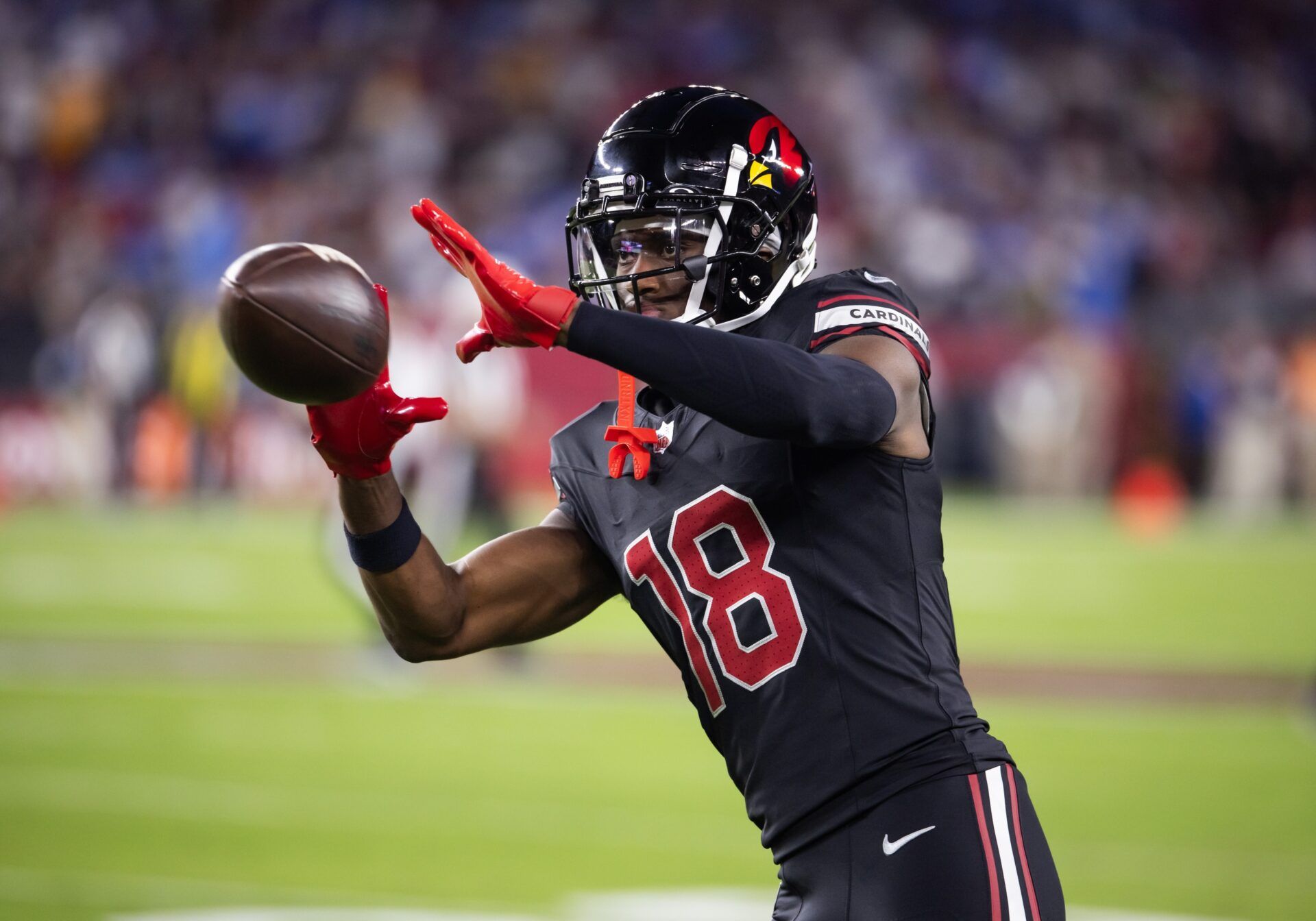
The fantasy football community is starting to wake up to what many overlooked during Marvin Harrison Jr.’s rookie campaign. While the Arizona Cardinals receiver didn’t deliver the explosive numbers many expected in 2024, the underlying metrics paint a compelling picture for a potential breakout in his sophomore season.

The Marvin Harrison Jr. Market Momentum Is Building
Harrison’s rising stock among savvy fantasy managers tells an important story. Over the past five weeks, he owns a 59% trade-for rate in PFSN’s Trade Analyzer, ranking third highest among receivers during that stretch. This surge in acquisition interest isn’t happening by accident. Fantasy managers are recognizing the convergence of factors that could propel Harrison into elite territory in 2025.
The Cardinals’ offensive struggles in 2024 masked several encouraging developments in Harrison’s game. His ability to generate consistent red zone opportunities stood out as a particularly promising sign for future touchdown upside. Harrison recorded six games with multiple end zone targets, matching DK Metcalf for the most by a rookie receiver over the past decade. This comparison becomes even more intriguing when considering Metcalf’s trajectory after his rookie season.
MARVIN HARRISON JR. HAS ARRIVED!
📺: #LARvsAZ on FOX
📱: https://t.co/waVpO909ge pic.twitter.com/ZTAbE4kapU
— NFL (@NFL) September 15, 2024
Metcalf posted a 58-900-7 line as a rookie before exploding for an 83-1,303-10 line in Year 2. While Harrison’s 62-885-8 rookie stat line shows similar promise, the red zone usage patterns suggest even greater touchdown potential moving forward. The Cardinals clearly viewed Harrison as their primary scoring threat in high-leverage situations, a role that typically expands rather than contracts in a player’s second season.
The Tale of Two Halves
Perhaps the most fascinating aspect of Harrison’s rookie campaign was his dramatic split between early-game production and later struggles. He ranked as the WR5 in first quarter PPR fantasy points per game at 4.94 PPG, trailing only elite talents like Nico Collins, CeeDee Lamb, Ja’Marr Chase, and Mike Evans. However, his production cratered in quarters 2-4, where he managed just 6.62 PPG.
This stark contrast reveals both the Cardinals’ ability to scheme Harrison early looks and their inability to sustain that success throughout entire games. The first quarter numbers demonstrate Harrison’s talent level when properly utilized, while the later-game struggles highlight systemic issues that should improve with experience and better offensive coordination.
Arizona’s coaching staff clearly understood how to maximize Harrison’s skill set in scripted situations. The challenge moving forward will be extending that early-game success across four quarters. Historical precedent suggests this type of improvement is not only possible but likely for talented receivers entering their second seasons.
The Physical Development Factor
Harrison’s rookie season revealed areas for improvement that align perfectly with typical second-year development patterns. Film analysis shows he needs to become more aggressive at the catch point and improve his ability to fight through contact. These aren’t talent deficiencies but rather adjustments that come with NFL experience and physical maturation.
The Cardinals receiver has reportedly focused on adding muscle mass during the offseason, addressing one of the key areas identified for improvement. His contested catch rate of 42.1% as a rookie actually compared favorably to established stars like Ja’Marr Chase, Tyreek Hill, and Puka Nacua. With added strength and experience, this number should trend upward significantly.
Harrison’s route running foundation remains exceptional, with his ability to create separation through footwork and timing already at an elite level. The missing piece has been the physicality required to consistently win contested situations against NFL defensive backs. This represents the most correctable aspect of his game and the area where second-year improvement typically shows most dramatically.
Scheme Limitations and Future Potential
The Cardinals’ offensive limitations in 2024 significantly capped Harrison’s ceiling. Arizona ranked among the bottom third of teams in several key offensive metrics, creating an environment where even talented receivers struggled to produce consistently. Harrison saw 116 targets but zero screens, was targeted just once during pre-snap motion, and faced the fifth-highest percentage of tight coverage among receivers with at least 50 targets.
These usage patterns suggest an offense that failed to maximize Harrison’s diverse skill set. His 83.3% catch rate when serving as the secondary, check-down, or designed target demonstrates his reliability in easier situations. The challenge for Arizona’s coaching staff will be creating more of these high-percentage opportunities while maintaining Harrison’s downfield impact.
Of course, there’s obvious concern regarding the lack of changes in personnel. The Cardinals have the same head coach, the same offensive coordinator, and the same quarterback. Typically, usage changes follow staffing changes. We have no such situation in Arizona.
Nevertheless, the Cardinals’ commitment to Harrison remains unwavering despite the rookie struggles. His snap count decreased as the season progressed, but this likely reflected game script and development concerns rather than diminished confidence in his abilities. With a full offseason to address these issues, Harrison should see expanded usage across all game situations.
The Dynasty Perspective
For dynasty fantasy managers, Harrison represents one of the most compelling buy-low opportunities at the receiver position. The combination of elite college production, strong rookie red zone usage, and clear areas for improvement creates an ideal storm for significant value appreciation.
Those considering trades to acquire Harrison should utilize the PFSN Trade Analyzer to evaluate fair compensation packages. His rising trade-for rate suggests the window for acquiring him at a discount may be closing rapidly as more managers recognize his upside potential.
The comparison to Metcalf’s development path provides a roadmap for Harrison’s potential trajectory. Both players showed flashes of brilliance as rookies while struggling with consistency. Metcalf’s explosive second season demonstrates what’s possible when talent meets opportunity and experience.
Harrison’s combination of elite route running, red zone usage, and clear developmental trajectory makes him an ideal candidate for significant improvement in 2025. The early-game production numbers prove he can compete with the league’s best receivers when properly utilized. The challenge now becomes extending that success across full games and full seasons.
Fantasy managers who recognize Harrison’s potential before the broader market catches up could be rewarded with one of 2025’s biggest value plays at the receiver position. The underlying metrics suggest the breakout is coming, and the rising trade interest indicates others are starting to take notice.
