
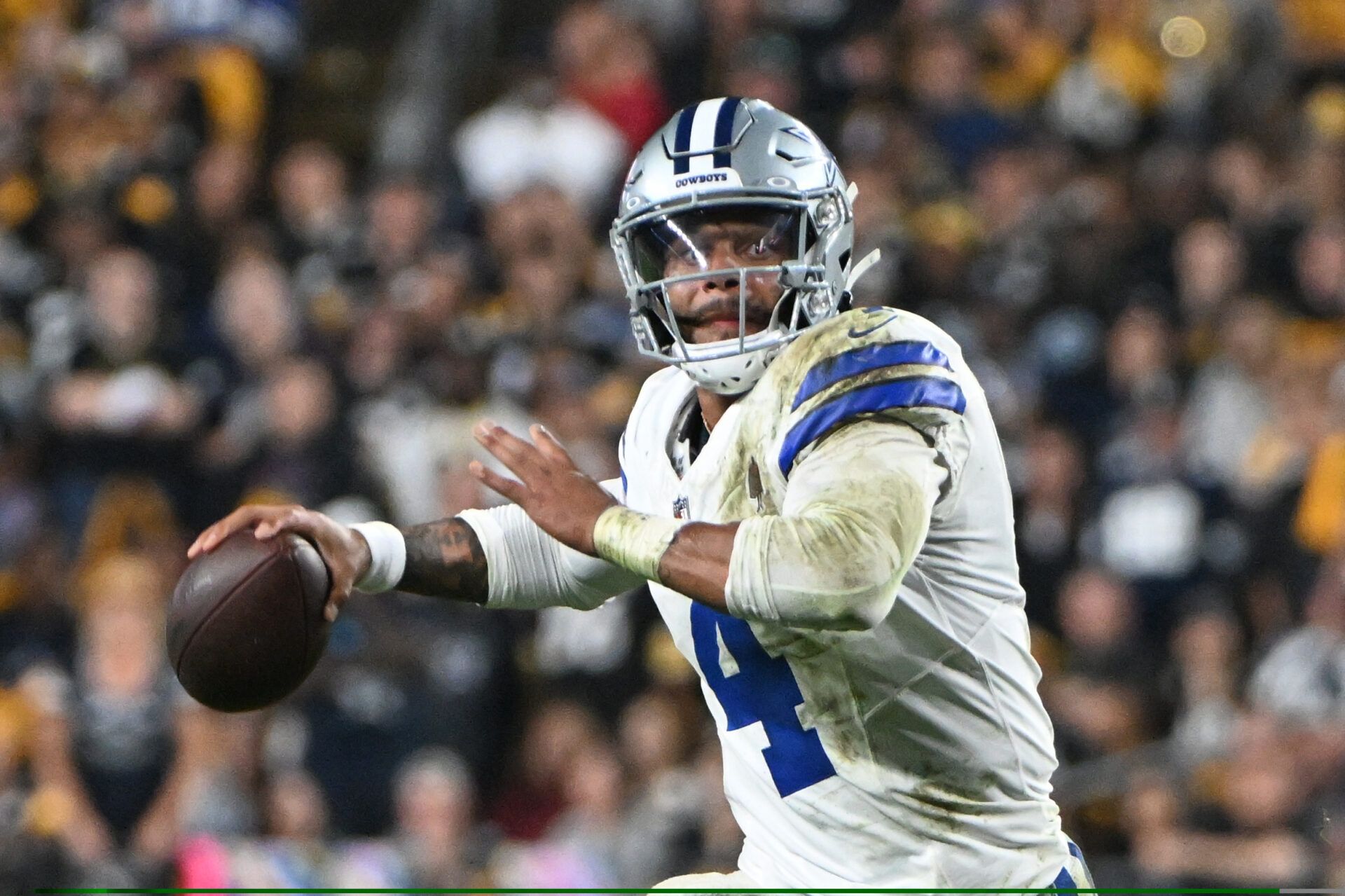

Dak Prescott’s Numbers Tell a Troubling Story
The data paints a picture that contradicts conventional wisdom. While most would expect Prescott’s fantasy value to rebound following his injury-shortened 2024 campaign, PFSN users are doing the opposite, according to PFSN’s Fantasy Football Trade Analyzer.
What started as mild skepticism has evolved into full-blown concern, with trade patterns showing accelerating doubt about the 32-year-old quarterback’s reliability.
In May, 52.7% of trades involving Prescott saw fantasy managers dealing him away. By June, that figure climbed to 54.8%. The most telling statistic comes from July, where an overwhelming 66.8% of Prescott trades have involved managers moving off the Cowboys signal-caller. This isn’t random market fluctuation; it represents a sustained loss of confidence in a player many once considered a fantasy stalwart.
The hamstring injury that ended Prescott’s 2024 season in early November serves as more than just a cautionary tale about durability. It symbolizes a broader concern about his evolving skill set and declining fantasy ceiling.
Fantasy managers aren’t just worried about missed games; they’re questioning whether Prescott can deliver the explosive performances that separate championship teams from also-rans.
Dak Prescott connects with CeeDee Lamb for a 65-yard TD. We have a shootout in Dallas. pic.twitter.com/dWQORvSl5Y https://t.co/WDIYhIOAdu
— Ari Meirov (@MySportsUpdate) September 15, 2024
The Rushing Element Has Vanished
Perhaps no statistic better illustrates Prescott’s fantasy decline than his rushing touchdown production. Early in his career, Prescott’s legs provided a crucial fantasy boost, contributing 18 rushing scores across his first 48 professional games. That dual-threat capability made him a reliable QB1 option even when his passing numbers fluctuated.
However, the past several seasons tell a different story entirely. Over his subsequent 74 games, Prescott has managed just 11 rushing touchdowns. This dramatic drop represents more than statistical noise; it reflects a fundamental shift in how Dallas utilizes their quarterback and how defenses approach containing him.
The modern fantasy football landscape rewards versatility at the quarterback position more than ever before.
Managers can stream lesser-known signal-callers who contribute significant rushing production and often outperform traditional pocket passers. Prescott’s diminishing mobility removes a key differentiator that once elevated his fantasy ceiling above his actual NFL performance level.
Schedule Presents Nightmare Scenario
The final stretch of the fantasy season looms as Prescott’s ultimate test, and the schedule suggests trouble ahead. During the crucial Weeks 12-17 period, when fantasy championships are won and lost, Dallas faces an unforgiving gauntlet of opponents designed to limit offensive production.
Every single opponent during this stretch ranks above average in time of possession from the previous season, including three teams that finished in the top six. This creates a perfect storm for fantasy disappointment. While strong defenses can sometimes inflate quarterback statistics through garbage time opportunities, teams that control the clock present a different challenge entirely.
Time of possession matters tremendously for fantasy quarterbacks. Extended drives by opposing offenses limit the total number of plays available to fantasy relevant players. For a quarterback already showing declining mobility and facing questions about his ceiling, reduced opportunities compound existing concerns about reliable production.
The Cowboys’ defense, while improved in recent years, hasn’t demonstrated the ability to consistently force quick three-and-out drives that would maximize offensive possessions. This defensive limitation, combined with facing methodical, ball-control opponents, creates a scenario where Prescott may find himself watching from the sidelines more than managing the game.
The Verdict on Prescott’s Fantasy Future
Smart fantasy managers recognize warning signs before they become disasters, and the PFSN trade data represents exactly that type of early indicator. The accelerating rate at which experienced fantasy players are moving away from Prescott suggests this isn’t temporary market overreaction but rather informed decision-making based on legitimate concerns.
Prescott’s age, injury history, declining rushing production, and brutal late-season schedule create a confluence of factors that spell trouble for fantasy championship hopes.
While he can still put up decent numbers in favorable matchups, especially with the Cowboys acquiring George Pickens to complement CeeDee Lamb at wide receiver, the margin for error is now razor-thin. When your fantasy season is on the line, trusting a quarterback that even his own managers are abandoning feels like a losing bet. Sometimes the crowd gets it right, and the data points to this being one of those times.
