
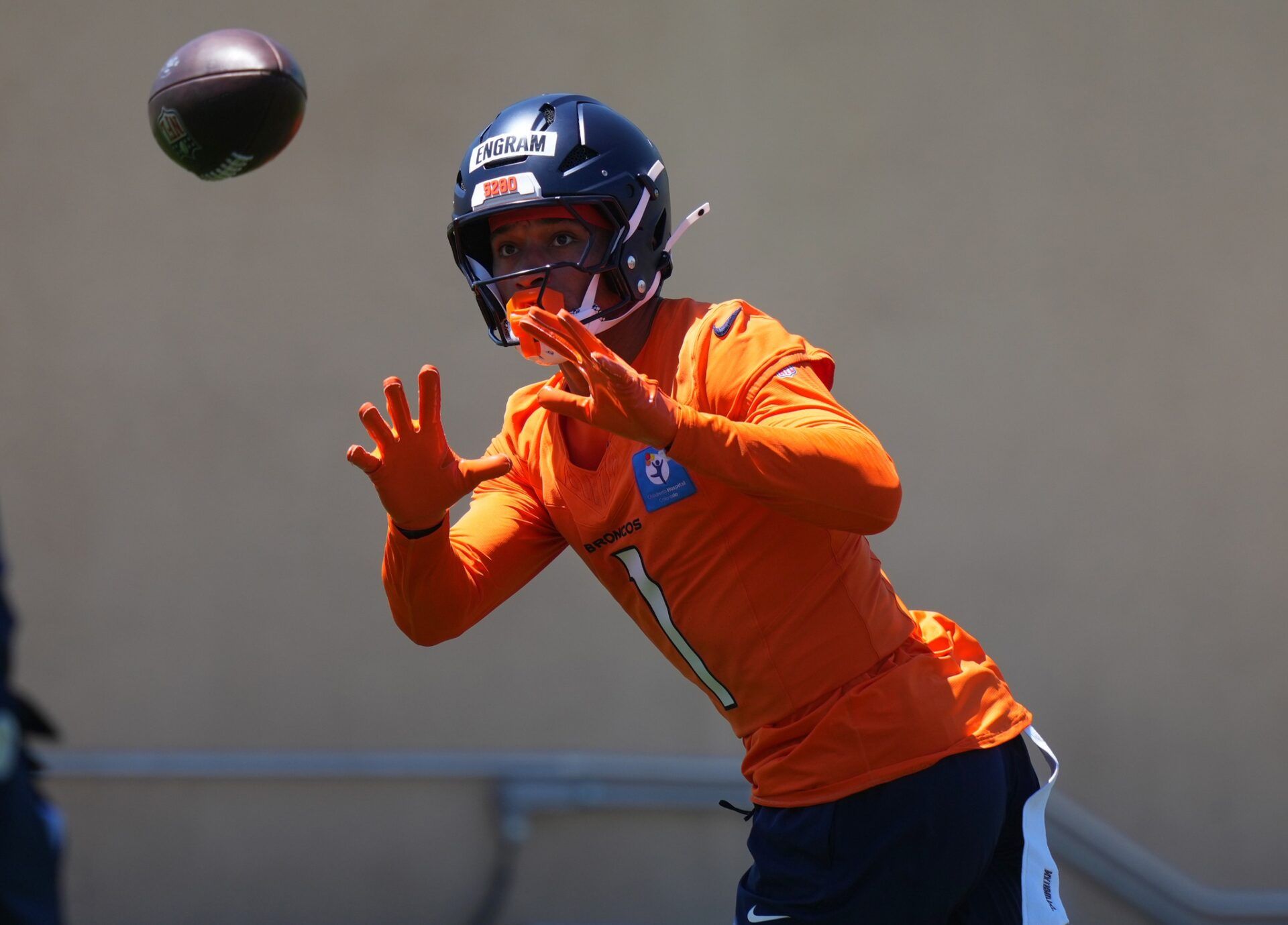
The fantasy football trade market has spoken, and Evan Engram is suddenly the tight end everyone wants on their roster. After being shipped out of fantasy lineups more often than acquired earlier this offseason, Engram has become the hottest commodity at his position, with fantasy managers trading for him at nearly a 2-to-1 rate in July.
The question isn’t whether this surge reflects real value, but whether fantasy managers are finally catching up to what the numbers have been screaming all along for the Denver Broncos TE.
The Market Shift Reflects Untapped Potential for Evan Engram
PFSN data from the Fantasy Football Trade Analyzer tells a compelling story about evolving perception. Through the first half of July, Engram was acquired 125 times, compared to just 64 trades sending him away. This dramatic reversal from his earlier offseason treatment suggests fantasy managers are recognizing something crucial: the Broncos’ receiving corps desperately needs a reliable target, and Engram fits that role perfectly.
Last season, the Denver offense managed to get only one player to 505 receiving yards, a startling statistic that reveals the team’s struggles and the massive opportunity ahead.
When an entire offense produces so few reliable fantasy contributors, any player positioned to absorb a significant target share becomes exponentially more valuable. Engram enters this scenario with Sean Payton, a coach whose track record with tight ends speaks volumes about the position’s potential role in the offensive scheme.
Payton’s history with tight ends extends beyond simple usage. Throughout his coaching career, he’s consistently found ways to maximize the position’s value, whether through red-zone opportunities, intermediate route concepts, or creating mismatches against linebackers. The combination of Payton’s system and Denver’s current receiving landscape creates the perfect opportunity for Engram to exceed his previous production levels.
The Consistency Factor That Fantasy Managers Crave
What makes Engram’s situation particularly intriguing is his demonstrated ability to produce consistent fantasy performances despite challenging circumstances. Over the past two seasons, he recorded 19 games with five or more receptions, ranking third among all tight ends in this crucial fantasy metric. Only Travis Kelce with 21 such games and Trey McBride with 20 surpassed him, placing Engram in elite company for weekly reliability.
Evan Engram’s 5.5 Receptions per Game in Jacksonville leads all #Jaguars in Franchise History.
pic.twitter.com/y7XMmQoeac— Daniel Griffis (@DanDGriffis) January 15, 2024
This consistency becomes even more impressive when considering the context. Engram achieved these numbers while appearing in nine games (missing eight) and playing for a bottom-12 offense in both yards per play and yards per game during the 2024 season. The ability to produce steady fantasy output within a struggling offensive system demonstrates the target prioritization that fantasy managers should highly value.
The five-reception threshold represents more than just a statistical benchmark. In most fantasy scoring systems, five catches with modest yardage typically translate to a solid floor performance, the weekly reliability that wins championships. Engram’s track record suggests he can deliver this consistency while offering upside for bigger games, which makes him particularly attractive in the middle rounds of fantasy drafts.
Why the Denver Broncos’ Opportunity Exceeds Expectations
The narrative surrounding Denver’s offensive limitations shouldn’t overshadow the genuine opportunity that exists. When a team has struggled to distribute the ball effectively, the arrival of a proven target like Engram can fundamentally alter the offensive dynamic.
His ability to work from multiple alignments and create separation in crucial down-and-distance situations gives Payton the flexibility to design an offense that maximizes existing talent while covering for potential weaknesses.
The fantasy managers driving Engram’s trade value understand that sometimes the best opportunities come from situations others avoid. Denver’s offensive rebuild creates the perfect environment for a veteran tight end to assume a larger role than he might receive on a more established team.
Fantasy football success often comes from identifying players before the broader market recognizes their value. The July trade surge suggests that Engram’s recognition has arrived, but the window for acquisition at a reasonable price may be closing quickly. When a player’s trade value nearly doubles in two weeks, the market tells you something important about perceived opportunity.
Sometimes the best fantasy picks come from players who quietly deliver precisely what you need them to deliver. Engram’s path to fantasy relevance doesn’t require reinventing himself or dramatically exceeding past performance levels.
He needs to continue doing what he’s already proven capable of doing, but now within an offensive system and target competition that should allow his skills to shine more brightly than they have in recent seasons.