
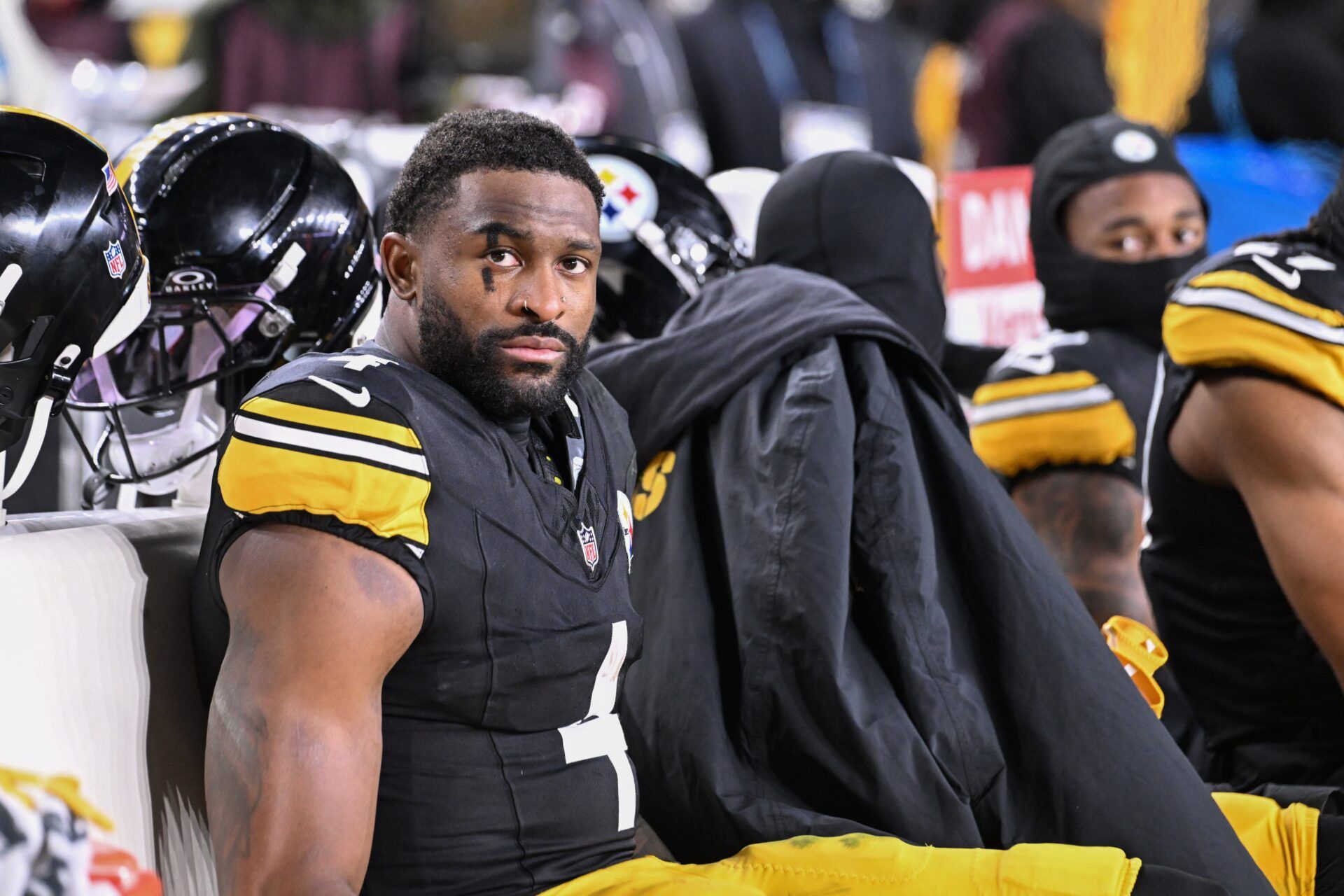
DK Metcalf’s exit from the Seattle Seahawks marked the end of a six-season run in which he became one of the NFL’s most productive wide receivers and a central figure in the Seahawks’ offense.
Drafted in 2019 and quickly emerging as a consistent big play threat, Metcalf was a focal point of multiple eras in Seattle, from the end of the Russell Wilson years through the transition to a new coaching staff. By the 2025 offseason, though, tension around his future, contract status, and the team’s direction had built to the point where both sides moved on.
Why Did Seahawks Trade Star WR DK Metcalf?
Seattle’s decision to trade Metcalf was rooted in a mix of his desire to leave and the organization’s calculations about value, timing, and roster construction. Metcalf officially requested a trade in early March, after an offseason in which rumors about his future had already begun to surface.
ESPN added that this was not the first time he had pushed for a move, noting Metcalf had asked to be traded multiple times in recent offseasons before allowing his latest request to go public.
General manager John Schneider initially hoped the relationship could be repaired. “DK and I were having a lot of personal discussions,” Schneider said after the trade.
He added, “I thought we could fix it, handle it, whatever it was, and at the end of the day, it was a no, and he wanted to be traded. So we pivoted and moved forward. We want guys who want to be here, we want guys that believe in what we’re doing, and you’d have to ask him, one reason or another, he just wanted to move on and get a fresh start.”
Contract dynamics were a significant factor. Metcalf was headed toward free agency after the 2025 season, and any decision to keep him in Seattle would have required a massive third contract.
The same ESPN report noted that the Seahawks were planning for him to be part of their future and still had time to work out an extension, but Schneider also had to weigh the risk of committing major cap space to a player described as “perpetually discontented.”
Metcalf’s frustrations reportedly included clashes with then-quarterback Geno Smith, and he effectively blocked a potential trade to the Patriots by making it clear he would not sign an extension in New England. His preferred destinations, per that report, were the Texans and Chargers.
In the end, Seattle found its deal with the Pittsburgh Steelers. The Seahawks received the Steelers’ 2025 second-round pick, No. 52 overall, in exchange for Metcalf, while the sides also swapped late-round selections, and Pittsburgh immediately signed him to a four-year, $132 million extension with $60 million guaranteed.
For the Steelers, it was a move to secure a top-tier receiver despite uncertainty at quarterback. For the Seahawks, it was a way to extract value before the contract situation forced a harder decision.
READ MORE: Super Bowl 60 Predictions: Predicting the Winner, Final Score, MVP, and More
The trade also intersected with Seattle’s changing offensive core. By 2024, Jaxon Smith-Njigba had broken out with 1,130 receiving yards, giving the Seahawks a younger receiver they believed could step into a true No. 1 role.
Metcalf’s departure opened space for Smith Njigba to become the lead option while sparing the franchise from another expensive wideout extension.
His production made the move jarring on its face with 438 receptions, 6,324 yards, and 48 touchdowns over 97 games, with six straight seasons of at least 900 receiving yards and never fewer than 15 games played. Metcalf was ranked 23rd on the PFSN NFL WR Impact Metric with a B- grade and 80.2% impact score.
But from Seattle’s perspective, a combination of repeated trade requests, looming financial commitments, a lack of postseason success in his tenure, and the emergence of a cheaper, ascending option in Smith-Njigba pushed the organization toward honoring his wish to leave.
By the time the Steelers and Seahawks met early in the 2025 season, Metcalf reportedly downplayed the matchup with his former team as just another football game.
For Seattle, that game and the broader 2025 campaign became an early test of whether the decision to cut ties with a star receiver at his peak would be justified by the development of the reshaped passing attack built around Smith Njigba and the flexibility gained by not extending Metcalf on a third major contract.
