
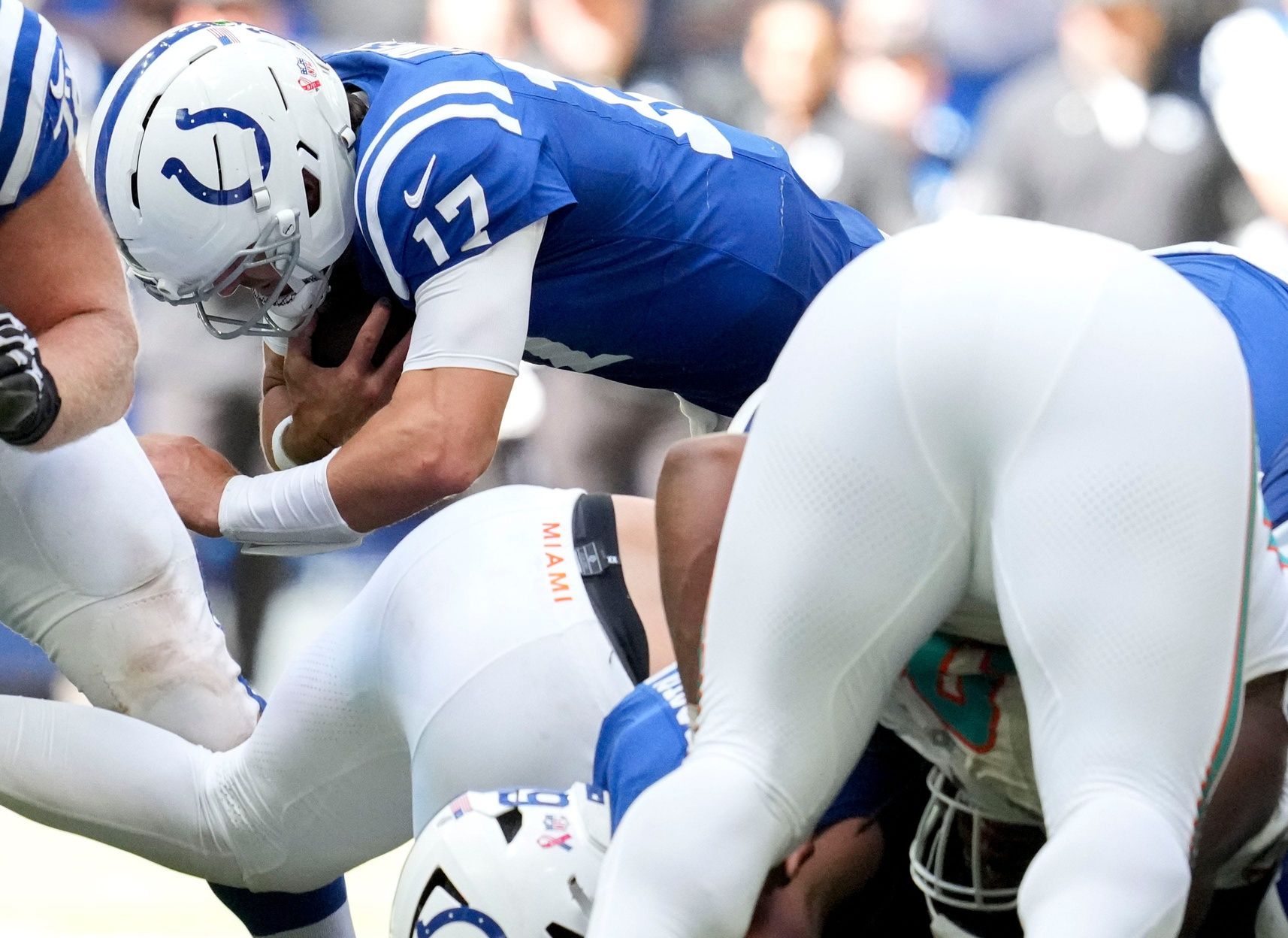
Daniel Jones wasted no time rewriting a franchise tradition. In his season debut against Miami, Jones posted an 84.9 overall game grade, the highest Week 1 mark ever awarded to a Colts quarterback by PFSN since 2000.
This number doesn’t just represent a solid opening; it puts Jones ahead of even Peyton Manning and Andrew Luck’s debut in Indianapolis. For a city that’s lived and breathed quarterback excellence, this is a sharp new benchmark and a promising sign for what lies ahead.
How Does Daniel Jones’s Debut Compare to Manning and Luck?
To understand why Jones’s performance matters, it’s essential to dig into PFSN’s QBi methodology. The QBi game grade combines both passing and rushing stats while placing the greatest weight on clean pocket performance and designed rushing efficiency. Less stable elements, like numbers generated under pressure, count for less. All of this gives us a reliable tool for separating real quarterback potential from fleeting highlights.
Jones’s 84.9 game grade in his Colts opener wasn’t just a technicality—it was driven by the highest clean pocket EPA per dropback (0.55) of any Indianapolis starter in Week 1 over the past two and a half decades. No other Colts quarterback going back through the Manning and Luck eras matched his blend of poise, decision-making, and stable production on opening day.
For context, Manning’s first game with the Colts in 1998 saw flashes of anticipation but also rookie mistakes and modest passing metrics under pressure. Luck’s debut in 2012 brought excitement, but with mixed results when the defense collapsed the pocket. Neither managed a game grade or clean pocket EPA per dropback on par with what Jones achieved against Miami.
MORE: PFSN’s QB Impact Rankings
What makes Jones’s outing especially meaningful is consistency in critical areas. PFSN’s data shows quarterback success throughout the season tracks closely to how well they navigate clean pocket scenarios. Jones ranked eighth league-wide in clean pocket EPA for Week 1, a strong leader for both the Colts and across the NFL.
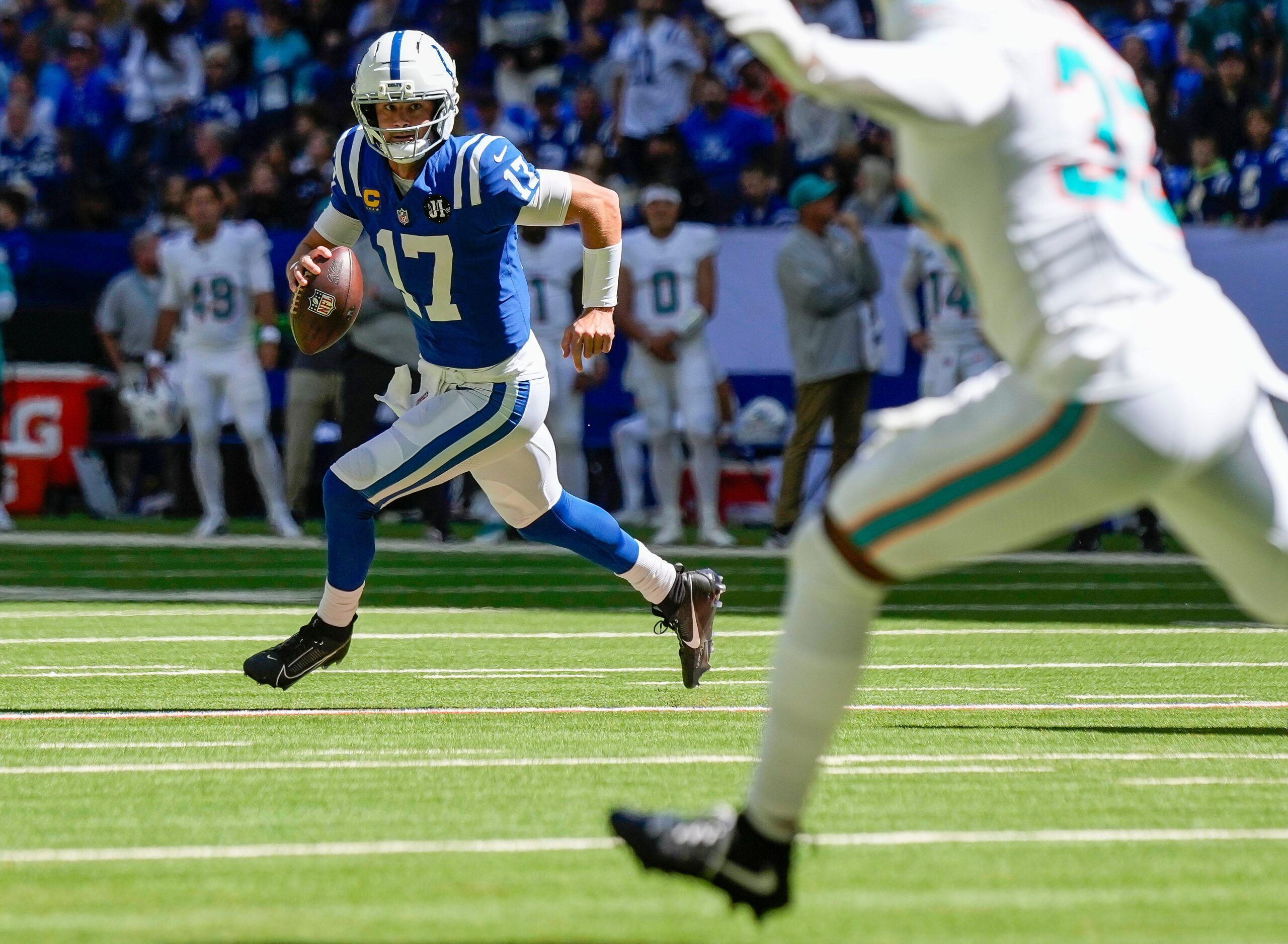
That stability is what offensive coordinators crave and what fantasy managers should prioritize. The finer details: Jones converted the most high-leverage plays, showed control and accuracy, and avoided the chaotic play that brings risk instead of reward.
Moving beyond comparison, Jones’s debut signals a possible shift in how Indianapolis builds around its quarterback. With the data pointing to efficiency where it matters most, the coaching staff is given evidence to double down on play designs that leverage his strengths.
Whereas Manning and Luck sometimes thrived on improvisation and big plays, Jones’s debut is marked by measured consistency and repeatable decision-making—values highlighted again and again in the PFSN QBi.
Daniel Jones put on a SHOW in his Colts debut. 📈
The former Giants top-10 pick has ranked higher than QB22 in PFSN’s QB Impact metric just once in his career.
Jones led the Colts on 7 straight scoring drives. 🔥 pic.twitter.com/XOSkiXEc5w
— PFSN (@PFSN365) September 7, 2025
Jones spoke to the media after the game and highlighted the time he had in the pocket to make big plays. “I feel like I’m throwing it well… We had time to throw yesterday, and it was a lot of fun.”
Transitioning to the broader meaning for Colts fans, Jones’s performance isn’t just about one game. PFSN’s tracking of clean pocket EPA per dropback as the most stable season-long measure gives genuine hope. This could be the start of a new chapter for Indianapolis.
The takeaway from Week 1 is grounded in hard numbers and hard-earned optimism. The Colts have needed stability and upside at quarterback, and this season’s opener delivered both. With a debut that sits atop the PFSN leaderboard and sets a national standard for clean pocket productivity, Jones has earned an early spotlight. More importantly, he’s given his team reason to believe, with metrics and data that point upward. The season is young, but the signal is bright