
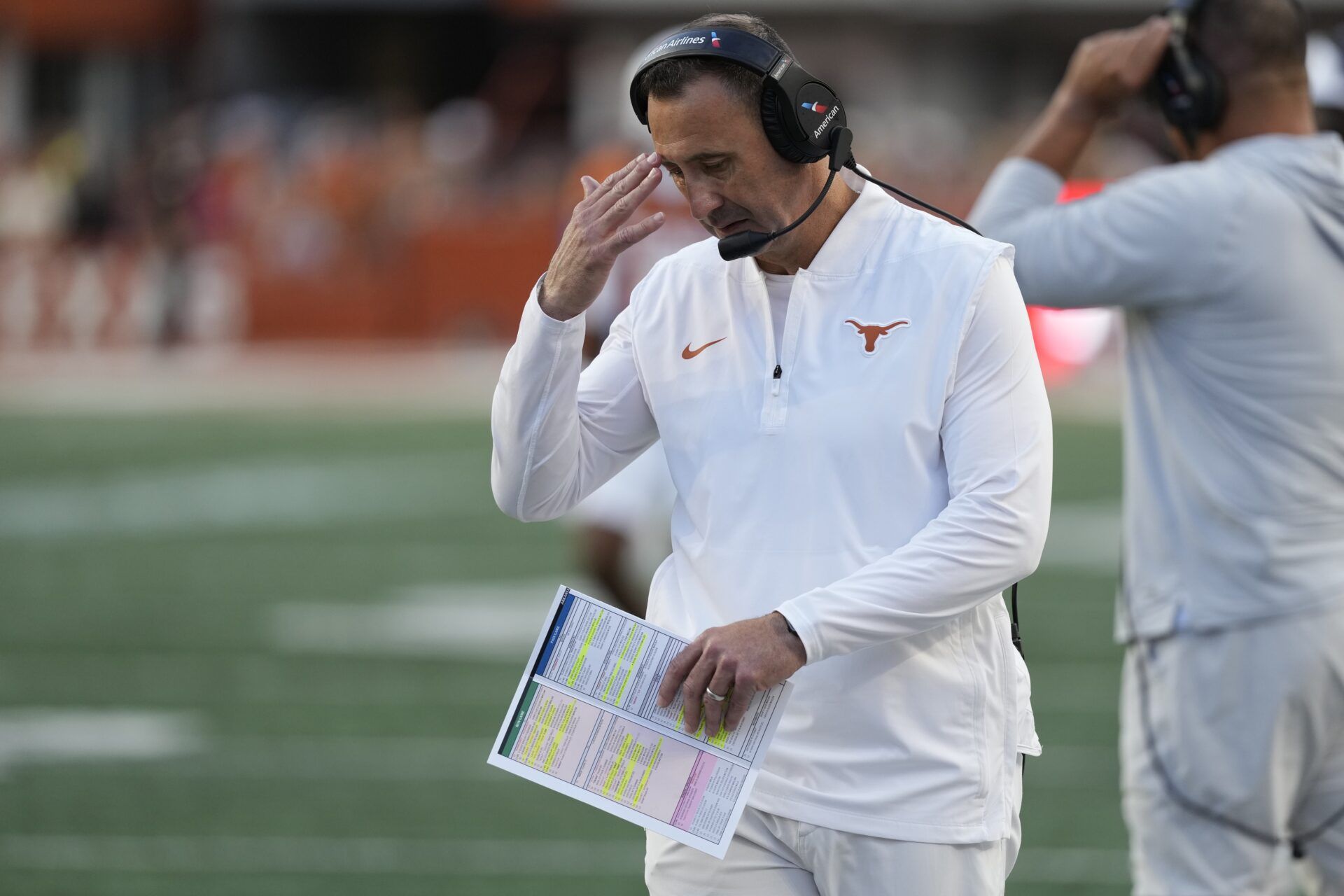
Texas head coach Steve Sarkisian expressed concern about the current trajectory of college football. With name, image, and likeness (NIL) deals emerging as a dominant force, programs are being compelled to adjust their strategies. Sarkisian specifically raised questions about how the absence of regulation surrounding agents is influencing the sport and its broader culture.

Texas HC Steve Sarkisian Blasts Agents in College Football
With financial considerations increasingly shaping college football, coaches have voiced frustration. Sarkisian, known for his candor, spoke openly about his concerns.
“There are some agents that are rational, and there are some agents that, this is the first time ever being an agent,” Sarkisian said. “I don’t know if they are even licensed to be an agent, and all of a sudden, they get to be agents, because we have no certification process in college football.
“In the NFL, certification is required. In college football, it could be just a player’s college roommate acting as an agent, throwing out numbers we can’t engage with. So, we just move on.”
Steve Sarkisian speaks on constructing rosters through NIL and some strong words with the challenges of dealing with specific agents:
“There are some agents that are rational, and there are some agents that this is the first time ever being an agent, I don’t know if they are… pic.twitter.com/RYNwn256Hg
— CJ Vogel (@CJVogel_OTF) December 30, 2025
Parsing Sarkisian’s comments reveals a key argument. The lack of a formal certification process for college football agents, compared to the NFL, creates problems. In the NFL, agents must meet strict requirements, but college football allows anyone, even unqualified acquaintances, to act as agents, which Sarkisian views as a major flaw in the system.
Sarkisian also highlights that friends or associates can serve as agents, which complicates recruiting. This can become a hurdle when players try to join a school, especially with the large number of athletes in the transfer portal and limited top-tier opportunities available. Texas already boasts a formidable team, ranking No. 17 in PFSN’s Defense Impact metric.
For example, an inexperienced agent could reset the market for a player, pushing their valuation beyond widely believed standards. Schools could get priced out. However, this should not become an issue for Texas, as the program boasts one of the most vibrant donor bases in college football.
Texas, unlike many programs, rarely seeks overlooked talent in the portal. The program pursues elite players with multiple offers, often represented by aggressive agents looking to secure the highest bids and their own commissions.
With Texas missing the College Football Playoff, Sarkisian must now recruit against top SEC programs. The competitive landscape makes dealings with agents even more fraught, further underscoring his frustration with the lack of oversight and its impact on the process.
For the current situation to change, athletic directors, along with conference commissioners acting in concert with the NCAA, will need to develop a plan to bring clarity and certification to the agenting process.
