
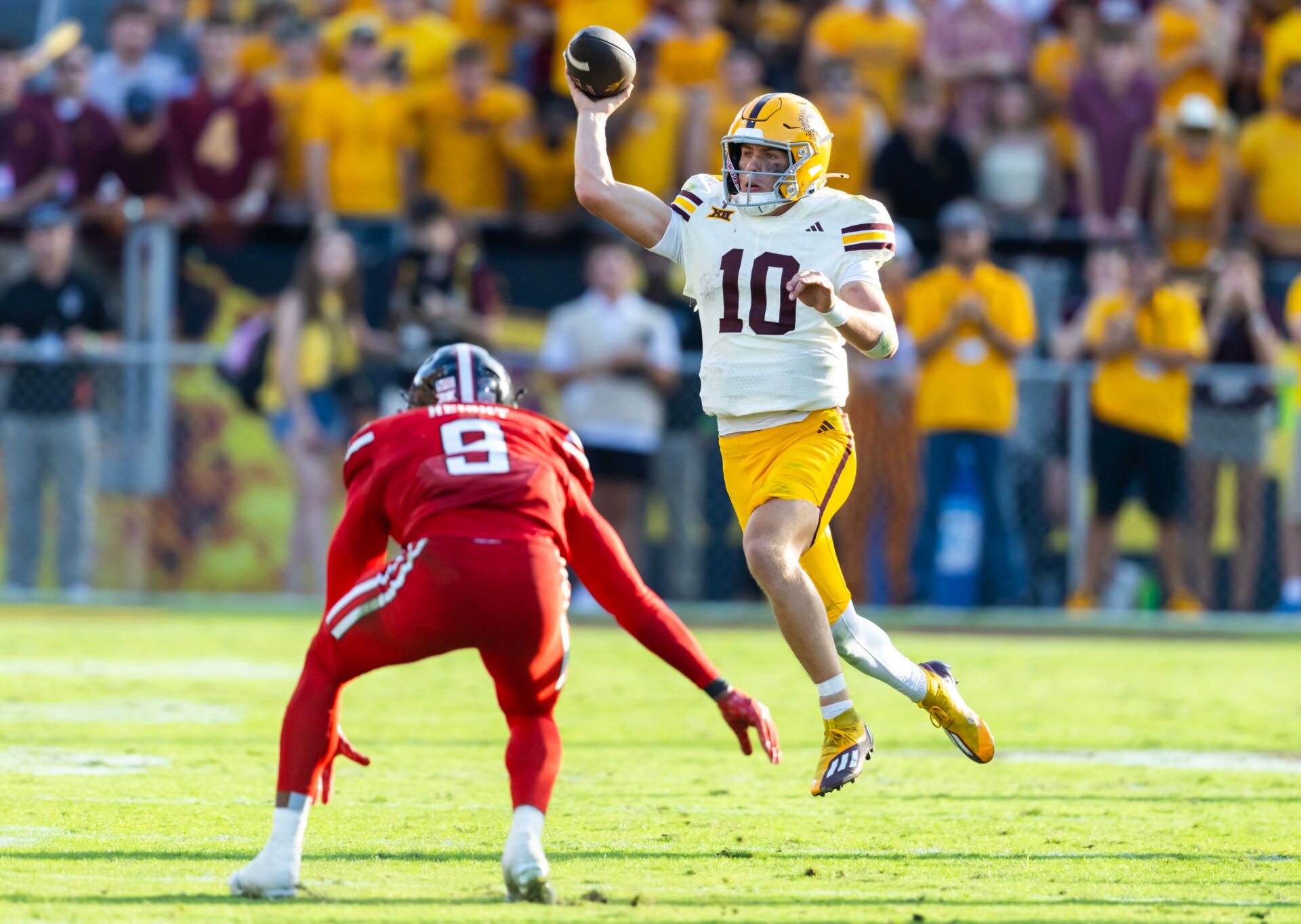
In today’s version of college football, elite quarterback recruiting doesn’t end on signing day; it typically ends when the highest bidder finally blinks. And in the battle for Sam Leavitt, LSU didn’t blink. According to reports from college football analyst Pete Nakos, LSU outlasted Tennessee in a late-stage bidding war, ultimately backing up the truck to the tune of roughly $6 million to secure the top quarterback available in the transfer portal. Tennessee made a serious last-ditch push, but LSU held firm and landed its guy.
The move is massive, and not just because of the price tag.
LSU Wins In More Ways Than One
This is a double victory for LSU.
First, the Tigers land their projected starting quarterback for the 2026 season, accelerating the program’s trajectory back toward the offensive standards that have long defined success in Baton Rouge. LSU wasn’t shopping for a stopgap. They were shopping for a centerpiece, and Sam Leavitt fits that bill.
Sources tell @On3sports that despite late contract talks with Tennessee, Sam Leavitt will land at LSU. https://t.co/7t7XlJlRkx https://t.co/hxWO1yb3Uw
— Pete Nakos (@PeteNakos) January 12, 2026
Second, LSU effectively blocked an SEC rival from solving its own quarterback problem.
Tennessee is now left in limbo, still awaiting clarity on whether Joey Aguilar will receive an additional year of eligibility, a ruling that appears increasingly unlikely. The Vols’ aggressive late push for Leavitt speaks volumes about how uncertain their internal situation truly is. Miss on Leavitt, and the options quickly thin out.
For LSU, that’s a strategic win. You get your quarterback and prevent a conference opponent from getting one. In a league where margins are razor-thin, that matters.
LSU Couldn’t Miss on Sam Leavitt
If LSU had missed on Leavitt, the board behind him was far less appealing, especially for a program that needs elite quarterback play to contend in the SEC. There simply weren’t many alternatives that offered the same ceiling for 2026.
And the urgency was justified.
According to PFSN, LSU posted a 76.1 offensive impact grade last season. For most programs, that’s respectable. At LSU, it’s unacceptable. The recent trend tells the story: 83.2, 91.9, then 85.8, a clear regression that proved costly. Offensive inconsistency directly influenced LSU’s decision to bring in Lane Kiffin, a coach synonymous with quarterback development and explosive production, because another season of instability at the position simply wasn’t an option.
Why Lane Kiffin Changes Everything
Under Kiffin, LSU instantly became one of the most quarterback-friendly destinations in the country.
Kiffin’s résumé speaks for itself. Last season, Jaxson Dart developed into a first-round NFL Draft pick under his watch. This year, Kiffin took Division II transfer Trinidad Chambliss and turned him into one of the game’s best quarterbacks in the nation, earning a 90.3 PFSN quarterback impact grade.
That kind of development doesn’t happen by accident.
For Sam Leavitt, if the priority was maximizing quarterback growth on the biggest possible stage, LSU under Kiffin always felt like the best fit. The SEC platform. A proven offensive architect. A clear path to being “the guy.”
It was a match made in heaven, though one that nearly slipped away. Kiffin briefly played the waiting game, monitoring whether Chambliss might gain an extra year of eligibility and potentially redirect to LSU. Once that door began to close, the Tigers went all-in on Leavitt. And they didn’t hesitate this time around after being linked to so many QBs.
Nonetheless, expect fireworks in Baton Rouge.
On the field, LSU is poised to reestablish itself as one of the most dangerous offenses in the country. Off the field, the personalities alone, Lane Kiffin and Sam Leavitt, promise headlines, confidence, and plenty of swagger.
In the SEC, elite quarterback play isn’t optional; it’s mandatory to put yourself at the top of the conference. LSU understood that, paid the price, and came away with the most important position secured.
Tennessee, meanwhile, is left waiting. And in college football’s new arms race, waiting can cost you everything.
