
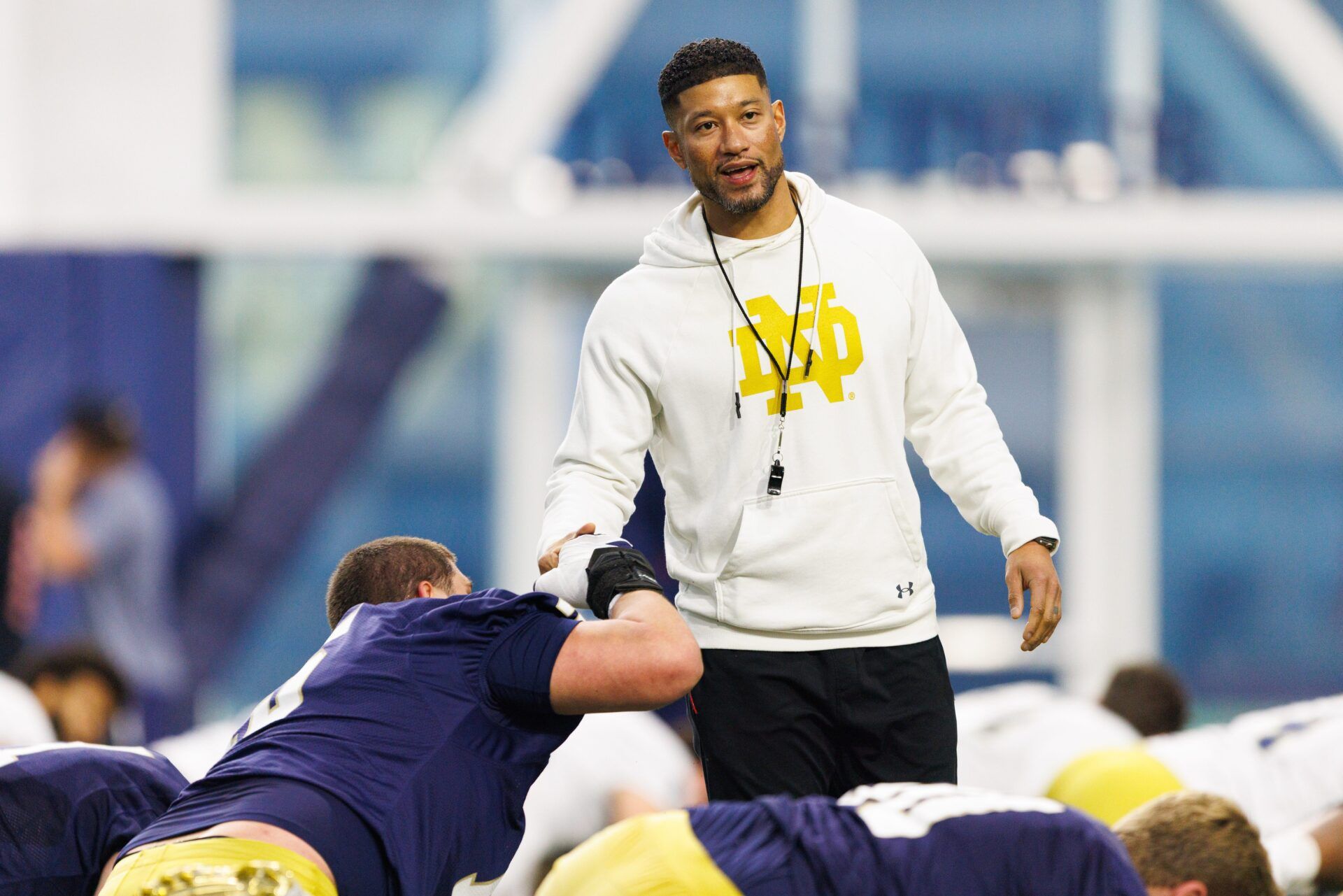
Notre Dame enters the 2026 college football season with a measurable advantage that could shape its path toward contention. The Fighting Irish return 72% of their production, the highest mark in the nation, positioning Marcus Freeman’s roster ahead of key opponents like Miami, BYU, and SMU.
In an era of rising roster turnover, that level of continuity stands out even more. With a veteran core, strong defensive retention, and a favorable schedule, Notre Dame is not just reloading but building on a foundation that already proved capable of competing at a high level.

Returning production sets Notre Dame apart in a shifting landscape
Continuity across college football has steadily declined, making Notre Dame’s numbers even more significant. According to ESPN’s Bill Connelly,
“The idea of returning production in college football is easy enough to understand: The more continuity and experience you return from last season, the more likely you are to improve.” That principle works heavily in Notre Dame’s favor heading into 2026.
MORE: Michael Irvin ‘Loves’ Mario Cristobal After Showing Off Miami’s Elite Commit Jaylyn Jones
The Irish lead all programs with 72% returning production, including 67% on offense (ranked 19th nationally) and 77% on defense (ranked second). That defensive retention is particularly notable, giving Notre Dame one of the most stable units in the country. Among its 2026 opponents, only BYU at No. 18 and SMU at No. 22 crack the top 25, while Miami sits much lower at No. 78.
Nationally, programs like Maryland, Nebraska, and Virginia Tech also rank near the top, but Notre Dame’s combination of balance and high-end defensive continuity stands out. Meanwhile, the broader trend shows declining retention across the sport, driven in part by transfer movement and the fading impact of extra eligibility from the COVID-19 season.
What does it mean for Notre Dame coming into 2026
While Notre Dame’s 72% leads the country, the broader context tempers expectations slightly. Connelly noted,
“Returning production reached an all-time high in 2021 after the NCAA gave everyone involved in the 2020 COVID season an extra year of eligibility; the national averages were always going to slide in the following seasons as the bonus-year guys filtered out of the playing pool.”
He added that current figures have dropped well below the pre-COVID average of around 62%.
That perspective matters. Notre Dame’s current mark would have ranked 14th in 2024 and 7th last season, suggesting the relative advantage is smaller than it might appear. Still, the Irish do not need a dramatic leap. After finishing fifth in SP+ last season, incremental improvement could be enough to push them into true title contention.
MORE: Maxwell Hiller Puts Florida on Alert As 5-Star OL Announces Tennessee Visit
The timing also works in Notre Dame’s favor. Unlike the previous year, when a deep postseason run shortened recovery time, the program now enters spring with a fresher roster.
Freeman, now in his fifth season, leads a team with both experience and urgency. Spring practices offer a chance to solidify leadership roles, integrate younger players, and refine key position groups — especially along the defensive line and at wide receiver.
