
In the modern era of college football, donors play a crucial role in the financial health of programs. Although this practice may seem new, it dates back decades; only the optics have changed. Understanding the longstanding influence of donor involvement is key to seeing how money continues to shape the sport.
Wealthy Donors Like Mark Cuban Are Not a Recent CFB Development
College football’s reliance on wealthy backers mirrors broader societal patterns. For example, medieval knights and classical musicians thrived with support from patrons. That tradition persists in college athletics, demonstrating that donor involvement is hardly a new phenomenon. The only major change is increased visibility in the 24-hour news age.
Building on this foundation, donors, often referred to as boosters, have long played a vital role in developing and sustaining successful college football programs.
In the late 1970s, Sherwood Blount exemplified this role by quietly ushering in a new era of donations at SMU. Blount, a former player who prospered in real estate during Dallas’s construction boom, led boosters in recruiting top talent for the program.
Head coach Ron Meyer knew what needed to be done. After losing seasons, he worked with Blount and donors to recruit players. Texas stars Eric Dickerson and Craig James joined, helping the Mustangs finish 18-5 in Meyer’s last two seasons.
As NCAA scrutiny intensified, Blount continued to support him. Eventually, the NCAA banned SMU from competing in 1987 and voluntarily remained out in 1988. 38 years later, SMU finally rejoined a Power Four in 2024. Blount and donors were officially banned. The NCAA punished SMU for actions now permitted elsewhere.
Transitioning to modern developments, Cody Campbell stands out as a pivotal figure in shaping today’s college football economy. A former Texas Tech offensive lineman who entered the oil and gas industry, Campbell was motivated by his alma mater’s struggles.
Leveraging his resources and Board of Regents appointment, Campbell established the Matador Club, one of the earliest NIL collectives. His efforts contributed to the Red Raiders winning the Big 12 championship, their first outright conference title since 1955.
Similarly, individual donors continue to influence player decisions in the current era. For example, Bryce Underwood, now Michigan’s starting quarterback, originally committed to LSU with a $1.5 million offer.
The connection between Michigan and influential figures, such as Larry Ellison, whose spouse is a Michigan alum, led to a lucrative opportunity for Underwood in Ann Arbor. With an agreement worth $10-12 million, Underwood signed with Michigan and moved forward without hesitation.
When Penn State sought to hire a head coach to replace James Franklin, who was fired in the middle of the season, BYU’s head coach, Kalani Sitake, jumped to the top of the Nittany Lions’ wish list.
The thought of potentially losing his alma mater’s head coach prompted Jason McGowan to take to social media, throwing his metaphorical hat into the ring to ensure that Sitake stayed in Utah. McGowan is the founder and CEO of Crumbl, a large cookie franchise with over 1,000 stores. In the end, Sitake rebuffed PSU’s advances and continues to lead BYU.
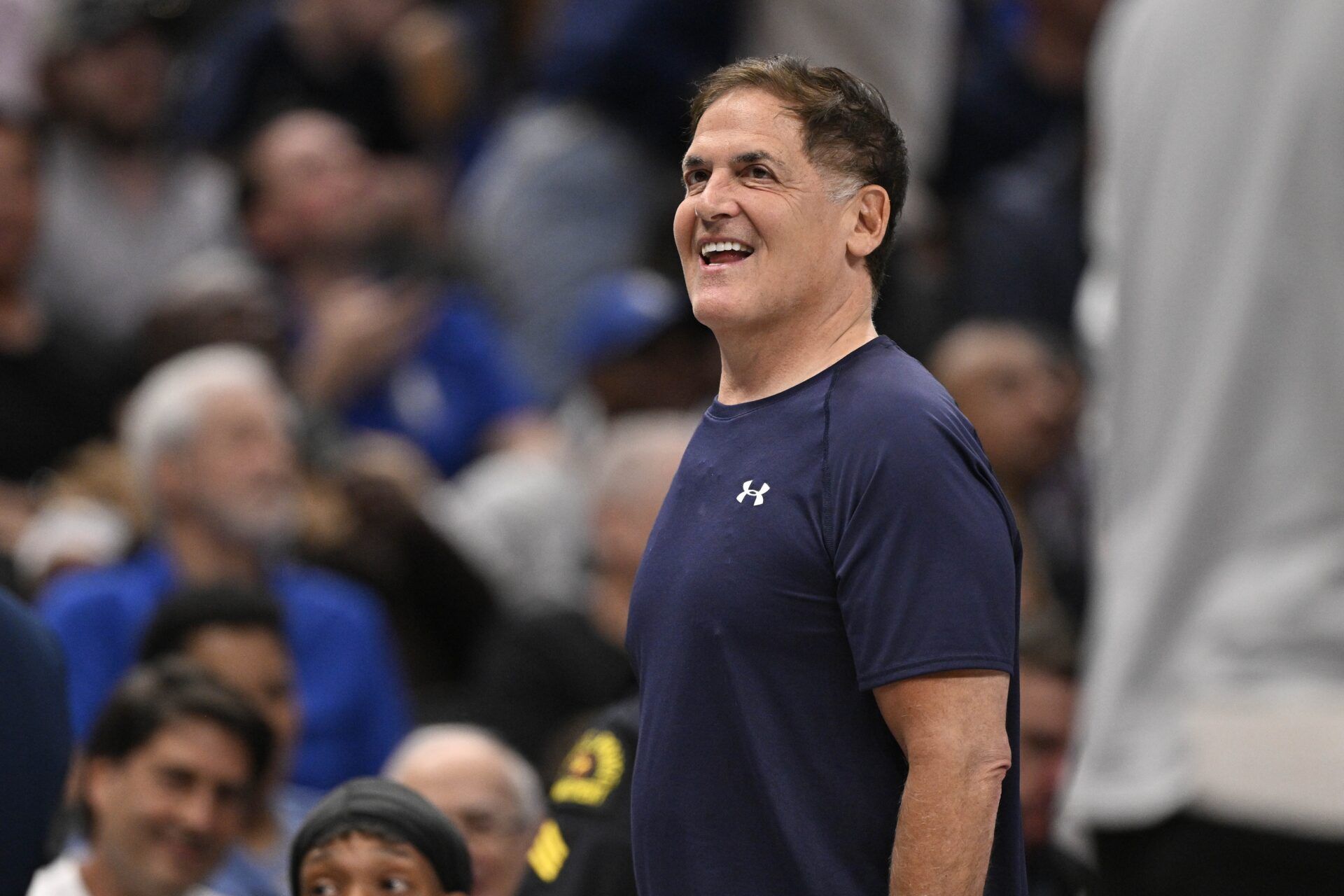
Front Office Sports ran this story about Mark Cuban being the driving force behind Indiana’s college football ascendancy. Cuban, an IU alum, made his billions by starting businesses and eventually selling them. In 2000, he purchased a majority interest in the Dallas Mavericks for $285 million. In 2023, he sold a significant portion of his stake in the team for $3.5 billion.
Cuban’s ongoing support illustrates how substantial alumni involvement can reshape a football program. His contributions enabled IU to hire Curt Cignetti, offer him a lucrative extension, and provide sufficient NIL funding to recruit elite players.
Consequently, the Hoosiers remain undefeated and are the favorites for the national championship this season. The Hoosiers rank No. 1 in PFSN’s Offense Impact Rankings.
Money has always influenced college football, as alumni have funded programs for decades. From Blount battling the NCAA to Cuban’s recent impact on Indiana, donor involvement has remained central to the sport’s direction and continues to play a defining role today.
