
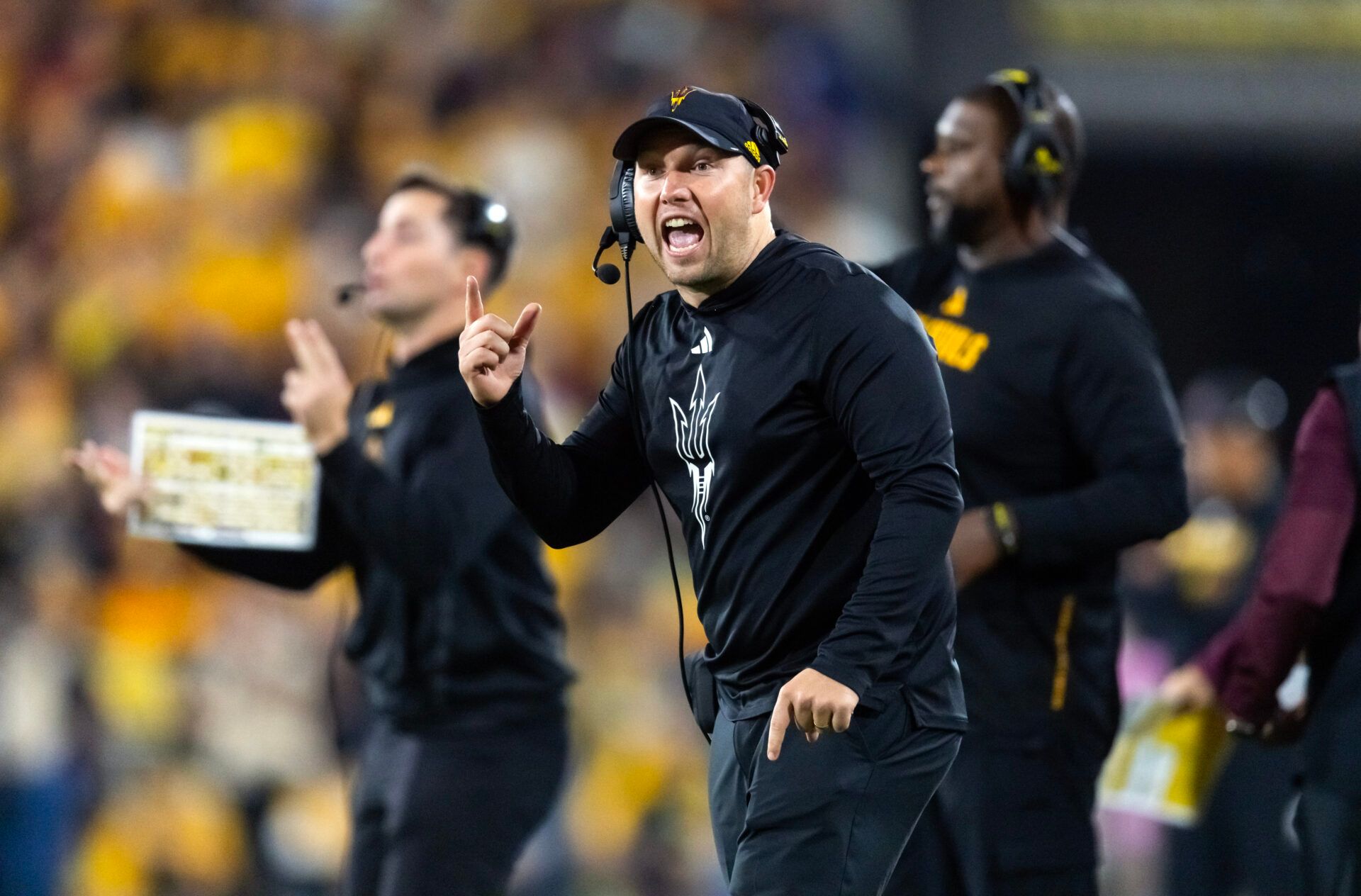
Kenny Dillingham passed up millions to stay in the desert, and he finally explained the structural shift that made his decision possible. The Arizona State head coach watched his university system counterpart make a similarly shocking decision this weekend, shedding light on the quiet revolution keeping elite coaching talent inside state lines.

The Michigan Rejection and Administrative Alignment for Kenny Dillingham
Dillingham rejected serious interest from the Michigan Wolverines in December 2025 to continue his football rebuild in Tempe. Now, Arizona basketball coach Tommy Lloyd has spurned the North Carolina Tar Heels on the eve of the Final Four to remain in Tucson. The parallel decisions signal a change in how the state handles its premium athletic investments.
“I think it’s a good sign that the board of regents is understanding how important sports are in this state,” Dillingham said when asked about Lloyd navigating a nearly identical scenario.
The motivation runs much deeper than simple nostalgia. Dillingham secured financial commitments for his assistant coaching pool and essential program infrastructure. He recognized a profound shift in how state leadership views collegiate athletics, an observation confirmed by Lloyd’s recent negotiations. Lloyd’s new deal includes a reporting structure where he now reports directly to University of Arizona President Suresh Garimella rather than the athletic director.
That reporting structure explains exactly why Dillingham felt comfortable passing on one of the most prestigious jobs in the Big Ten. He realized he did not need to leave the state to find an administration willing to spend like a blue-blood program. The Arizona Board of Regents oversees both major public universities and holds the ultimate authority over these coaching contracts.
MORE: Ja’Boree Antoine Gets Honest on Facing Miami’s Darian Mensah Offense
Historically, Arizona and Arizona State served as stepping-stone jobs for ambitious coaches. The programs consistently lost their best talent to universities capable of offering superior resources and fewer bureaucratic hurdles. Dillingham recognized that the traditional hierarchy was changing during his own contract negotiations.
He demanded structural support to compete in the modern NIL environment. The state leadership delivered exactly what he needed to sustain the momentum of his 2024 Big 12 championship run. He locked in his future knowing the administration was committed to the financial realities of modern college football.
MORE: Jordyn Tyson ‘Trending in Wrong Direction’ As Injury Woes Spark Draft Slide
The two coaches are currently operating at the peak of their respective sports. Tommy Lloyd reached a 148-35 overall record through his first five seasons in Tucson—the most wins for any coach in that span in NCAA history. He guided the 2025–26 Wildcats to a 36-2 mark, sweeping the Big 12 regular season and tournament titles. Dillingham resurrected a dormant football program, securing a 2024 Big 12 title and a College Football Playoff berth in his second season.
Production forces institutions to adapt or face irrelevance. The Board of Regents clearly chose adaptation. They recognized that replacing coaching talent is far more expensive than simply paying market value to retain it.
