
With so much chaos in the transfer portal and the impact of NIL in college football, it’s no surprise that these topics remain hotly discussed, even in the offseason. They’ve become an integral part of the game and seem likely to stay, at least in their current form.
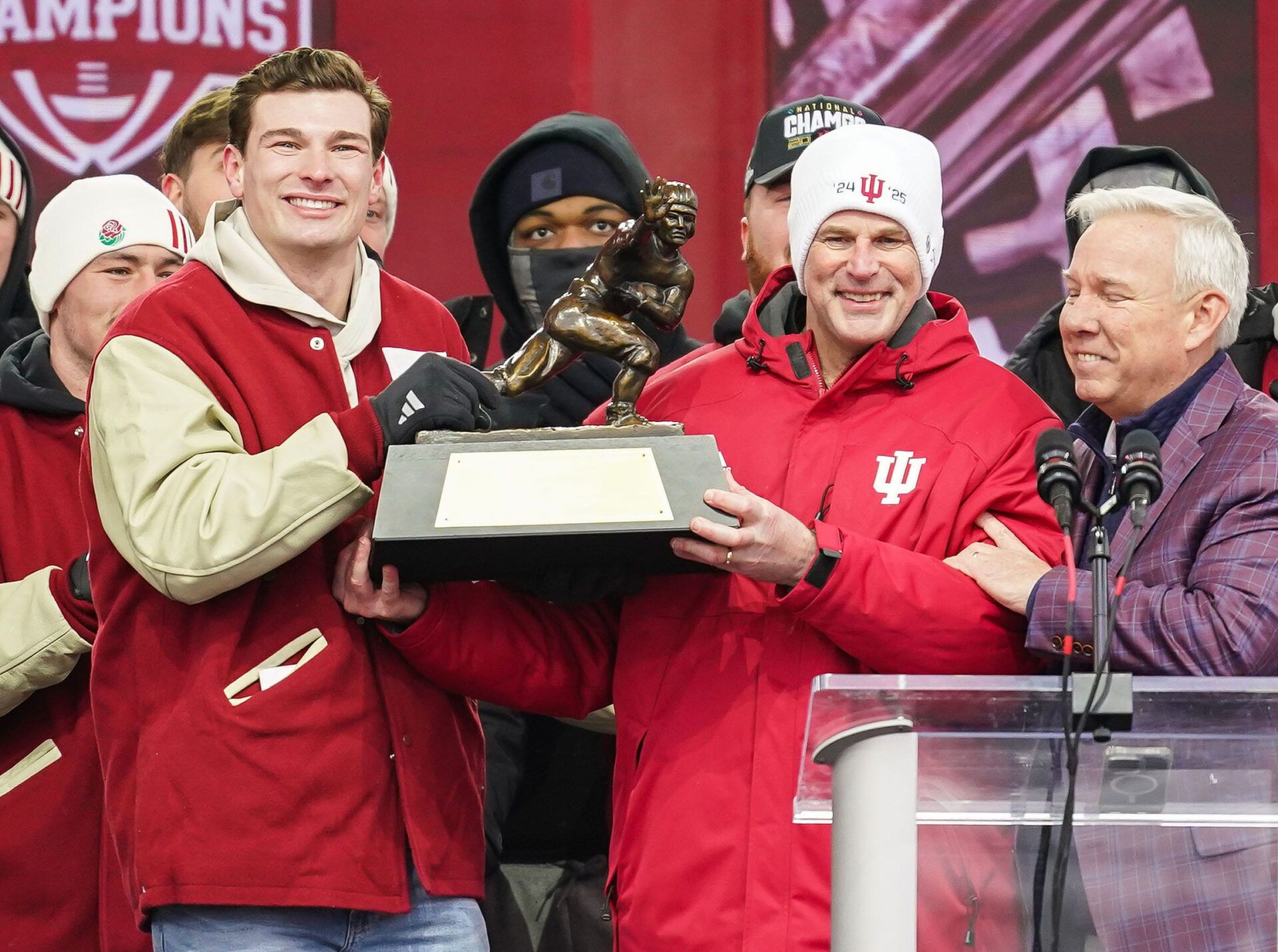
This offseason, the transfer portal reached an all-time high, with top players across the country moving and chasing opportunities and, in many cases, money. Yet, in the end, success still comes down to coaching and player development, as demonstrated by Indiana’s rise to the top in 2025.
How Curt Cignetti and Indiana Football Proved It Can Be Done
Sports columnist Jason Whitlock stirred debate this week after taking to social media to push back on the narrative surrounding Indiana football’s remarkable rise. Responding to a discussion about the transfer portal and NIL, Whitlock wrote:
“Again, I love Indiana football and Curt Cignetti. But Indiana football isn’t a Cinderella story. It’s a pay-for-play story.”
Again, I love Indiana football and Curt Cignetti. But Indiana football isn’t a Cinderella story. It’s a pay-for-play story. https://t.co/rW52hCHVpE
— Jason Whitlock (@WhitlockJason) March 21, 2026
It’s a bold claim, one that reflects the rapidly evolving landscape of college football. With the rise of NIL deals and the transfer portal, the sport has undeniably shifted toward a model where financial resources play a larger role than ever before. The traditional idea of a “Cinderella story,” a program rising purely on grit and development, is increasingly being questioned.
And yet, reducing Indiana’s success under Cignetti to simply saying “pay-for-play” will win more times than not, misses a significant part of the story.
Why Culture and Player Development Mattered for Indiana
Yes, Indiana utilized the transfer portal. That much is undeniable and necessary in today’s game. But the Hoosiers didn’t just outbid opponents for talent. Instead, they identified players who fit their system, culture, and coaching philosophy.
The approach wasn’t about paying the highest price. It was about finding the right players.
Cignetti built a roster centered on competition and opportunity. Players weren’t handed roles; they earned them. That mindset translated directly onto the field, where Indiana excelled on both sides of the ball, finishing the season with the highest PFSN CFB Impact grades on both offense and defense.
Perhaps the clearest example of Indiana’s model is quarterback Fernando Mendoza.
A relatively under-the-radar transfer heading into the season, Mendoza didn’t command the massive NIL deals that some of the portal’s biggest names received. Instead, he was given something arguably more valuable: a genuine opportunity.
That opportunity paid off in a major way.
Mendoza not only led Indiana to unprecedented success but also emerged as one of the top quarterbacks in the country. His rise has pushed him to the top of several analyst rankings, including PFSN’s consensus big board, with some projecting him as the No. 1 overall pick in the 2026 NFL Draft.
From a return-on-investment perspective, Mendoza may be one of the best portal acquisitions in recent memory. But his story reinforces a key point: His success wasn’t driven by money. It was driven by development, trust, and fit.
The New Era of Parity in College Football
Whitlock’s argument isn’t entirely off base. NIL and the transfer portal have fundamentally changed the sport. Programs with deep pockets undeniably have advantages, and “pay-to-play” elements are now part of the ecosystem.
But if money alone determined outcomes, the same handful of programs would win every year.
That hasn’t been the case.
Instead, college football is experiencing a level of parity rarely seen before. Indiana’s rise is proof that while financial resources matter, they are not the sole ingredient for success.
Indiana embraced the modern realities of college football without abandoning the foundational principles of winning: player development, strong culture, and the ability to maximize opportunity.
As parity continues to grow, Indiana may not be the last program to emerge from outside the traditional power structure. Because in the college football world, it’s not just about how much you pay. It’s about what you build.
