
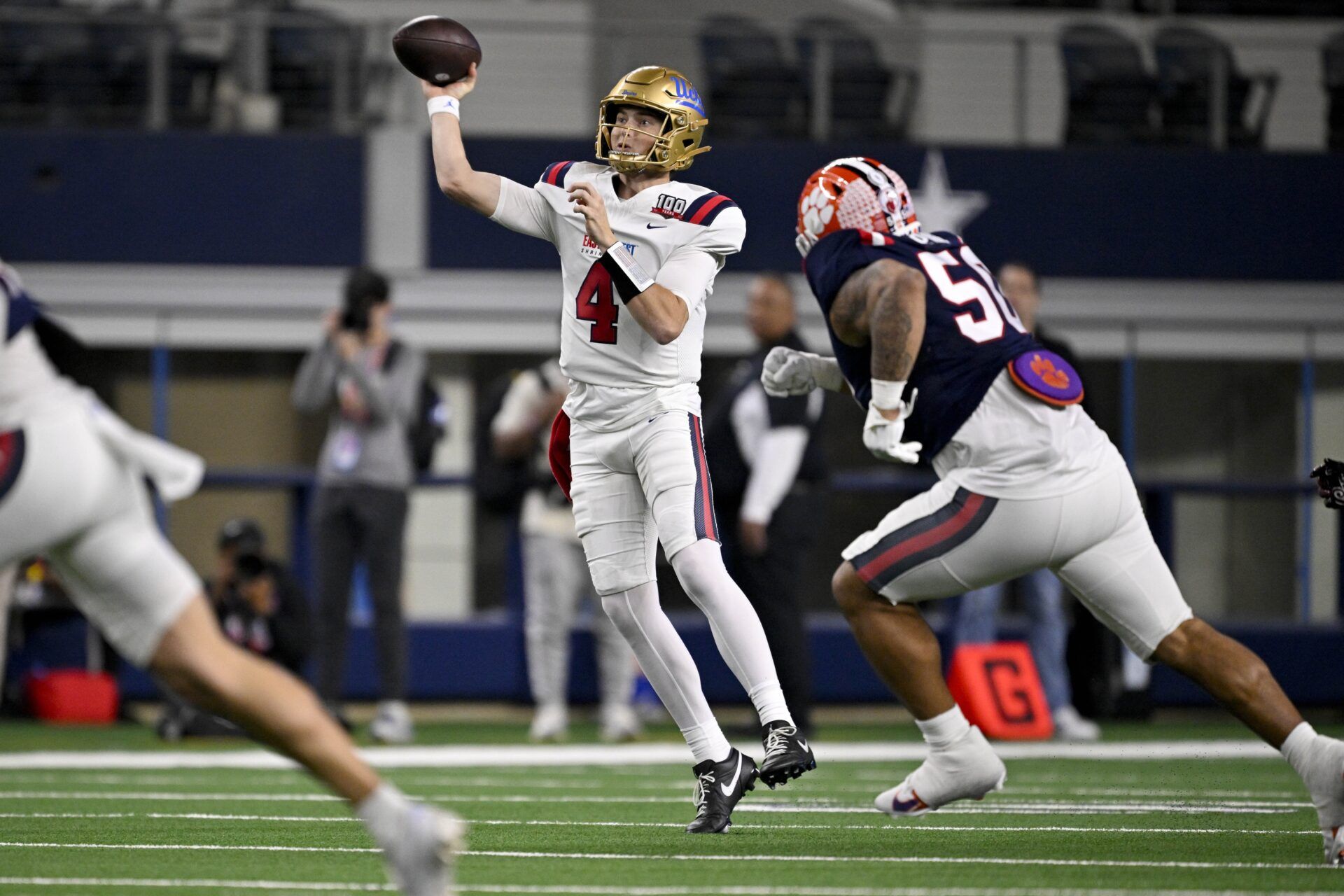
The House vs. NCAA settlement, approved on June 6, 2025, has reshaped college athletics with direct athlete compensation and much stricter name, image, and likeness (NIL) rules. In his June 18 Athletic Mailbag, Stewart Mandel shared his thoughts about whether this $20.5 million revenue-sharing cap will replace or supplement existing NIL deals.
His analysis explained why the settlement’s attempt to curb NIL money is unlikely to succeed, casting doubt on its long-term impact.
College Football Experts Share Thoughts on Revenue Sharing vs NIL Collectives
Mandel noted that most schools’ collectives fall short of the $20.5 million cap, making revenue sharing the primary compensation method for many. However, for top-tier programs, things are different. Administrators, including Florida basketball coach Todd Golden and Ohio State AD Ross Bjork, claimed the NIL Go clearinghouse, operated by Deloitte, will slash outside deals.
South Carolina’s LaNorris Sellers rejected tempting transfer offers, the college football star’s father says
The advent of name, image, and likeness (NIL) has significantly altered the college sports— Landrover defender (@Landroverdefen9) June 20, 2025
Golden predicted players could earn just “10 to 20 percent” of their recent NIL hauls, while Bjork called collectives a “false market,” which will be similar to pro sports’ smaller NIL deals.
Legal and Practical Hurdles
Mandel argued that the settlement’s two-part restriction of capping school payments at $20.5 million and requiring NIL deals over $600 to be approved for “valid business purpose” and fair-market value will face legal issues.
Over the past decade, courts, including the U.S. Supreme Court, have deemed NCAA restrictions on athlete earnings illegal restraints of trade. Mandel pointed to Texas Tech’s $55 million in NIL commitments, confirmed by booster Cody Campbell, as evidence that schools may exceed the cap.
“Either their payroll is going down by more than 60 percent a year from now, or a judge will have issued an injunction,” he wrote.
Answering one of the reader’s questions, who asked about penalties for improper NIL deals under the College Sports Commission (CSC), led by CEO Bryan Seeley, Mandel wrote that no specifics have emerged about the “substantive” and “severe” penalties that were promised.
Another reader suggested the settlement paves the way for a salary cap, but Mandel countered that this cap, unnegotiated with players, is “legally dubious.” The CSC’s attempt to control the NIL landscape through Deloitte’s oversight assumes compliance that may never become a reality.
With schools like Texas Tech already pushing past the cap, Mandel predicted legal challenges will preserve NIL money’s prominence. The settlement may shift compensation structures, but as Mandel sees it, the lucrative NIL market is far from dead.
