
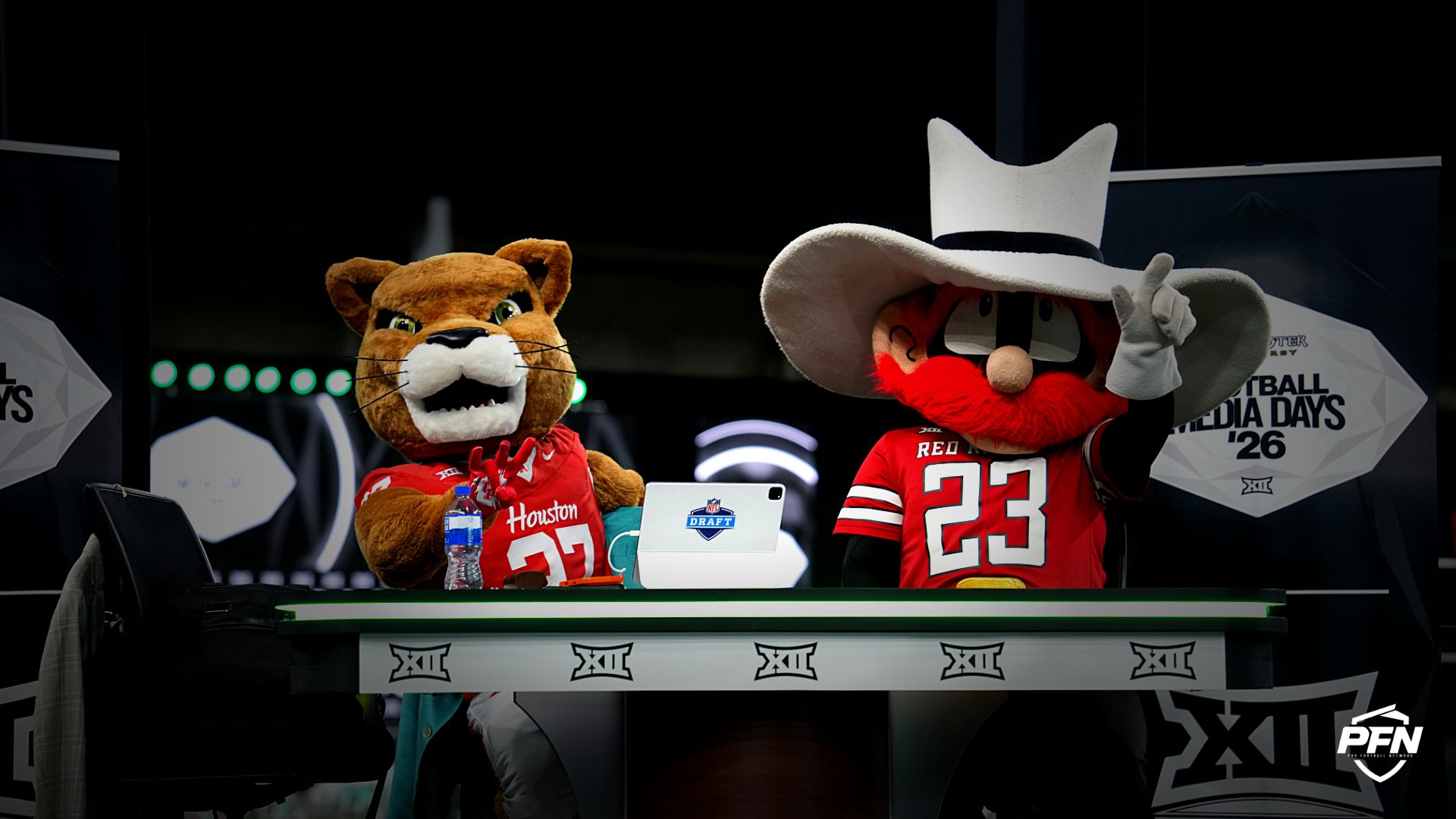
Texas Tech’s defense projects for 24.7 fantasy points per game in 2026. The best quarterback in the player pool projects 24.6. The best wide receiver, 22.0. The best running back, 20.4. The top defense in college fantasy football outscores every skill player in the game, and it usually goes off the board in the double-digit rounds.
Twelve of these units carry an overall draft rank inside the top 130. Drafts open Aug. 3, so take them into our college fantasy football mock draft simulator and see how late the elite ones actually last.
2026 College Fantasy Football Defense Rankings
- 1. Texas Tech, Big 12 24.7 PPG, 296.3 projected points, 95.8 DEF+ (A)
- 2. Notre Dame, Independent 22.7 PPG, 272.6 projected points, 87.7 DEF+ (B+)
- 3. Indiana, Big Ten 22.3 PPG, 268.1 projected points, 97.9 DEF+ (A+)
- 4. Arizona, Big 12 21.9 PPG, 263.3 projected points, 83.6 DEF+ (B)
- 5. Kansas State, Big 12 21.5 PPG, 258.5 projected points, 77.4 DEF+ (C+)
- 6. Miami, ACC 20.6 PPG, 247.3 projected points, 89.9 DEF+ (B+)
- 7. SMU, ACC 20.5 PPG, 245.9 projected points, 83.1 DEF+ (B)
- 8. Texas, SEC 19.5 PPG, 234.2 projected points, 85.4 DEF+ (B)
- 9. Maryland, Big Ten 19.3 PPG, 231.5 projected points, 76.3 DEF+ (C)
- 10. LSU, SEC 17.8 PPG, 213.8 projected points, 84.6 DEF+ (B)
- 11. Utah, Big 12 17.8 PPG, 213.5 projected points, 84.8 DEF+ (B)
- 12. BYU, Big 12 17.4 PPG, 208.7 projected points, 86.1 DEF+ (B)
- 13. Ohio State, Big Ten 17.0 PPG, 204.5 projected points, 95.1 DEF+ (A)
- 14. Tennessee, SEC 17.0 PPG, 203.6 projected points, 73.2 DEF+ (C)
- 15. Duke, ACC 16.6 PPG, 199.2 projected points, 70.5 DEF+ (C-)
- 16. South Carolina, SEC 16.4 PPG, 196.8 projected points, 84.3 DEF+ (B)
- 17. Auburn, SEC 16.4 PPG, 196.8 projected points, 83.6 DEF+ (B)
- 18. Oregon, Big Ten 16.3 PPG, 196.0 projected points, 86.5 DEF+ (B)
- 19. Virginia, ACC 16.2 PPG, 194.5 projected points, 84.3 DEF+ (B)
- 20. Pittsburgh, ACC 16.2 PPG, 193.9 projected points, 84.3 DEF+ (B)
- 21. West Virginia, Big 12 16.1 PPG, 193.0 projected points, 77.4 DEF+ (C+)
- 22. USC, Big Ten 16.0 PPG, 191.5 projected points, 76.3 DEF+ (C)
- 23. Washington, Big Ten 16.0 PPG, 191.4 projected points, 84.0 DEF+ (B)
- 24. TCU, Big 12 15.7 PPG, 188.8 projected points, 78.8 DEF+ (C+)
Why Turnovers, Not Points Allowed, Decide This Position
Ohio State allowed 130 points last season, fewest on this board, and posted a 95.1 DEF+ grade. It ranks 13th of 24. The Buckeyes intercepted eight passes, fewest here, and forced a turnover on 10.2% of opponent drives, also last. A defense that never gives up points and never takes the ball away is a great defense and a mediocre fantasy asset, because sacks, interceptions and defensive touchdowns are where the volume lives.
Now flip it. Kansas State surrendered 320 points and graded 77.4, a C+, which puts it in the bottom quarter of this board. It ranks fifth. The Wildcats forced turnovers on 17.1% of opponent drives, third-best here, and got to the quarterback on 7.2% of dropbacks. Duke allowed 412 points, most on this board, and graded 70.5, the worst mark here. It still lands 15th because it took the ball away on 15.5% of drives.
Texas Tech is the exception that makes it easy. The Red Raiders do both. They allowed 165 points, forced turnovers on a board-high 17.3% of drives, sacked the quarterback on 8.5% of dropbacks and picked off 17 passes. Shiel Wood engineered what Texas Tech calls the top defensive turnaround by any program this century, finishing No. 1 nationally against the run at 68 yards per game and 2.2 per carry, plus third in total and scoring defense.
He’s back for a second season on an extension through 2028. There are real personnel losses, but Wood’s defenses at Troy and Tulane both finished top 10 nationally in takeaways before he ever got to Lubbock. Take the defense first among your non-skill spots and take this one.
Best Defense Values and Fades in 2026 College Fantasy Drafts
Arizona is the sleeper. The Wildcats forced turnovers on 19.2% of opponent drives, the highest rate on this board, and intercepted 22 passes, also the most. They did it while grading out at just 83.6 and sacking the quarterback on 5.5% of dropbacks, second-lowest here. That combination usually means an opportunistic secondary rather than a dominant front, which is exactly the profile fantasy scoring overpays. At fourth on this board and 93rd overall, Arizona is the cheapest access to elite turnover volume.
Indiana is the safest. A 97.9 DEF+ grade is the best mark on this board and the only A+. The Hoosiers allowed 144 points, intercepted 17 passes, forced turnovers on 16.7% of drives and sacked the quarterback on 10.1% of dropbacks. They finished second nationally against the run at 77 yards per game. There’s no hole in the profile. They also lost a national championship’s worth of production, so the floor matters more than the ceiling here.
Washington is the quiet one. The Huskies own the lowest sack rate on this board at 5.4%, which is usually a disqualifier, and they still grade 84.0 while forcing turnovers on 12.9% of drives. That is a defense getting results without pressure, which tends not to repeat. At 23rd they are priced accordingly, but if the front improves at all, this is a top-10 unit at a last-round cost.
Tennessee is the fade. The Volunteers allowed 375 points and graded 73.2, third-worst here, and unlike Kansas State and Duke they don’t have the turnover rate to justify it, forcing takeaways on 12.8% of drives and intercepting just 10 passes. At 14th they’re being priced on name recognition rather than any category that scores.
Stream the position early if you missed the top tier, because Power Four defenses will feast on FCS opponents through September. The separation comes when conference play starts, and a unit built on takeaways holds up against real offenses better than one built on holding down yardage. Run these 24 defenses through the PFSN College Fantasy Football Mock Draft Simulator and find out where the tier actually breaks in your league.