
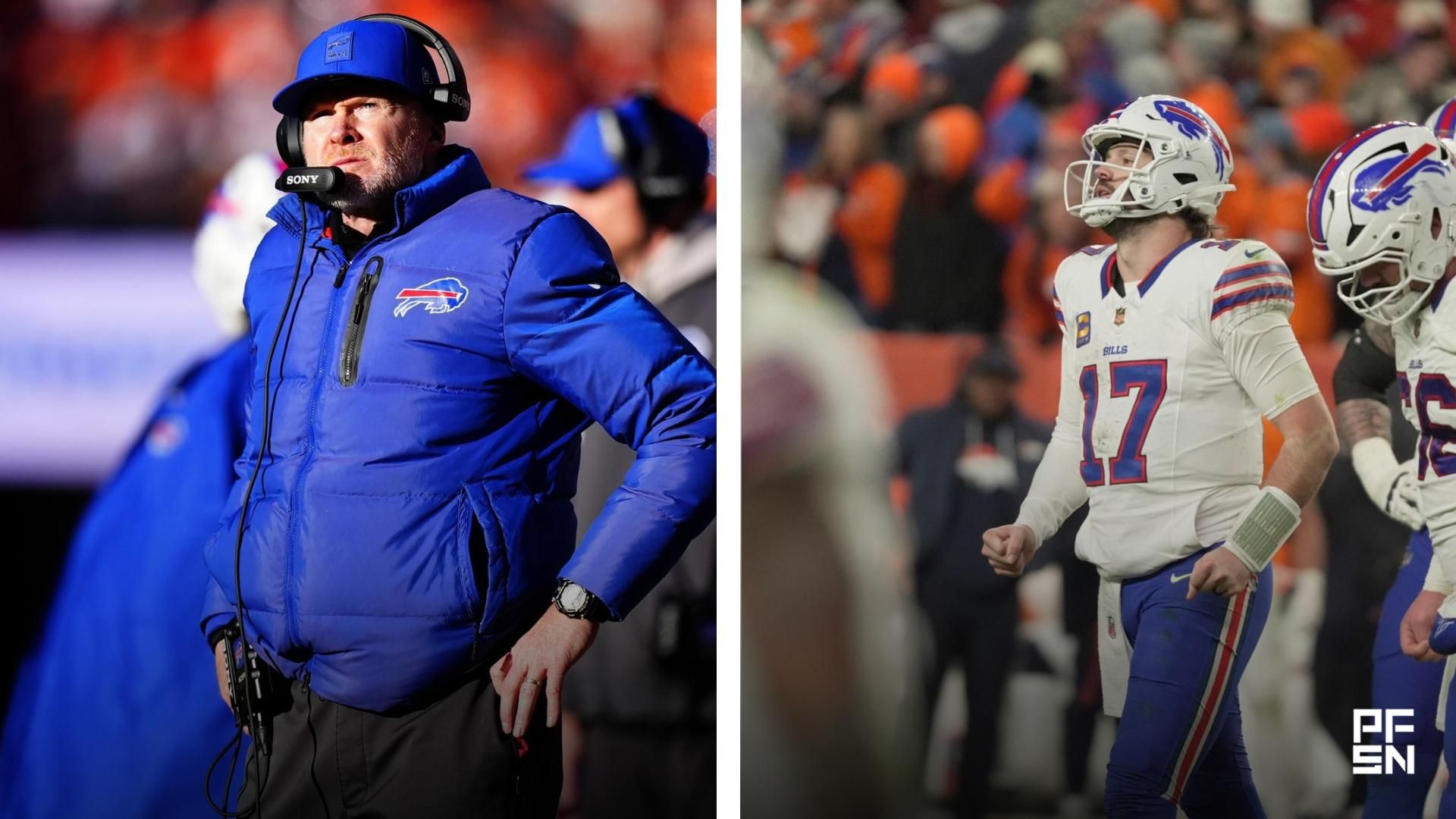
Sean McDermott sat in his locker after the Bills’ 33-30 overtime loss to Denver and watched Brandin Cooks’ contested catch repeatedly. He then did something he almost never does: torched the officials. But his sharpest criticism wasn’t about whether his receiver completed the catch. It was about a replay process that, in his view, robbed his players of transparency in a season-ending moment.
McDermott’s Process Argument Exposes the NFL’s Replay Blind Spot
“I don’t understand why the head official who is at the game does not get a chance to look at the same thing people in New York are ruling on,” McDermott told The Buffalo News postgame. That single sentence cuts to the heart of a structural problem the league has refused to address.
Bills HC Sean McDermott shared more thoughts in a pool report to @JaySkurski following his press conference. Keep in mind, these comments are AFTER he spoke to us. pic.twitter.com/lSSfLgHgJ1
— Matthew Bové (@Matt_Bove) January 18, 2026
The play itself was close enough to spark a legitimate debate. Josh Allen fired deep on third-and-11 from Buffalo’s 36-yard line. Cooks came down with the ball at Denver’s 20, appearing to have a knee on the turf and possession secured. Broncos cornerback Ja’Quan McMillian wrestled the ball away as both players hit the ground. Officials ruled it an interception without sending referee Carl Cheffers under the hood.
McDermott called timeout immediately after the play; not to ice anyone, but to force a pause he felt wasn’t happening organically. It didn’t work. League replay officials in New York confirmed the ruling via expedited review, and the Bills never got their shot at a game-winning field goal.
Cheffers explained the ruling in the pool report: the receiver didn’t complete the catch process before losing possession to the defender. By rule, McMillian finished the catch and was awarded the ball. Reasonable minds can disagree on that interpretation. What McDermott found indefensible was the speed and opacity of the entire sequence.
woke up thinking about the brandin cooks call, hbu? pic.twitter.com/6qf8ccQvIa
— Carly Mascitti (@carlymascitti) January 18, 2026
“It’s a shame that a game is decided on a call like that, and there is no time spent with the head official going underneath the hood or to the replay booth,” McDermott said. “To the monitor. I don’t understand how that works. I don’t understand how that could be the case when it’s such a close play.”
MORE: Fans and Analysts React to Controversial Bills-Broncos Call
Here’s the tension: the NFL’s replay system relies heavily on centralized review from its New York command center, ostensibly to standardize outcomes. But that centralization strips on-field officials of agency in pivotal moments, and strips players and coaches of any visible assurance that their fate is being carefully weighed. McDermott’s point isn’t only that New York got it wrong. It’s that the process looked rushed and felt arbitrary when the stakes demanded the opposite.
“These guys spent three hours out there playing football, pouring their guts out, to not even say, ‘Hey, let’s just slow this thing down,'” McDermott said. “That’s why I’m bothered.”
A Coach Who Rarely Speaks Up Made His Position Clear
McDermott has been the Bills’ head coach for nine seasons. He’s made the playoffs eight times. He’s never reached a Super Bowl. Through all of those near-misses, he’s maintained a steady public posture on officiating; measured, deferential, occasionally frustrated but never confrontational. That changed Saturday night.
When asked why he chose this moment to break his silence, McDermott was direct: “I only speak up when there is a wrong. In this case, it happened to be to our team. We win with class, and we lose with class in Buffalo. That’s how we handle our business.”
Then he made clear the class act was taking a backseat to something rawer.
“We’re not just going to sit here and take it,” McDermott said. “I’m pissed off about it, and I feel strongly as I’ve looked at it in review in my own locker that it’s a catch, possession Buffalo, and that the process should have been handled differently.”
The NFL will almost certainly fine him. McDermott seemed to anticipate that when he launched into his critique. He did it anyway, and his reasoning was deliberate. If he’s going to absorb the penalty, he wants the league to absorb the scrutiny.
The Broncos, meanwhile, advanced to their first AFC Championship since their Super Bowl 50 run a decade ago. Denver’s subsequent drive featured 47 yards via two pass interference penalties, piling frustration onto a Bills sideline already seething over the interception call. But McDermott’s critique zeroed in on that initial ruling, the moment everything shifted.
However, it is not all rainbows and butterflies for Denver. Despite the win, the team received devastating news when it was revealed that Bo Nix suffered a season-ending injury two plays before the end of the game. Now, the team will rely on backup Jarrett Stidham in the AFC Championship game.
Buffalo will spend the offseason dissecting what went wrong. Allen’s four turnovers, two interceptions and two lost fumbles, will dominate the self-scouting. His 0-7 career record in overtime games will fuel the narrative machine. Those are legitimate concerns. On the plus side, despite the loss and early struggles, Allen graded out with an 82.9 Quarterback Impact metric (B-), while Bo Nix was 79.7 (C+). Allen’s great rushing numbers and good third and fourth-down numbers (68.8% combined) helped lift his score.
But McDermott planted a different flag. He’s not asking the NFL to admit it got the call wrong. He’s asking why the officials on the field weren’t given the same look that New York received, and why players who just played the biggest game of their season had to watch their championship hopes evaporate without anyone slowing down to make sure.
“The fans deserve more. The players certainly deserve more,” McDermott said. “They deserve an explanation.”
He’s right. And whether or not that explanation ever comes, McDermott made sure the question was asked in a voice too loud to ignore.