
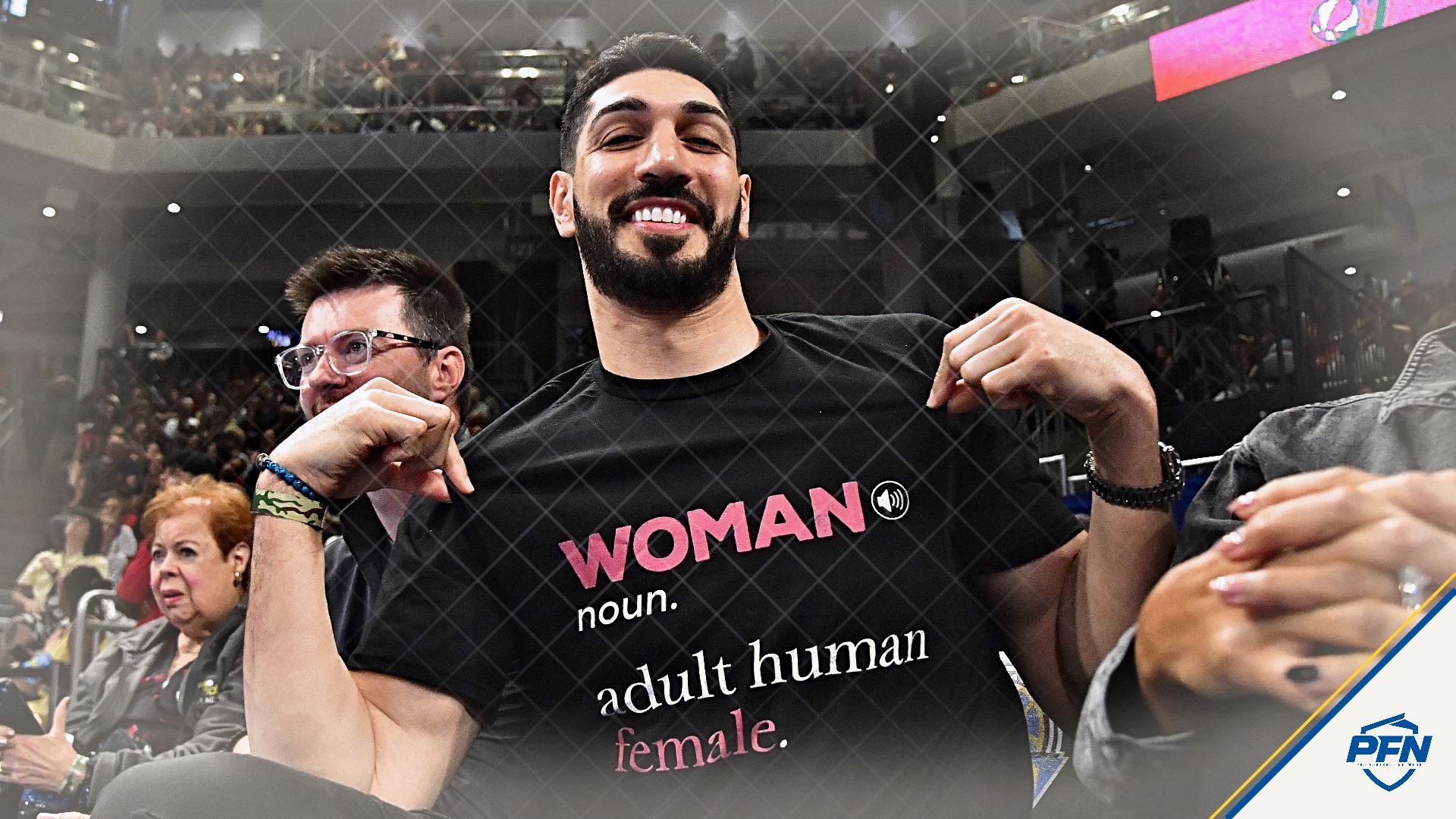
Chicago Sky owner Michael Alter announced on Tuesday that Enes Kanter had been banned from the team’s home games. The development occurred after Kanter was involved in a heated courtside altercation with Sky guard Natasha Cloud during a recent matchup against the Indiana Fever at Wintrust Arena.
Now, Jason Whitlock has offered his own interpretation of what led to the former NBA player’s ban.
Jason Whitlock Reveals What He Believes Got Enes Kanter Banned by Sky
Kanter has been an outspoken advocate for limiting women’s sports to biological females. On Sunday, he sat near courtside during the Fever-Sky game wearing a shirt that read, “WOMAN noun. adult human female,” highlighting his stance against the WNBA’s reluctance to define the term “women” in its Collective Bargaining Agreement.
As Kanter watched the game, a visibly angry Cloud appeared to yell at him while approaching during the third quarter. Kanter stretched out his arms to display the message on his shirt and appeared to move towards Cloud.
Arena personnel quickly stepped in before the two could get closer. After conversing with security, Kanter was eventually escorted out of Wintrust Arena. Two days later, Alter told Chicago media that Kanter was “trying to be provocative” and “made himself into a threat,” comments that preceded the arena ban.
Whitlock addressed the controversy on Wednesday on “The Fearless” podcast, arguing that Kanter’s shirt played a bigger role in the incident than the Sky owner suggested.
“Enes Kanter did not throw a drink. He did not storm the floor with a weapon…Of course the shirt struck a nerve. A definition is a fence. A fence tells you who does not get in. Cloud left her assignment to police a noun, and the Sky treated the noun like a bomb,” Whitlock said.
“Alter told Chicago reporters you can’t have the potential to be a threat because he stood, pointed, and took a step. The owner wrapped a lifetime arena ban in security language so he wouldn’t have to say the quiet part: the shirt was the crime, the step was the alibi.”
Alter, however, pointed to the actions of “five different security authorities that all agreed very quickly to throw him out” as evidence that Kanter’s portrayal of himself as a victim “who did nothing, said nothing” did not match what security personnel saw.
Kanter is reportedly considering legal action after Alter compared his actions to someone “shooting a gun” and said he had become a threat, leaving no scope for him to be given only a warning.
The former Boston Celtics center has maintained that he attended the game to support the Fever and Sophie Cunningham, who shares his position on transgender athletes competing in women’s sports.
Whitlock remains convinced that the shirt was central to the controversy, arguing that Alter’s security explanation did not tell the whole story. Whether the ban was driven primarily by Kanter’s conduct, his message, or both, remains a matter of dispute.
