
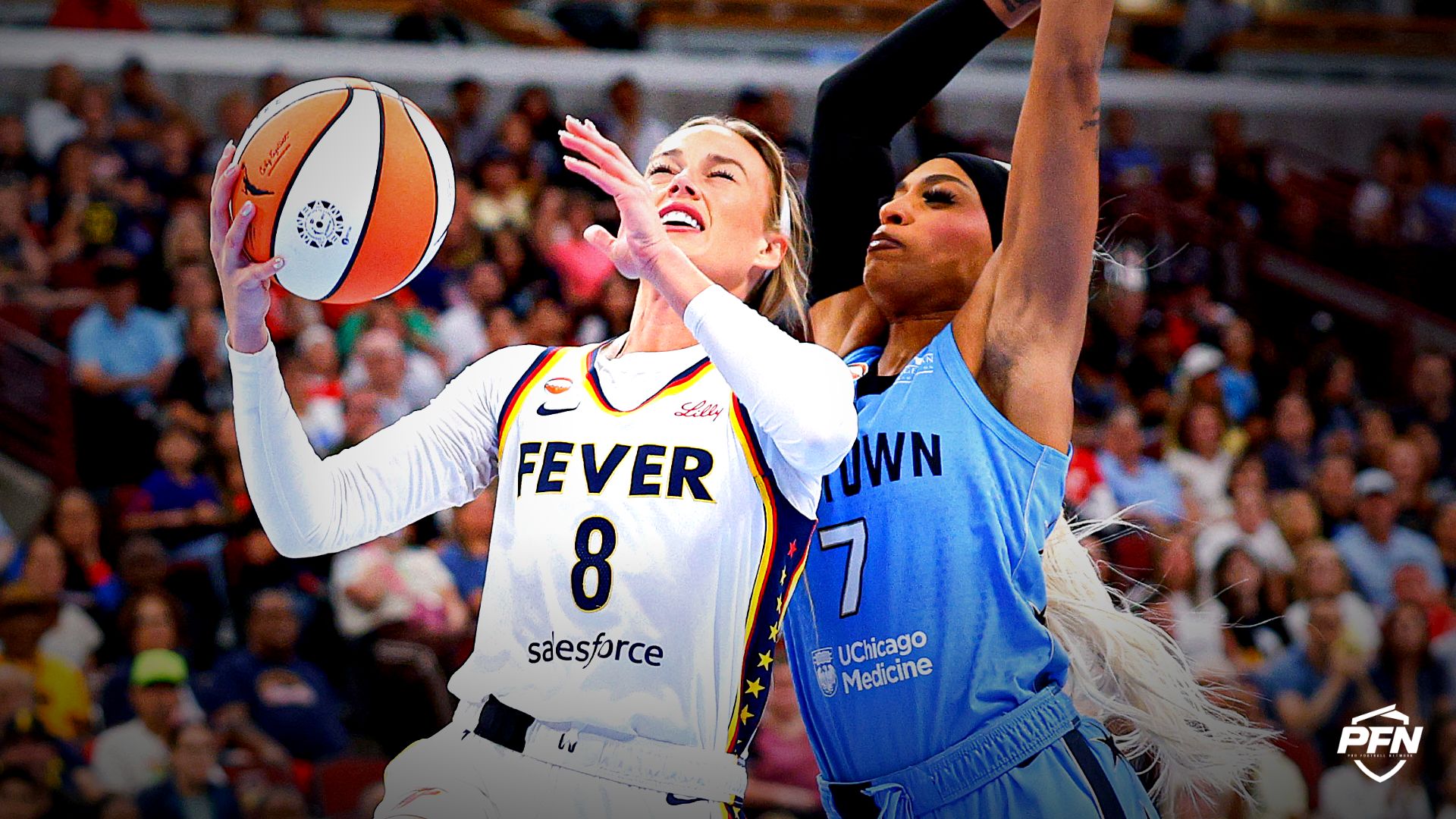
Jason Whitlock has joined the brouhaha surrounding DiJonai Carrington’s “White Privilege” comment, a social-media post the Chicago Sky guard made after her Flagrant 2 foul on Indiana Fever counterpart Sophie Cunningham.
The controversy began a little over a week ago when Carrington was ejected after striking Cunningham during a game. After leaving the court, Carrington posted “White Privilege” on social media, turning a basketball incident into a much broader debate.
Whitlock addressed the comment during an interview with journalist Bill O’Reilly.
Jason Whitlock Unloads on DiJonai Carrington Amid Caitlin Clark, Sophie Cunningham Drama
Racial tensions have become an increasingly visible part of the WNBA conversation, particularly around Cunningham and Caitlin Clark. Both Fever players have faced criticism from some observers who believe white players receive favorable treatment, while others have rejected those claims.
Carrington’s post added another layer to that debate.
When O’Reilly asked Whitlock about the controversy, the “Fearless” host delivered a blunt assessment of Carrington and referenced her previous incidents involving Clark and Cunningham.
“She slaps Sophie Cunningham upside the head, bloodies her mouth, could have seriously injured her. She has this pattern of this type of behavior. She’s gouged the eye of Caitlin Clark. DiJonai Carrington is a nut job,” Whitlock said.
“She wears a blonde wig. She hates white women, but she dresses and styles her hair in a way to look like a white woman.”
Whitlock then pointed to Cunningham’s own disciplinary history. Last season, the Fever guard was ejected for a Flagrant 2 foul, the same penalty Carrington received for her hit on Cunningham.
“And so, she’s screaming white privilege when, you know, Sophie Cunningham last year or the year before, tackled another woman in retaliation for what that woman had done to Caitlin Clark, and Sophie Cunningham got booted out of the game. No different than DJ Carrington. There’s no racial double standard here.”
His argument was straightforward: both players committed actions that officials deemed worthy of a Flagrant 2, making the basketball punishment itself unrelated to race. Whitlock questioned why Carrington introduced race into the discussion after the game.
Carrington, meanwhile, has pushed back strongly against the criticism she received.
Former NFL player Emmanuel Acho called the “White Privilege” remark “ignorant and to some degree asinine,” prompting Carrington to respond. She insisted that her comment was not directed at the foul or the subsequent ejection.
Carrington stressed that the connection between her post and the officiating decision was an assumption made by Acho and others and not a comment from her.
However, she has not publicly explained what prompted her to write “White Privilege” in the first place. That silence has left room for continued speculation and criticism from both sides of the debate.
Cunningham offered a different perspective after Indiana’s 90-86 win over the Sky.
In her postgame comments, she said Carrington should not have brought race into the situation, arguing that the play was simply a basketball incident that resulted in a basketball penalty.
That distinction remains at the heart of the controversy. The foul has already been decided on the court, but Carrington’s unexplained “White Privilege” post has ensured the debate will continue well beyond the final whistle.
